
Three Supreme Court Cases That Could Restore the Foundations of Self-Government
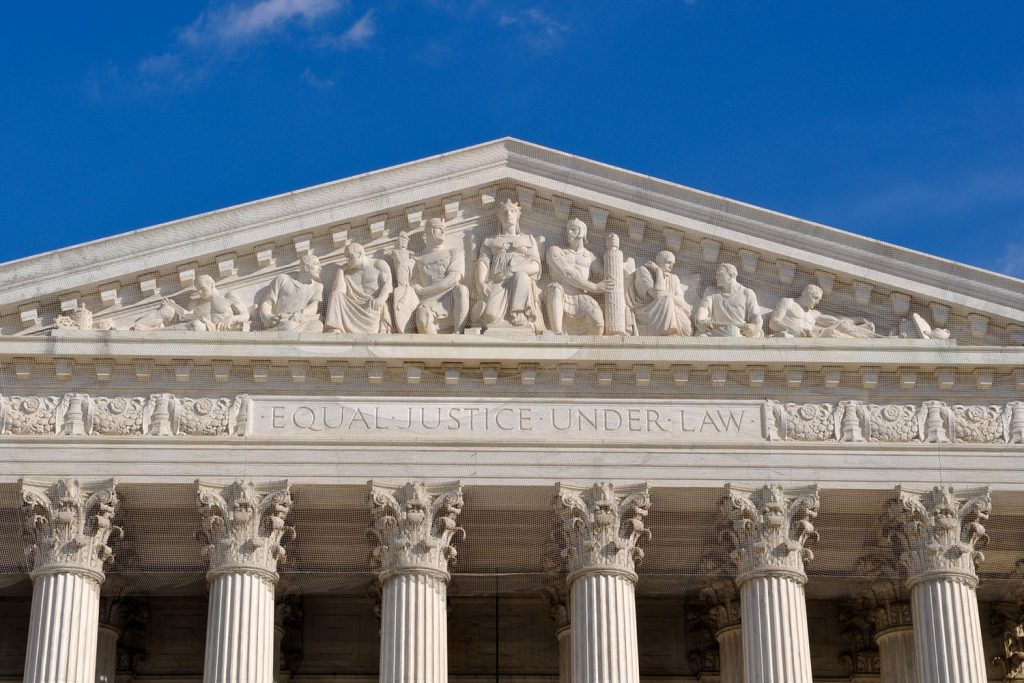
In most Supreme Court terms, we see important cases that refine doctrine or settle discrete disputes. But every so often, perhaps once in a generation, the docket aligns on questions that strike at the structural pillars of how Americans choose their representatives, conduct their elections, and define membership in the polity. The 2025–2026 term appears poised to deliver exactly that kind of moment with three pending cases: Louisiana v. Callais, Watson v. RNC, and Trump v. Barbara.
In essence, these cases ask:
- May race predominate in drawing congressional districts to satisfy Section 2 of the Voting Rights Act?
- Does the federal statute fixing Election Day as “the Tuesday after the first Monday in November” mean ballots must actually be received by that day?
- Does the 14th Amendment’s Citizenship Clause—“All persons born or naturalized in the United States, and subject to the jurisdiction thereof”—exclude children of parents who are not fully subject to U.S. sovereign authority (e.g., illegal entrants or temporary visa holders)?
A Court applying originalism, reading the Constitution according to the public meaning of its text, history, and tradition at the time of adoption, could answer each in a way that corrects decades of doctrinal expansion and returns the law to its original moorings. What follows is not partisan score-keeping but a clear-eyed civics lesson: an explanation of each case, the constitutional text and history at stake, and the foreseeable political and civic consequences. My goal, as it has been for generations of Court-watchers, is to equip you to understand why these rulings matter to the American covenant.
Louisiana v. Callais and the Limits of Race in Redistricting
This case began when Louisiana redrew its congressional map after a federal court found that the state’s previous plan diluted Black voting strength in violation of Section 2 of the Voting Rights Act of 1965. To comply, the legislature created a second majority-Black district. White voters challenged the map as an unconstitutional racial gerrymander under the 14th Amendment’s Equal Protection Clause. The Supreme Court not only took the case but broadened the question: Can Section 2 ever require states to make race the predominant factor in drawing district lines?
From an originalist perspective, the answer turns on the text, history, and tradition of the Reconstruction Amendments. The 14th Amendment guarantees “the equal protection of the laws” to each person, and the 15th Amendment forbids denial of the vote “on account of race, color, or previous condition of servitude.” Both were ratified to secure individual rights against racial discrimination, not to guarantee proportional group outcomes. The original public meaning, as debated in the 39th Congress, was color-blind protection for freed slaves and all citizens alike.
Section 2 of the VRA, especially after the 1982 amendments, has been interpreted by lower courts to require “opportunity districts” where minority voters have an equal chance to elect their candidates of choice, often achieved by drawing lines where race predominates. That reading sits uneasily with the Constitution’s command. Precedents like Shaw v. Reno (1993) already warned that race cannot be the “predominant” factor unless the state has a compelling interest and narrowly tailored remedy. An originalist Court could hold that Section 2’s “effects” test cannot override the Equal Protection Clause when it forces racial predominance.
The civic and political fallout would be straightforward. In Southern and Sun Belt states that have long drawn maps under VRA pressure, legislatures could redraw districts using traditional criteria: compactness, respect for political subdivisions, and communities of interest. Analysts project a net shift of roughly 10–20 House seats over the decade, many of them currently held by members of the Congressional Black Caucus. Democrats would lose a statutory tool that has helped preserve urban and Southern strongholds. Map-drawing would refocus on neutral principles rather than engineered demographics. Expect loud claims of a “rollback” of voting rights, yet the practical effect would be fewer race-based lawsuits and more districts that reflect actual voter geography. Black and Hispanic voters would continue to vote and win elections, just in maps drawn without race as the controlling variable. The long-term civic lesson: the Constitution protects voters, not racial groups as such.
Watson v. RNC and the Meaning of “Election Day”
Mississippi, along with roughly fourteen other states and the District of Columbia, allows mail ballots that are postmarked by Election Day to be counted if they arrive several days later. The Republican National Committee argues this practice violates federal law, specifically 3 U.S.C. § 1 and the framework of the Electoral Count Act, which designate a single, uniform federal Election Day: “the Tuesday next after the first Monday in November.”
The original public meaning here is refreshingly plain. Congress chose a fixed day for the people to choose their electors and representatives. Nineteenth-century practice and the statutory text treated that day as the moment when ballots are cast and the election concludes. Extending the counting window beyond the statutory date effectively stretches “the day” into a rolling period. Military and overseas ballots receive separate federal protection under the Uniformed and Overseas Citizens Absentee Voting Act, but domestic mail ballots do not enjoy that carve-out.
If the Court holds that “day” means ballots must be received by Election Day, the immediate consequence is the elimination of grace periods in those states. The much-discussed “blue shift” from late-arriving urban mail ballots would shrink or disappear. Close races would be decided on election night or shortly thereafter, reducing the window for post-election litigation and conspiracy claims. Republicans would gain a structural advantage in states where in-person and timely voting patterns differ demographically. Blue states would likely respond by expanding early in-person voting or same-day registration to adapt.
From a civics standpoint, the ruling would reinforce a simple truth the Framers understood: elections must have a clear, final moment. Public confidence in the process tends to rise when results are known promptly and rules are applied uniformly. The country has adapted to stricter deadlines before; it will again. The teaching point is that federal statutes, like the Constitution itself, mean what they say, not what later administrators wish they said.
Trump v. Barbara and the Original Meaning of Citizenship
President Trump’s Executive Order 14160 directs federal agencies to recognize birthright citizenship only for children with at least one parent who is a U.S. citizen or lawful permanent resident. Challengers contend the order violates the 14th Amendment’s Citizenship Clause and the statutory codification in 8 U.S.C. § 1401.
The original public meaning of the Clause, drafted in 1866–1868, supplies the answer. Its sponsors, Senators Howard and Trumbull, made clear that “subject to the jurisdiction thereof” meant full political allegiance to the United States, not mere physical presence or subjection to its criminal laws. Diplomats, invading armies, and (at the time) tribal Indians were the classic exclusions. The Clause was written primarily to overturn Dred Scott and secure citizenship for freed slaves born on U.S. soil to parents owing it allegiance. United States v. Wong Kim Ark (1898) addressed the child of lawful, permanently domiciled Chinese residents; it did not decide the status of children of illegal aliens or temporary sojourners.
An originalist Court could therefore uphold the Executive Order as consistent with the Clause’s text and history. Citizenship at birth is a solemn grant of membership, not an automatic loophole. Oral arguments are scheduled for April 1.
The long-term civic consequences would be profound. The incentive for illegal immigration and birth tourism, sometimes called the “anchor baby” dynamic, would diminish over time. Demographic projections that assumed automatic citizenship for children of undocumented parents would shift. Congress retains full power to legislate broader citizenship rules by statute; the 14th Amendment leaves that door open. Expect intense media focus on affected families and calls for legislative clarification, but also broad public support for closing what many see as an unintended loophole. Red states would gain relative influence in apportionment and electoral politics over generations. The debate would move from courts back to the political branches and the border, exactly where the Framers intended such questions of sovereignty to reside.
The Larger Constitutional Reckoning
Taken together, these three cases form a rare doctrinal triad. Each asks the Court to read the Constitution and federal statutes as they were understood when ratified or enacted, rather than as they have been stretched by later policy preferences. A trifecta of originalist rulings would not “end” voting rights, elections, or citizenship; it would restore them to their textual and historical foundations. Maps drawn without racial predominance, elections concluded on Election Day, and citizenship tied to full jurisdiction are not innovations; they echo the Reconstruction generation’s own understanding.
The political realignment would be real: structural shifts in House representation, more predictable election nights, and a slowed demographic pipeline that parties have long taken for granted. States would adapt, parties would recalibrate, and voters, not engineered districts, extended counting periods, or automatic citizenship rules, would ultimately decide the future. History shows the republic absorbs such corrections. From the Marshall Court’s nationalism to the Warren Court’s expansions and the later originalist corrections, the American covenant has always recalibrated when the judiciary returns to first principles.
That is the quiet power of these cases. They remind us that the Constitution is not a living document that drifts with the cultural tide but a fixed covenant whose meaning is discovered in its text, history, and tradition. When the Supreme Court enforces those foundations across representation, elections, and membership in the polity, the country may feel turbulence in the short run. Over time, however, clarity about the rules tends to strengthen the Union rather than weaken it. The 2025–2026 term, if it delivers this trifecta, will be remembered not as a partisan triumph but as a constitutional reckoning, one more chapter in the long story of a republic that governs itself by returning, again and again, to the written charter that binds us all.
