
Fusion, Not Magic – Lessons from Creative Repurposing
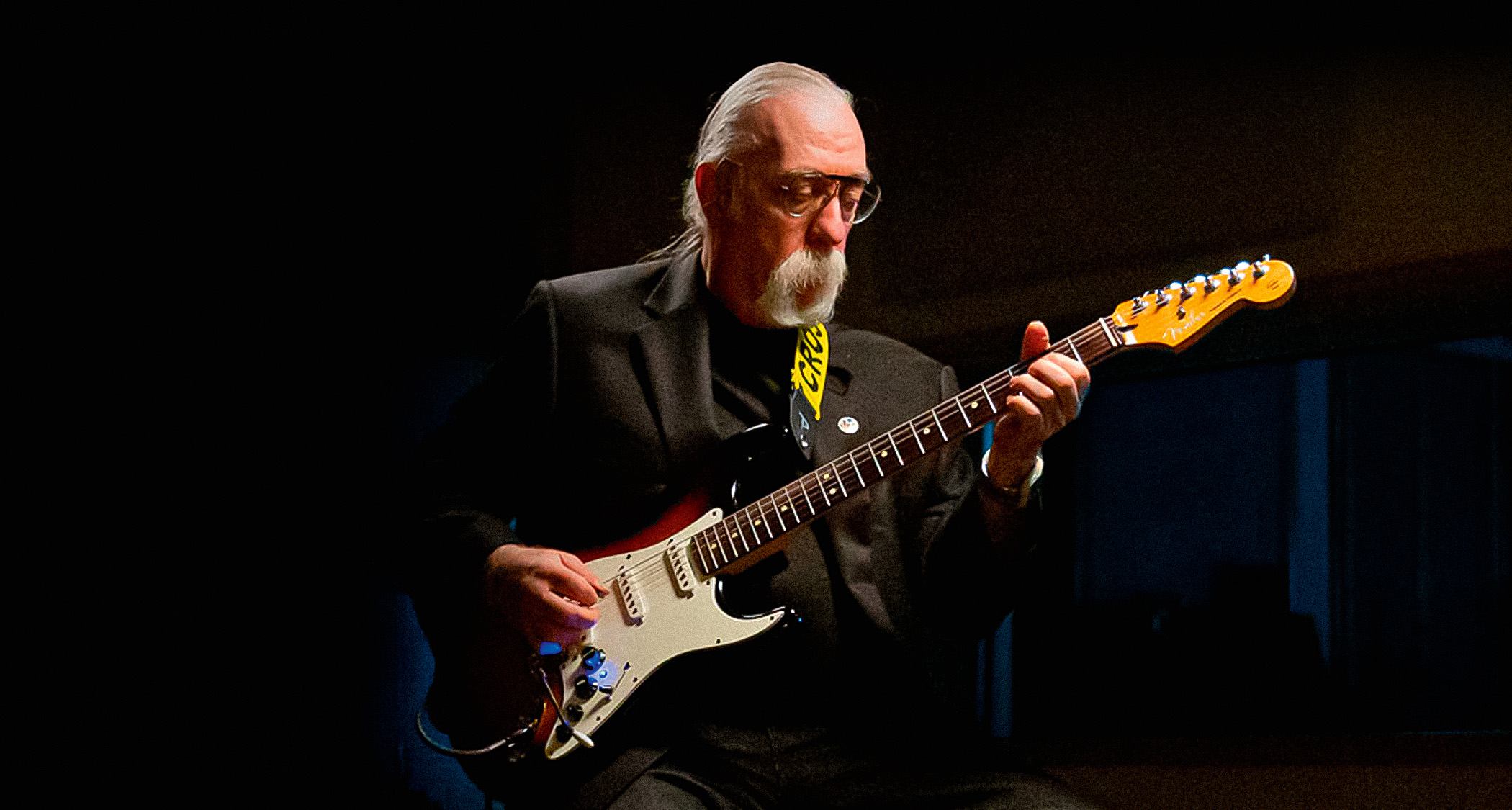
I’ve always believed the most profound changes in our world don’t arrive as sudden miracles or some deus ex machina swooping in to save the day. They come from clever people spotting what’s already there-an existing tool, a familiar skill, an old piece of hardware-and combining it with fresh insight in ways no one quite expected.
Take Jeff “Skunk” Baxter. You know him as the pony-tailed guitarist who helped shape Steely Dan’s sound and powered The Doobie Brothers through their golden era. He’s a Rock & Roll Hall of Famer, a session legend whose solos still make guitar players pause. Yet in the 1980s, his curiosity about music technology-data compression, storage, things with military roots-led him to devour defense journals. A retired Sidewinder missile engineer neighbor handed him Aviation Week subscriptions, and Baxter started seeing patterns.
He wrote a short paper proposing something simple yet revolutionary: repurpose the U.S. Navy’s existing Aegis anti-aircraft system-already proven on ships since the 1980s-for theater ballistic missile defense. Make it mobile, sea-based, cost-effective, and ready for NATO allies. No new super-weapon from scratch; just smart adaptation of hardware that was already built and tested.
That five-page idea, shared with a congressional friend, earned him high-level clearances. He chaired the Civilian Advisory Board for Ballistic Missile Defense, consulted for the Missile Defense Agency, the Pentagon, national labs, and more-even weighing in on cyber-warfare and counterterrorism. Today, Aegis-equipped destroyers and cruisers form a backbone of protection against ballistic threats from places like North Korea or Iran. A rock musician helped reshape national security through creative repurposing.
This story hits close to home for me. As someone who’s spent years in cybersecurity-hunting vulnerabilities, building defenses-and as a musician who knows the joy of improvising over familiar changes, I see the same principle at work. In both worlds, real breakthroughs come from stacking skills and seeing new uses for what’s already in your toolkit. It’s what the late great Scott Adams called a “talent stack”: you don’t need to be the absolute best at one thing, but combining several solid abilities in a unique way creates outsized value. Baxter stacked musical improvisation and pattern recognition with self-taught engineering. The result? A defense system that’s more effective because it built on proven foundations.
Tesla’s latest patents, published on January 15, 2026, follow the same playbook. They’re not inventing AI from thin air. They’re fusing real-world driving data and physics with smart mathematical shortcuts and simulation techniques to make autonomy practical, efficient, and scalable.
First, consider the RoPE patent (US20260017019A1). Modern AI models need to keep track of order and timing in data-like remembering a pedestrian who stepped out of view 30 seconds ago during a drive. Rotary Positional Encoding (RoPE) handles this elegantly by treating positions as angles on a circle and “rotating” the information mathematically with sine and cosine waves. It excels at relative distances and long sequences.
The catch: true accuracy demands precise calculations, typically done with 32-bit floating-point math on powerful, energy-hungry chips. Those chips draw too much power, produce heat, and cost a fortune-unsuitable for battery-powered cars or robots.
BREAKING 🚨 TESLA HAS PATENTED A "MATHEMATICAL CHEAT CODE" THAT FORCES CHEAP 8-BIT CHIPS TO RUN ELITE 32-BIT AI MODELS AND REWRITES THE RULES OF SILICON 🐳
How does a Tesla remember a stop sign it hasn’t seen for 30 seconds, or a humanoid robot maintain perfect balance while… pic.twitter.com/Znf0ba6woU
— Ming (@tslaming) January 17, 2026
Tesla’s innovation is a “mixed-precision bridge” that lets inexpensive 8-bit chips-basic processors handling simple whole numbers, like those in older devices-deliver near-32-bit precision. In everyday terms, they compress the critical angle data using logarithms (shrinking big ranges into manageable ones, like zipping a large file), perform quick multiplications on the low-power hardware, then reconstruct the accuracy with efficient approximations (breaking complex curves into simple addition and multiplication steps). They pre-compute shortcuts, store memory more compactly (cutting space by 50% or more for long “memories”), skip useless calculations (ignoring blank sky in a video feed), and even train the AI to expect these shortcuts from the beginning so it doesn’t get confused.
The payoff? Advanced AI runs smoothly on everyday hardware-longer battery life, less heat, real-time reasoning over extended periods-without needing expensive, power-thirsty super-chips.
The second patent (US20260017875A1) tackles the data problem. Real-world footage from Tesla vehicles provides accurate physics, roads, and lighting. The system builds a precise 3D model from it, then remixes endlessly: fade lane lines for poor visibility, add potholes by reshaping the road, layer in rain, fog, snow, or night, shift environments to mimic other countries, and populate with dynamic traffic behaving realistically. Virtual cameras matching Tesla’s hardware render new views, with automatic perfect labels (“this is a half-visible stop sign”). One real drive yields thousands of diverse, labeled scenarios-safely training on rare or dangerous events without risking lives. It’s a digital “holodeck” for AI, grounded in reality.
GOOD NEWS 🚨 TESLA IS BUILDING A "GOD MODE" SIMULATOR TO TEACH CARS HOW TO DRIVE THROUGH THE IMPOSSIBLE 🐳
If you think the limiting factor of Tesla's autonomy is just "more real-world miles", you are missing the bigger picture: reality is actually too boring.
On January 15,… pic.twitter.com/w8MM1jemO7
— Ming (@tslaming) January 18, 2026
These two patents create a powerful loop. The simulation generates massive, varied, long-sequence data ideal for training models that rely on RoPE for timing and position tracking. The RoPE optimizations then deploy those trained models efficiently on low-power hardware in real cars or robots. Simulate a foggy highway to teach persistent object memory; deploy with power savings for actual driving. Create cluttered home scenarios for humanoid robots; run extended tasks without draining the battery quickly. It’s a flywheel: better data yields smarter models, which run more efficiently, collecting more real data.
The implications reach far. Lower energy use and fewer real test miles help the environment. Licensing potential could democratize advanced AI. On-device processing boosts privacy while creating more smart devices-a cybersecurity double-edged sword, with stronger defenses but a bigger attack surface.
Beyond cars, this foundation powers humanoid robotics like Optimus in factories and homes, healthcare assistants, and more-embodied AI that interacts intelligently with the physical world.
The bigger lesson? Like Baxter repurposing Aegis, or creators stacking modest skills into something remarkable, Tesla fuses existing real data and hardware with AI innovations. No single magic invention-just smart, incremental combination.
In music and cybersecurity, we thrive by improvising solutions from familiar tools. The future belongs to those who spot new possibilities in what’s already here. From a guitarist reshaping national defense to Tesla engineering scalable autonomy, creative fusion is the real engine of progress.
