
The Autopsy That Refuses to Die

How the Democrats’ 2024 Post-Mortem Became Their Own MacGuffin
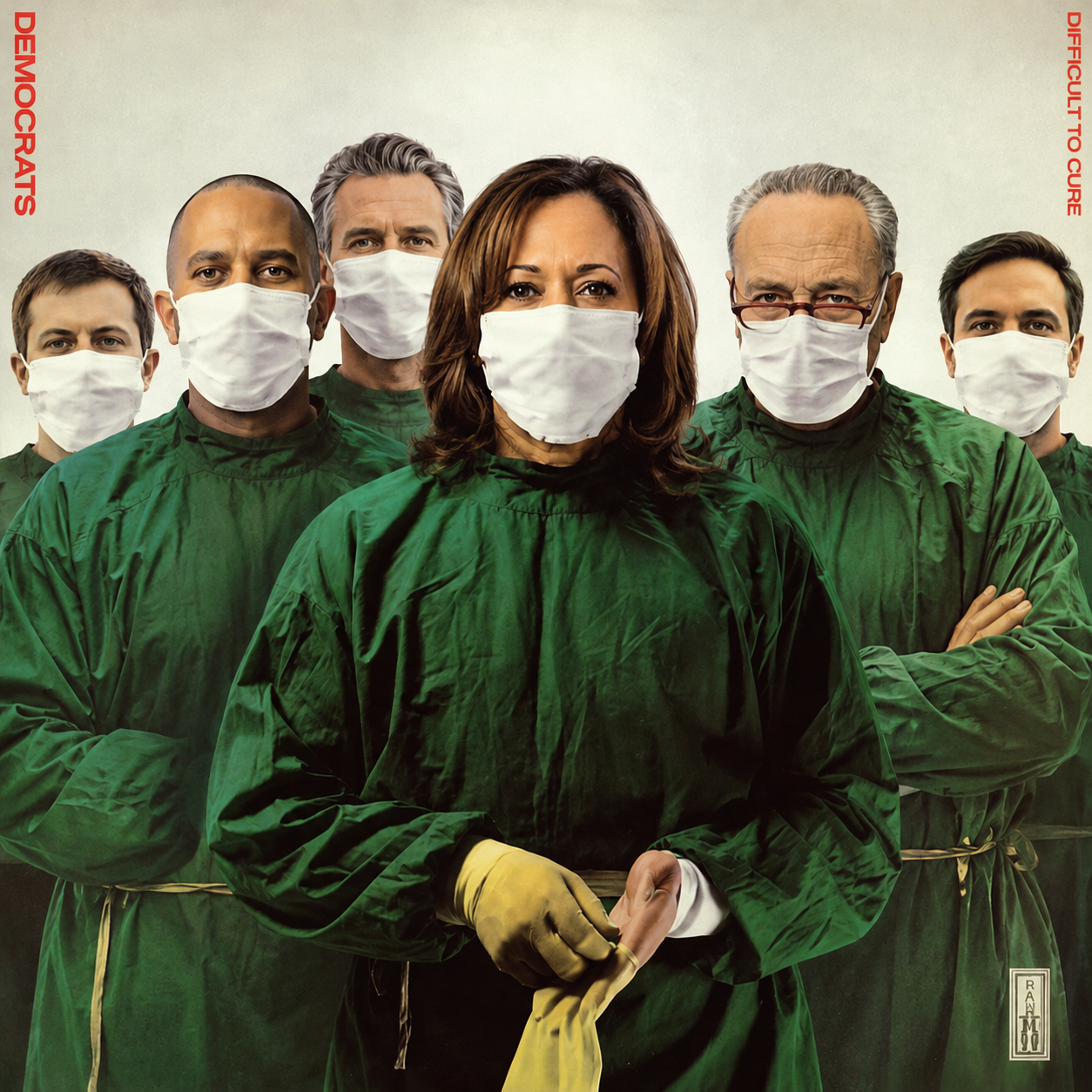
The Democrat Party — or at least someone inside it — unloaded a 192-page beast titled “Build to Win. Build to Last.” Marketed as a serious post-2024 election autopsy and a forward-looking 10-year strategic blueprint, the document was supposed to mark a turning point. A sober reckoning. A Ron Brown-style call to rebuild from the ground up and reconnect with the voters who had drifted away.

Instead, it has become something far more compelling and far more lethal: a MacGuffin. You know the term — that Hitchcock plot device everyone obsesses over, chases, fights about, and treats as the center of the universe, even though its real purpose is to expose the futility, contradictions, and self-deception of the characters pursuing it. In this case, the MacGuffin is the Democrats’ own words, now hanging over the party like a cursed totem just five months before the 2026 midterms. It drives internal drama, media hand-wringing, and Republican messaging gold, all while revealing why the party’s deeper problems remain stubbornly unresolved.

Kamala Harris reportedly demanded its release. DNC Chair Ken Martin, clearly reluctant, finally put the unedited version out with heavy disclaimers, annotations about unsourced claims, and multiple “PENDING” sections. What they got wasn’t catharsis. It was a mirror — and mirrors don’t flatter when you’ve spent years avoiding hard truths.

The Surface-Level Self-Awareness That Sounds Reasonable… Until You Look Closer

To be fair, the report does demonstrate moments of genuine insight. It acknowledges the long, slow erosion of Democrat strength since the Obama peak: disinvestment in state parties and local infrastructure, an over-reliance on coastal and urban strongholds, and a failure to maintain year-round organizing in Middle America and the South. It criticizes seasonal messaging — showing up only when elections loom — versus the Republican “always on” approach. It flags inefficient spending patterns where Democrats often out-raised and outspent opponents but achieved diminishing returns.

Most notably, it calls out the electoral drag of “identity politics” and “abstract issues.” It praises governors and candidates like North Carolina’s Josh Stein, who outperformed the national ticket by hammering kitchen-table concerns: the economy, disaster relief, housing affordability, and public safety. Similar nods go to figures who succeeded by speaking to working-class realities rather than cultural signaling. The document even floats a return to the “vital center,” economic populism, and rebuilding trust through tangible results instead of negative partisanship.

On ballot measures, it leans hard into the familiar defense: sure, candidates lose, but Democrat-backed policies on Medicaid expansion, minimum wage increases, family leave, and reproductive rights often pass even in challenging states. The implication is clear — the policies are popular; the messengers and the packaging are the problem.

This all sounds constructive. Almost humble. But that’s precisely what makes the MacGuffin so insidious. The report diagnoses the disease with clinical detachment, then watches as the patient refuses the cure.

The Disconnect: When Your Own Autopsy Becomes Opposition Research

Step back and look at the 2026 map the Democrats are actually fielding under this supposed new enlightenment.

Texas: James Talarico’s Cultural Signaling

In Texas, James Talarico cruised through a contentious primary against Jasmine Crockett. The progressive state representative has raised serious money and positioned himself as a fresh, faith-infused voice. But his brand remains deeply steeped in progressive cultural rhetoric — public reckonings with his “whiteness and masculinity,” framing “multiracial, multicultural democracy” in quasi-theological terms, and strong alignment with national left priorities on abortion, LGBTQ+ issues, and identity-focused politics. This is the exact profile the report warns alienates working-class men and rural voters outside deep-blue enclaves like Austin. Yet here he is, the party’s standard-bearer in a state that continues trending sharply away from Democrats.

Talarico’s primary became heavily racialized and identity-driven, and his past comments on gender, race, and “deconstructing” traditional faith have given Republicans ample material. Despite some economic populist talk, his voting record and rhetoric lean heavily into the abstract issues the Democrat autopsy said hurt them. In a state that rewards pragmatic conservatism, Talarico’s style is pure electoral risk — exactly the kind of candidate quality failure the report identified but the party keeps nominating.

Ohio: Sherrod Brown’s Bundled Record

Ohio offers Sherrod Brown’s comeback tour. The longtime senator lost his seat in 2024 but is now running hard for the other one. He’s smartly leaning into the economic populist lane the report celebrates — unions, trade skepticism, “dignity of work,” and attacking corporate greed. In interviews he plays folksy and evasive on hot-button cultural questions, steering every conversation back to egg prices and factory jobs.

But his actual Senate voting record tells a different story: consistent support for expansive abortion protections with no serious limits, LGBTQ+ legislation including the Equality Act, federal voting overhauls that override state rules, and repeated resistance to stricter immigration enforcement. Brown has one of the most progressive records on social and cultural issues among Midwest Democrats. This bundled package is precisely what voters in red-trending Ohio have rejected repeatedly. The report praised economic messaging, but Brown carries the full national Democrat brand that continues to cost the party in working-class America.

Georgia: Jon Ossoff’s Progressive Incumbency

Georgia’s Jon Ossoff enters as an incumbent carrying a solidly progressive scorecard. High ratings from left-leaning groups, votes for sweeping federal mandates on abortion, LGBTQ+ issues, voting rights, and climate policy that sit uneasily in a state Donald Trump carried again in 2024. While Ossoff touts Georgia-specific wins on infrastructure and small business, his overall voting pattern aligns more with California Democrats than with the “vital center” the report urges.

His support for federal preemption on social issues and resistance to border security measures gives Republicans a clear contrast in a purple-but-right-trending state. Ossoff’s incumbency gives him name recognition and fundraising advantages, but his record embodies the very federalization and cultural priorities the autopsy said were dragging the party down with working-class and suburban voters. The disconnect is glaring.

Maine: The Platner Gamble

Then there’s Maine, where the Democrat primary delivered one of the starkest examples of the party ignoring its own report. Graham Platner, an oyster farmer, harbormaster, and Marine Corps veteran with zero prior elected experience, steamrolled the field and forced establishment favorite Gov. Janet Mills to drop out. Backed by Bernie Sanders, Elizabeth Warren, and organized labor, Platner positioned himself as a fiery anti-establishment populist running a “working-class revolution.”

On paper, he looks like the kind of outsider the report claims could reconnect with voters. In reality, he carries a mountain of red flags that make him radioactive in a state like Maine, which values pragmatic, low-drama candidates like Susan Collins.

Platner’s past includes a trove of deleted Reddit posts under the username “P-Hustle” spanning 2013–2021. Among them: calling himself a “communist,” declaring “all cops are bastards,” labeling rural white Americans “racist and stupid,” using homophobic slurs, minimizing military sexual assault by telling women not to “get so fucked up” if they want to avoid it, and endorsing political violence with lines like “fight with signs, and fists, and guns if need be” while arguing an “armed working class” is needed for economic justice. He also made crude jokes about the Virgin Mary being a “skank” and other vulgar commentary.

Compounding that is a tattoo he got during his Marine service — a skull and crossbones design that closely resembles the Nazi SS Totenkopf symbol. Platner initially denied knowing its associations, later admitted it looked similar, and had it covered up. He’s also faced questions about a past DUI during a difficult post-service period involving heavy drinking and PTSD.

These aren’t ancient history — some posts were as recent as 2021. Republicans have already built entire websites cataloging the “red flags,” and Collins allies are hammering them relentlessly. Even some Maine Democrats and LGBTQ leaders have expressed private horror. Platner calls it youthful mistakes and “locker room talk” from a combat veteran, but in a purple state that prizes civility and Susan Collins-style moderation, these controversies are electoral poison — exactly the kind of abstract/identity-adjacent baggage and candidate quality issues the Democrat report warned against.

Yet Platner is the presumptive nominee, leading Collins in some recent polls. The party rolled the dice on ideological purity and anti-establishment energy over the “vital center” approach their own document praised.

Kentucky: Charles Booker’s Progressive Purity Test

Kentucky offers another textbook case. Charles Booker, the progressive former state representative who won the May 2026 Democrat Senate primary, embodies the exact contradictions the report identifies but the party refuses to fix. Booker previously ran in 2022 on a bold left-wing platform heavy on identity politics, criminal justice reform that included “defund the police” rhetoric, the Green New Deal, Medicare for All, and expansive abortion rights with minimal restrictions.

His record includes strong support for federalizing key issues — overriding state preferences on energy, policing, and healthcare — while showing little willingness to moderate for deeply conservative Kentucky voters in Appalachia and rural areas. Even in 2026, Booker continues leaning into cultural and systemic critiques rather than pure kitchen-table economic messaging, making him vulnerable to attacks as too far left for a state Trump won by nearly 30 points in 2024. His primary victory rewarded ideological purity over the pragmatic moderation the autopsy said was essential.

North Carolina: Roy Cooper’s Crime Vulnerability

Even Roy Cooper in North Carolina — currently holding a comfortable polling lead against Republican Michael Whatley — carries meaningful vulnerabilities that contradict the report’s advice. The former governor is a polished, experienced Democrat who projects moderation, but Republicans are pounding him on crime: pandemic-era inmate releases that included violent offenders, racial equity task forces that influenced justice policy, and lingering perceptions from urban crime spikes in Charlotte and Raleigh.

High-profile trage

How the Democrats’ 2024 Post-Mortem Became Their Own MacGuffin

The Democrat Party — or at least someone inside it — unloaded a 192-page beast titled “Build to Win. Build to Last.” Marketed as a serious post-2024 election autopsy and a forward-looking 10-year strategic blueprint, the document was supposed to mark a turning point. A sober reckoning. A Ron Brown-style call to rebuild from the ground up and reconnect with the voters who had drifted away.

Instead, it has become something far more compelling and far more lethal: a MacGuffin. You know the term — that Hitchcock plot device everyone obsesses over, chases, fights about, and treats as the center of the universe, even though its real purpose is to expose the futility, contradictions, and self-deception of the characters pursuing it. In this case, the MacGuffin is the Democrats’ own words, now hanging over the party like a cursed totem just five months before the 2026 midterms. It drives internal drama, media hand-wringing, and Republican messaging gold, all while revealing why the party’s deeper problems remain stubbornly unresolved.

Kamala Harris reportedly demanded its release. DNC Chair Ken Martin, clearly reluctant, finally put the unedited version out with heavy disclaimers, annotations about unsourced claims, and multiple “PENDING” sections. What they got wasn’t catharsis. It was a mirror — and mirrors don’t flatter when you’ve spent years avoiding hard truths.

The Surface-Level Self-Awareness That Sounds Reasonable… Until You Look Closer

To be fair, the report does demonstrate moments of genuine insight. It acknowledges the long, slow erosion of Democrat strength since the Obama peak: disinvestment in state parties and local infrastructure, an over-reliance on coastal and urban strongholds, and a failure to maintain year-round organizing in Middle America and the South. It criticizes seasonal messaging — showing up only when elections loom — versus the Republican “always on” approach. It flags inefficient spending patterns where Democrats often out-raised and outspent opponents but achieved diminishing returns.

Most notably, it calls out the electoral drag of “identity politics” and “abstract issues.” It praises governors and candidates like North Carolina’s Josh Stein, who outperformed the national ticket by hammering kitchen-table concerns: the economy, disaster relief, housing affordability, and public safety. Similar nods go to figures who succeeded by speaking to working-class realities rather than cultural signaling. The document even floats a return to the “vital center,” economic populism, and rebuilding trust through tangible results instead of negative partisanship.

On ballot measures, it leans hard into the familiar defense: sure, candidates lose, but Democrat-backed policies on Medicaid expansion, minimum wage increases, family leave, and reproductive rights often pass even in challenging states. The implication is clear — the policies are popular; the messengers and the packaging are the problem.

This all sounds constructive. Almost humble. But that’s precisely what makes the MacGuffin so insidious. The report diagnoses the disease with clinical detachment, then watches as the patient refuses the cure.

The Disconnect: When Your Own Autopsy Becomes Opposition Research

Step back and look at the 2026 map the Democrats are actually fielding under this supposed new enlightenment.

In Texas, James Talarico cruised through a contentious primary against Jasmine Crockett. He’s raised serious money and positioned himself as a fresh face, but his brand remains steeped in progressive cultural rhetoric — public reckonings with “whiteness and masculinity,” framing democracy in quasi-theological terms, and strong alignment with national left priorities on social issues. This is the exact profile the report warns alienates working-class men and rural voters. Yet here he is, the party’s standard-bearer in a state that continues trending away from Democrats.

Ohio offers Sherrod Brown’s comeback tour. Brown lost his seat in 2024 but is now running hard for the other one. He’s smartly leaning into the economic populist lane the report celebrates — unions, trade skepticism, “dignity of work.” In interviews, he plays folksy and evasive on hot-button cultural questions, steering every conversation back to egg prices and factory jobs. But his Senate voting record tells a different story: consistent support for expansive abortion protections, LGBTQ+ legislation, federal voting overhauls, and resistance to stricter immigration enforcement. It’s the classic bundled package voters keep rejecting in red-trending states.

Georgia’s Jon Ossoff enters as an incumbent with a solidly progressive scorecard — high ratings from left-leaning groups, votes for sweeping federal mandates on social and cultural issues that sit uneasily in a state Donald Trump carried again in 2024.

Maine: The Platner Gamble

Then there’s Maine, where the Democrat primary delivered one of the starkest examples of the party ignoring its own report. Graham Platner, an oyster farmer, harbormaster, and Marine Corps veteran with zero prior elected experience, steamrolled the field and forced establishment favorite Gov. Janet Mills to drop out. Backed by Bernie Sanders, Elizabeth Warren, and organized labor, Platner positioned himself as a fiery anti-establishment populist running a “working-class revolution.”

On paper, he looks like the kind of outsider the report claims could reconnect with voters. In reality, he carries a mountain of red flags that make him radioactive in a state like Maine, which values pragmatic, low-drama candidates like Susan Collins.

Platner’s past includes a trove of deleted Reddit posts under the username “P-Hustle” spanning 2013–2021. Among them: calling himself a “communist,” declaring “all cops are bastards,” labeling rural white Americans “racist and stupid,” using homophobic slurs, minimizing military sexual assault by telling women not to “get so fucked up” if they want to avoid it, and endorsing political violence with lines like “fight with signs, and fists, and guns if need be” while arguing an “armed working class” is needed for economic justice. He also made crude jokes about the Virgin Mary being a “skank” and other vulgar commentary.

Compounding that is a tattoo he got during his Marine service — a skull and crossbones design that closely resembles the Nazi SS Totenkopf symbol. Platner initially denied knowing its associations, later admitted it looked similar, and had it covered up. He’s also faced questions about a past DUI during a difficult post-service period involving heavy drinking and PTSD.

These aren’t ancient history — some posts were as recent as 2021. Republicans have already built entire websites cataloging the “red flags,” and Collins allies are hammering them relentlessly. Even some Maine Democrats and LGBTQ leaders have expressed private horror. Platner calls it youthful mistakes and “locker room talk” from a combat veteran, but in a purple state that prizes civility and Susan Collins-style moderation, these controversies are electoral poison — exactly the kind of abstract/identity-adjacent baggage and candidate quality issues the Democrat report warned against.

Yet Platner is the presumptive nominee, leading Collins in some recent polls. The party rolled the dice on ideological purity and anti-establishment energy over the “vital center” approach their own document praised.

Kentucky: Charles Booker’s Progressive Purity Test

Kentucky offers another textbook case. Charles Booker, the progressive former state representative who won the May 2026 Democratic Senate primary, embodies the exact contradictions the report identifies but the party refuses to fix. Booker previously ran in 2022 on a bold left-wing platform heavy on identity politics, criminal justice reform that included “defund the police” rhetoric, the Green New Deal, Medicare for All, and expansive abortion rights with minimal restrictions.

His record includes strong support for federalizing key issues — overriding state preferences on energy, policing, and healthcare — while showing little willingness to moderate for deeply conservative Kentucky voters in Appalachia and rural areas. Even in 2026, Booker continues leaning into cultural and systemic critiques rather than pure kitchen-table economic messaging, making him vulnerable to attacks as too far left for a state Trump won by nearly 30 points in 2024.

The pattern is unmistakable: despite the report’s pleas for localized, vital-center candidates who prioritize economy and safety over abstract signaling, Democrat primaries and incumbent realities keep delivering the opposite.

Even Roy Cooper in North Carolina — currently holding a comfortable polling lead — carries meaningful vulnerabilities. Republicans are already pounding him on crime: pandemic-era inmate releases, racial equity task forces in justice policy, and lingering perceptions from urban spikes. High-profile tragedies, like the murder of Iryna Zarutska, involving repeat offenders have given the attacks real teeth. Statistical improvements in crime data later on don’t erase the early impressions or the policy choices behind them.

House Exposure and the Laken Riley Liability

The contradictions sharpen further in House races. Large majorities of House Democrats voted against the Laken Riley Act — straightforward legislation requiring federal detention for illegal aliens charged with theft, assault on law enforcement, burglary, and similar crimes. Named for the Georgia nursing student murdered by a repeat offender who never should have been in the country, the bill still saw only about 46-48 Democrats vote yes while the rest lined up in opposition. Similar patterns emerged on related enforcement measures.

Republicans now possess a devastating, repeatable contrast: “Even after Laken Riley, even after clear public demand for basic security, your member of Congress voted to keep the revolving door spinning.” In suburban and rural swing districts where working-class voters care deeply about crime and border security, this is pure political dynamite. It perfectly illustrates the report’s warning about failing to connect on kitchen-table safety concerns — while doing nothing to change the behavior.

The Federalization Trap, the Popularity Myth, and 72% Disapproval

The report’s biggest sleight-of-hand — claiming policies are broadly popular because isolated ballot measures succeed — crumbles under real-world scrutiny. Yes, voters in specific states will back targeted ideas on wages, healthcare access, or abortion rights when presented cleanly. But there is no national consensus for the Democrat habit of federalizing these issues and imposing uniform standards from Washington.

Americans remain deeply divided by region, culture, and values. Many prefer letting states decide on abortion, education, energy, and criminal justice rather than top-down mandates. Red and purple states especially resist having California or New York priorities forced upon them. This federalist instinct, combined with frustration over implementation failures on inflation, borders, and urban disorder, explains the brutal 72% disapproval rating for congressional Democrats in recent Quinnipiac polling. Voters aren’t rejecting individual policies in a vacuum. They’re rejecting the full progressive national brand, the condescension, and the disconnect between elite rhetoric and everyday life.

The 2026 Shadow: Economic Perception Will Decide If the Curse Bites

This is where the MacGuffin becomes truly dangerous for Democrats heading into November.

Voter perception of the economy remains the decisive variable. Not abstract GDP numbers or unemployment rates, but how people feel when they fill up their tank, buy groceries, or look at their rent. If those perceptions meaningfully improve over the next five months — if costs stabilize, wages feel real, and the post-pandemic hangover finally lifts — and if no major Black Swan event (recession, foreign crisis, scandal) intervenes, Republicans have a credible path to holding both the House and Senate.

In the House, it would mean vulnerable incumbents like Mike Lawler in New York’s 17th, Brian Fitzpatrick in Pennsylvania’s 1st, and Jen Kiggans in Virginia’s 2nd survive their tough races. It would turn opportunities like former Governor Paul LePage flipping Maine’s 2nd into realistic gains. The narrow Republican majority could endure. In the Senate, the map already tilts their way; better fundamentals would protect defensive positions and limit Democrat breakthroughs in Ohio, Georgia, and elsewhere.

The report, released under Harris’s insistence, gives Republicans half a year to weaponize its own admissions. Every ad, every debate, every mail piece can quote the Democrats’ own document back at them: “You admit identity politics and abstract issues hurt you. You admit you need to focus on the economy and working families. Yet look at who you keep nominating and what your record shows.”

The Enduring Curse of the Totem

This is the genius and the tragedy of the MacGuffin. The party fought over whether to release it. Harris wanted transparency and perhaps a shield against internal blame. Martin tried to contain the damage with disclaimers. Conservatives immediately turned it into opposition research. Now it exists as permanent proof of self-awareness without meaningful self-correction.

The incentives inside the Democrat coalition haven’t shifted. The activist base, major donors, media allies, and primary voters still reward the cultural and ideological approaches the report itself identified as electoral liabilities. There is no real enforcement mechanism to enforce the “vital center” pivot. So the totem simply hangs there — a constant, whispering reminder of the gap between diagnosis and treatment.

In politics, sometimes the most devastating document isn’t the one your opponents write about you. It’s the one you write about yourself — especially when it becomes Exhibit A for why the same mistakes keep happening.

Democrats wanted a post-mortem to bury the past. What they released was a mirror. And that mirror is going to be watching them all the way through Election Day 2026.

Like this post? Become a Citizen Producer!

How the Democrats’ 2024 Post-Mortem Became Their Own MacGuffin

The Democrat Party — or at least someone inside it — unloaded a 192-page beast titled “Build to Win. Build to Last.” Marketed as a serious post-2024 election autopsy and a forward-looking 10-year strategic blueprint, the document was supposed to mark a turning point. A sober reckoning. A Ron Brown-style call to rebuild from the ground up and reconnect with the voters who had drifted away.

Instead, it has become something far more compelling and far more lethal: a MacGuffin. You know the term — that Hitchcock plot device everyone obsesses over, chases, fights about, and treats as the center of the universe, even though its real purpose is to expose the futility, contradictions, and self-deception of the characters pursuing it. In this case, the MacGuffin is the Democrats’ own words, now hanging over the party like a cursed totem just five months before the 2026 midterms. It drives internal drama, media hand-wringing, and Republican messaging gold, all while revealing why the party’s deeper problems remain stubbornly unresolved.

Kamala Harris reportedly demanded its release. DNC Chair Ken Martin, clearly reluctant, finally put the unedited version out with heavy disclaimers, annotations about unsourced claims, and multiple “PENDING” sections. What they got wasn’t catharsis. It was a mirror — and mirrors don’t flatter when you’ve spent years avoiding hard truths.

The Surface-Level Self-Awareness That Sounds Reasonable… Until You Look Closer

To be fair, the report does demonstrate moments of genuine insight. It acknowledges the long, slow erosion of Democrat strength since the Obama peak: disinvestment in state parties and local infrastructure, an over-reliance on coastal and urban strongholds, and a failure to maintain year-round organizing in Middle America and the South. It criticizes seasonal messaging — showing up only when elections loom — versus the Republican “always on” approach. It flags inefficient spending patterns where Democrats often out-raised and outspent opponents but achieved diminishing returns.

Most notably, it calls out the electoral drag of “identity politics” and “abstract issues.” It praises governors and candidates like North Carolina’s Josh Stein, who outperformed the national ticket by hammering kitchen-table concerns: the economy, disaster relief, housing affordability, and public safety. Similar nods go to figures who succeeded by speaking to working-class realities rather than cultural signaling. The document even floats a return to the “vital center,” economic populism, and rebuilding trust through tangible results instead of negative partisanship.

On ballot measures, it leans hard into the familiar defense: sure, candidates lose, but Democrat-backed policies on Medicaid expansion, minimum wage increases, family leave, and reproductive rights often pass even in challenging states. The implication is clear — the policies are popular; the messengers and the packaging are the problem.

This all sounds constructive. Almost humble. But that’s precisely what makes the MacGuffin so insidious. The report diagnoses the disease with clinical detachment, then watches as the patient refuses the cure.

The Disconnect: When Your Own Autopsy Becomes Opposition Research

Step back and look at the 2026 map the Democrats are actually fielding under this supposed new enlightenment.

In Texas, James Talarico cruised through a contentious primary against Jasmine Crockett. He’s raised serious money and positioned himself as a fresh face, but his brand remains steeped in progressive cultural rhetoric — public reckonings with “whiteness and masculinity,” framing democracy in quasi-theological terms, and strong alignment with national left priorities on social issues. This is the exact profile the report warns alienates working-class men and rural voters. Yet here he is, the party’s standard-bearer in a state that continues trending away from Democrats.

Ohio offers Sherrod Brown’s comeback tour. Brown lost his seat in 2024 but is now running hard for the other one. He’s smartly leaning into the economic populist lane the report celebrates — unions, trade skepticism, “dignity of work.” In interviews, he plays folksy and evasive on hot-button cultural questions, steering every conversation back to egg prices and factory jobs. But his Senate voting record tells a different story: consistent support for expansive abortion protections, LGBTQ+ legislation, federal voting overhauls, and resistance to stricter immigration enforcement. It’s the classic bundled package voters keep rejecting in red-trending states.

Georgia’s Jon Ossoff enters as an incumbent with a solidly progressive scorecard — high ratings from left-leaning groups, votes for sweeping federal mandates on social and cultural issues that sit uneasily in a state Donald Trump carried again in 2024.

Maine: The Platner Gamble

Then there’s Maine, where the Democrat primary delivered one of the starkest examples of the party ignoring its own report. Graham Platner, an oyster farmer, harbormaster, and Marine Corps veteran with zero prior elected experience, steamrolled the field and forced establishment favorite Gov. Janet Mills to drop out. Backed by Bernie Sanders, Elizabeth Warren, and organized labor, Platner positioned himself as a fiery anti-establishment populist running a “working-class revolution.”

On paper, he looks like the kind of outsider the report claims could reconnect with voters. In reality, he carries a mountain of red flags that make him radioactive in a state like Maine, which values pragmatic, low-drama candidates like Susan Collins.

Platner’s past includes a trove of deleted Reddit posts under the username “P-Hustle” spanning 2013–2021. Among them: calling himself a “communist,” declaring “all cops are bastards,” labeling rural white Americans “racist and stupid,” using homophobic slurs, minimizing military sexual assault by telling women not to “get so fucked up” if they want to avoid it, and endorsing political violence with lines like “fight with signs, and fists, and guns if need be” while arguing an “armed working class” is needed for economic justice. He also made crude jokes about the Virgin Mary being a “skank” and other vulgar commentary.

Compounding that is a tattoo he got during his Marine service — a skull and crossbones design that closely resembles the Nazi SS Totenkopf symbol. Platner initially denied knowing its associations, later admitted it looked similar, and had it covered up. He’s also faced questions about a past DUI during a difficult post-service period involving heavy drinking and PTSD.

These aren’t ancient history — some posts were as recent as 2021. Republicans have already built entire websites cataloging the “red flags,” and Collins allies are hammering them relentlessly. Even some Maine Democrats and LGBTQ leaders have expressed private horror. Platner calls it youthful mistakes and “locker room talk” from a combat veteran, but in a purple state that prizes civility and Susan Collins-style moderation, these controversies are electoral poison — exactly the kind of abstract/identity-adjacent baggage and candidate quality issues the Democrat report warned against.

Yet Platner is the presumptive nominee, leading Collins in some recent polls. The party rolled the dice on ideological purity and anti-establishment energy over the “vital center” approach their own document praised.

Kentucky: Charles Booker’s Progressive Purity Test

Kentucky offers another textbook case. Charles Booker, the progressive former state representative who won the May 2026 Democratic Senate primary, embodies the exact contradictions the report identifies but the party refuses to fix. Booker previously ran in 2022 on a bold left-wing platform heavy on identity politics, criminal justice reform that included “defund the police” rhetoric, the Green New Deal, Medicare for All, and expansive abortion rights with minimal restrictions.

His record includes strong support for federalizing key issues — overriding state preferences on energy, policing, and healthcare — while showing little willingness to moderate for deeply conservative Kentucky voters in Appalachia and rural areas. Even in 2026, Booker continues leaning into cultural and systemic critiques rather than pure kitchen-table economic messaging, making him vulnerable to attacks as too far left for a state Trump won by nearly 30 points in 2024.

The pattern is unmistakable: despite the report’s pleas for localized, vital-center candidates who prioritize economy and safety over abstract signaling, Democrat primaries and incumbent realities keep delivering the opposite.

Even Roy Cooper in North Carolina — currently holding a comfortable polling lead — carries meaningful vulnerabilities. Republicans are already pounding him on crime: pandemic-era inmate releases, racial equity task forces in justice policy, and lingering perceptions from urban spikes. High-profile tragedies involving repeat offenders have given the attacks real teeth. Statistical improvements in crime data later on don’t erase the early impressions or the policy choices behind them.

House Exposure and the Laken Riley Liability

The contradictions sharpen further in House races. Large majorities of House Democrats voted against the Laken Riley Act — straightforward legislation requiring federal detention for illegal aliens charged with theft, assault on law enforcement, burglary, and similar crimes. Named for the Georgia nursing student murdered by a repeat offender who never should have been in the country, the bill still saw only about 46-48 Democrats vote yes while the rest lined up in opposition. Similar patterns emerged on related enforcement measures.

Republicans now possess a devastating, repeatable contrast: “Even after Laken Riley, even after clear public demand for basic security, your member of Congress voted to keep the revolving door spinning.” In suburban and rural swing districts where working-class voters care deeply about crime and border security, this is pure political dynamite. It perfectly illustrates the report’s warning about failing to connect on kitchen-table safety concerns — while doing nothing to change the behavior.

The Federalization Trap, the Popularity Myth, and 72% Disapproval

The report’s biggest sleight-of-hand — claiming policies are broadly popular because isolated ballot measures succeed — crumbles under real-world scrutiny. Yes, voters in specific states will back targeted ideas on wages, healthcare access, or abortion rights when presented cleanly. But there is no national consensus for the Democrat habit of federalizing these issues and imposing uniform standards from Washington.

Americans remain deeply divided by region, culture, and values. Many prefer letting states decide on abortion, education, energy, and criminal justice rather than top-down mandates. Red and purple states especially resist having California or New York priorities forced upon them. This federalist instinct, combined with frustration over implementation failures on inflation, borders, and urban disorder, explains the brutal 72% disapproval rating for congressional Democrats in recent Quinnipiac polling. Voters aren’t rejecting individual policies in a vacuum. They’re rejecting the full progressive national brand, the condescension, and the disconnect between elite rhetoric and everyday life.

The 2026 Shadow: Economic Perception Will Decide If the Curse Bites

This is where the MacGuffin becomes truly dangerous for Democrats heading into November.

Voter perception of the economy remains the decisive variable. Not abstract GDP numbers or unemployment rates, but how people feel when they fill up their tank, buy groceries, or look at their rent. If those perceptions meaningfully improve over the next five months — if costs stabilize, wages feel real, and the post-pandemic hangover finally lifts — and if no major Black Swan event (recession, foreign crisis, scandal) intervenes, Republicans have a credible path to holding both the House and Senate.

In the House, it would mean vulnerable incumbents like Mike Lawler in New York’s 17th, Brian Fitzpatrick in Pennsylvania’s 1st, and Jen Kiggans in Virginia’s 2nd survive their tough races. It would turn opportunities like former Governor Paul LePage flipping Maine’s 2nd into realistic gains. The narrow Republican majority could endure. In the Senate, the map already tilts their way; better fundamentals would protect defensive positions and limit Democrat breakthroughs in Ohio, Georgia, and elsewhere.

The report, released in May under Harris’s insistence, gives Republicans half a year to weaponize its own admissions. Every ad, every debate, every mail piece can quote the Democrats’ own document back at them: “You admit identity politics and abstract issues hurt you. You admit you need to focus on the economy and working families. Yet look at who you keep nominating and what your record shows.”

The Enduring Curse of the Totem

This is the genius and the tragedy of the MacGuffin. The party fought over whether to release it. Harris wanted transparency and perhaps a shield against internal blame. Martin tried to contain the damage with disclaimers. Conservatives immediately turned it into opposition research. Now it exists as permanent proof of self-awareness without meaningful self-correction.

The incentives inside the Democrat coalition haven’t shifted. The activist base, major donors, media allies, and primary voters still reward the cultural and ideological approaches the report itself identified as electoral liabilities. There is no real enforcement mechanism to enforce the “vital center” pivot. So the totem simply hangs there — a constant, whispering reminder of the gap between diagnosis and treatment.

In politics, sometimes the most devastating document isn’t the one your opponents write about you. It’s the one you write about yourself — especially when it becomes Exhibit A for why the same mistakes keep happening.

Democrats wanted a post-mortem to bury the past. What they released was a mirror. And that mirror is going to be watching them all the way through Election Day 2026.

Like this post? Become a Citizen Producer!

dies involving repeat offenders have given the attacks real teeth. While overall crime numbers later improved, the early policy choices and “soft-on-crime” narrative stick with working-class and suburban voters. Cooper’s record on criminal justice reform aligns him with national Democrat priorities the report implicitly warned against. In a purple state, this baggage risks turning a polling advantage into a late collapse — another example of the party failing to deliver the kitchen-table safety focus it claims to want.

House Exposure and the Laken Riley Liability

The contradictions sharpen further in House races. Large majorities of House Democrats voted against the Laken Riley Act — straightforward legislation requiring federal detention for illegal aliens charged with theft, assault on law enforcement, burglary, and similar crimes. Named for the Georgia nursing student murdered by a repeat offender who never should have been in the country, the bill still saw only about 46-48 Democrats vote yes while the rest lined up in opposition. Similar patterns emerged on related enforcement measures.

Republicans now possess a devastating, repeatable contrast: “Even after Laken Riley, even after clear public demand for basic security, your member of Congress voted to keep the revolving door spinning.” In suburban and rural swing districts where working-class voters care deeply about crime and border security, this is pure political dynamite. It perfectly illustrates the report’s warning about failing to connect on kitchen-table safety concerns — while doing nothing to change the behavior.

The Federalization Trap, the Popularity Myth, and 72% Disapproval

The report’s biggest sleight-of-hand — claiming policies are broadly popular because isolated ballot measures succeed — crumbles under real-world scrutiny. Yes, voters in specific states will back targeted ideas on wages, healthcare access, or abortion rights when presented cleanly. But there is no national consensus for the Democrat habit of federalizing these issues and imposing uniform standards from Washington.

Americans remain deeply divided by region, culture, and values. Many prefer letting states decide on abortion, education, energy, and criminal justice rather than top-down mandates. Red and purple states especially resist having California or New York priorities forced upon them. This federalist instinct, combined with frustration over implementation failures on inflation, borders, and urban disorder, explains the brutal 72% disapproval rating for congressional Democrats in recent Quinnipiac polling. Voters aren’t rejecting individual policies in a vacuum. They’re rejecting the full progressive national brand, the condescension, and the disconnect between elite rhetoric and everyday life.

The 2026 Shadow: Economic Perception Will Decide If the Curse Bites

This is where the MacGuffin becomes truly dangerous for Democrats heading into November.

Voter perception of the economy remains the decisive variable. Not abstract GDP numbers or unemployment rates, but how people feel when they fill up their tank, buy groceries, or look at their rent. If those perceptions meaningfully improve over the next five months — if costs stabilize, wages feel real, and the post-pandemic hangover finally lifts — and if no major Black Swan event (recession, foreign crisis, scandal) intervenes, Republicans have a credible path to holding both the House and Senate.

In the House, it would mean vulnerable incumbents like Mike Lawler in New York’s 17th, Brian Fitzpatrick in Pennsylvania’s 1st, and Jen Kiggans in Virginia’s 2nd survive their tough races. It would turn opportunities like former Governor Paul LePage flipping Maine’s 2nd into realistic gains. The narrow Republican majority could endure. In the Senate, the map already tilts their way; better fundamentals would protect defensive positions and limit Democrat breakthroughs in Ohio, Georgia, and elsewhere.

The report, released in May under Harris’s insistence, gives Republicans half a year to weaponize its own admissions. Every ad, every debate, every mail piece can quote the Democrats’ own document back at them: “You admit identity politics and abstract issues hurt you. You admit you need to focus on the economy and working families. Yet look at who you keep nominating and what your record shows.”

The Enduring Curse of the Totem

This is the genius and the tragedy of the MacGuffin. The party fought over whether to release it. Harris wanted transparency and perhaps a shield against internal blame. Martin tried to contain the damage with disclaimers. Conservatives immediately turned it into opposition research. Now it exists as permanent proof of self-awareness without meaningful self-correction.

The incentives inside the Democrat coalition haven’t shifted. The activist base, major donors, media allies, and primary voters still reward the cultural and ideological approaches the report itself identified as electoral liabilities. There is no real enforcement mechanism to enforce the “vital center” pivot. So the totem simply hangs there — a constant, whispering reminder of the gap between diagnosis and treatment.

In politics, sometimes the most devastating document isn’t the one your opponents write about you. It’s the one you write about yourself — especially when it becomes Exhibit A for why the same mistakes keep happening.

Democrats wanted a post-mortem to bury the past. What they released was a mirror. And that mirror is going to be watching them all the way through Election Day 2026.

Like this post? Become a Citizen Producer!

James K. Bishop

James K. Bishop is a conservative writer and raconteur hailing from Texas, known for his incisive and often provocative takes on political and cultural issues. With a staunch commitment to originalist constitutional principles, he emphasizes limited government, individual liberties, and traditional American values. Active on X under the handle @James_K_Bishop, he frequently engages his audience with sharp critiques of progressive policies, media narratives, and overreaches by the federal government. His style is direct, often laced with humor and wit, which resonates strongly with his conservative followers.