
Implications of a Supreme Court Sweep Victory for Trump in Reviving the Pre-Watergate Presidency
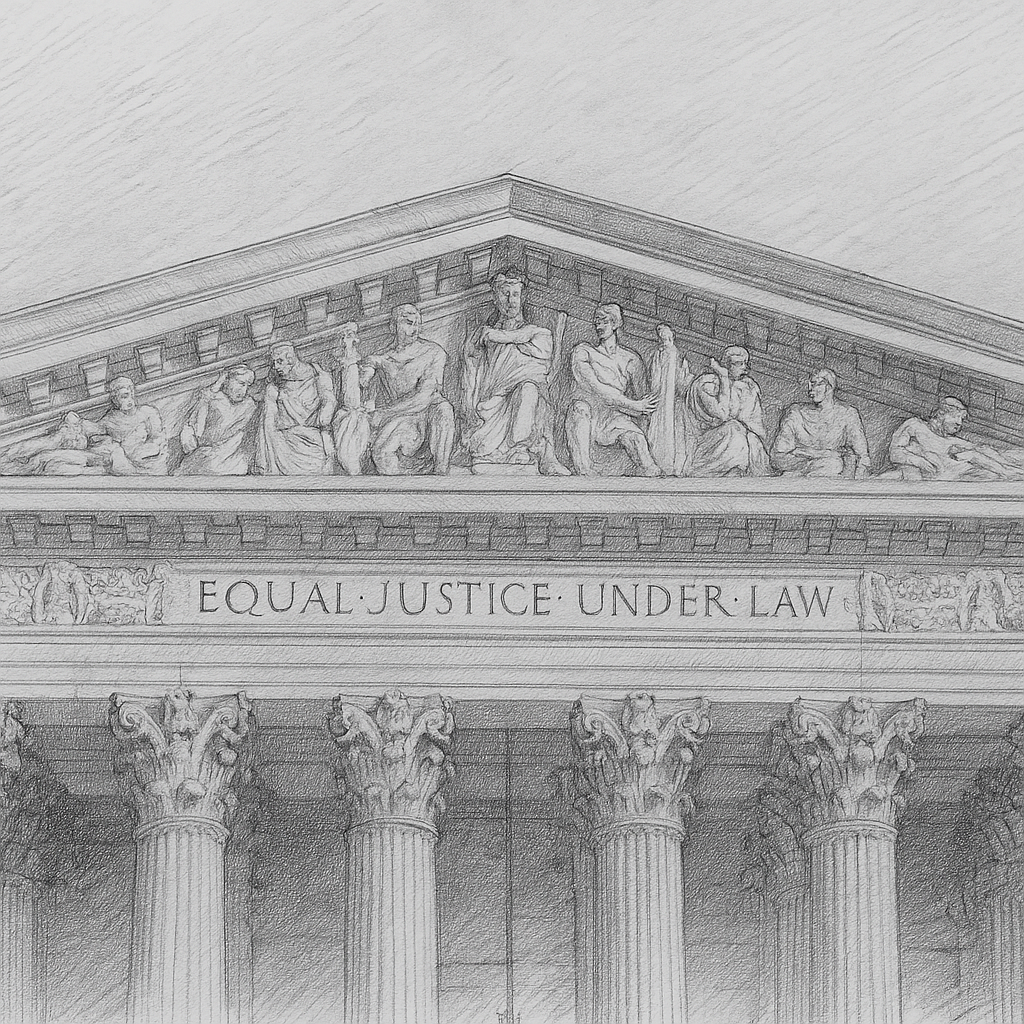
As the Supreme Court’s 2025-26 term commences on Monday, October 6, 2025-less than two weeks from today-the timing could not be more urgent or consequential. With President Trump’s aggressive executive actions already sparking a flurry of lower-court battles over firings, tariffs, and agency overhauls, the Court’s docket arrives amid a high-stakes constitutional showdown. This term’s focus on presidential authority promises to define the boundaries of executive power in real time, directly influencing ongoing policy battles and the administration’s “drain the swamp” agenda. Rooted in Alexander Hamilton’s timeless vision, a full victory sweep for Trump would not only resolve these clashes but restore the presidency to its pre-Watergate dynamism.
Alexander Hamilton’s Federalist No. 70, penned in 1788, champions a robust, unitary executive as essential for effective republican governance. Hamilton delineates the “ingredients” of executive energy-unity, duration, adequate support, and competent powers-arguing that a single president, unencumbered by fragmented authority, ensures decisiveness, accountability to the electorate, and the capacity to act swiftly in the national interest. This vision posits the presidency as the dynamic core of the Executive Branch, where the president wields undivided control over subordinates to execute laws faithfully and respond to crises without bureaucratic dilution. However, the disgraced end of Richard Nixon’s administration in 1974, amid the Watergate scandal, and the subsequent feckless Ford administration (1974-1977), marked a pivotal deviation from this Hamiltonian ideal. Stung by Nixon’s abuses-such as unauthorized wiretaps, executive privilege overreach, and attempts to politicize agencies-Congress enacted a suite of reforms that curtailed presidential authority, including the War Powers Resolution (1973), the Budget and Impoundment Control Act (1974), the Ethics in Government Act (1978) establishing independent counsels, and strengthened protections for independent agencies and civil servants. These measures, intended to prevent an “imperial presidency,” fragmented executive unity by enhancing congressional oversight, limiting budgetary discretion, and insulating bureaucrats from presidential control-directly contradicting Hamilton’s emphasis on a vigorous, accountable executive. Ford’s tenure, as the first unelected president, further exemplified this weakened state, with his pardon of Nixon and congressional rebuffs underscoring a presidency hamstrung by post-scandal reforms.
A full Supreme Court victory sweep for President Trump in the 2025-26 term cases-Slaughter v. Trump, Cook v. Trump, Dellinger v. Trump, Harris v. Trump, and Learning Resources v. Trump-would represent a seismic reversal of this post-Watergate erosion. Rooted in Hamiltonian principles, such rulings would dismantle statutory barriers to executive control, restoring the presidency to its pre-Nixon vigor: a unitary office capable of decisive action, unburdened by congressional encroachments or judicial overreach, and directly accountable to the people rather than an insulated bureaucracy. Below, I analyze the implications for each case through Hamilton’s lens, highlighting how victories would undo the post-Watergate “taming” of presidential power.
Slaughter v. Trump: Overruling Humphrey’s Executor and Revitalizing Executive Unity
A Trump victory here, overruling the 1935 precedent of Humphrey’s Executor v. United States and striking down for-cause removal protections for FTC commissioners while limiting judicial injunctions, would affirm at-will presidential authority over multi-member independent agencies. From Hamilton’s perspective, this restores executive “unity”-the cornerstone of Federalist No. 70-by eliminating the fragmentation caused by insulated commissions, which post-Watergate reforms amplified through expanded agency independence (e.g., via the Ethics in Government Act). Pre-Nixon presidents, like FDR, wielded broader control over regulatory bodies without such statutory shields, enabling coherent policy execution; Nixon’s fall prompted Congress to entrench these protections to prevent “abuses,” diluting the president’s ability to direct the Executive Branch. Implications include immediate firings across agencies like the SEC and FCC, allowing Trump to realign them with his deregulation agenda and dismantle the “administrative state.” Long-term, it would enhance Hamiltonian “energy” by preventing bureaucratic obstruction, but risk policy volatility; societally, it restores democratic accountability, as voters judge a unified president’s actions, undoing Ford-era congressional dominance that weakened executive decisiveness.
Cook v. Trump: Politicizing the Federal Reserve and Reclaiming Economic Authority
Upholding Trump’s removal of Federal Reserve Board members for policy disputes would erode the Fed’s for-cause protections, a post-Watergate legacy of insulating economic policy from executive interference to avoid Nixon-like manipulations (e.g., pressuring the Fed for electoral gains). Hamilton’s vision of “competent powers” supports this, as a unitary executive must control key instruments like monetary policy to ensure national prosperity without divided loyalties. Pre-Watergate, presidents like Kennedy and Johnson influenced the Fed more directly; reforms post-Nixon, including enhanced congressional oversight, formalized its independence to curb “imperial” overreach. A sweep victory would allow Trump to steer interest rates toward growth-oriented policies, potentially injecting political appointees and synchronizing Fed actions with executive priorities. Short-term: Market volatility but faster economic stimulus; long-term: Risk of inflation from politicization, yet Hamiltonian accountability as voters hold the president responsible for outcomes. This restores the pre-Ford presidency’s flexibility, countering the “decline of constitutional restraint” that fragmented economic authority.
Dellinger v. Trump: Extending At-Will Removal to Single-Director Agencies
A ruling affirming presidential removal power over agencies like the Office of the Comptroller of the Currency (OCC) would build on Seila Law (2020), curtailing judicial reinstatement and post-Watergate enhancements to agency autonomy (e.g., through budgetary controls that limited Nixon’s impoundments). Hamilton’s emphasis on “adequate support” for the executive-through loyal subordinates-would be vindicated, as single-director agencies embody the unity he advocated, free from statutory barriers. Pre-Nixon, executives like Truman exercised broader financial regulatory control; Ford’s administration, weakened by congressional budget reforms, exemplified the post-scandal constraints that diffused authority. Implications: Swift deregulation of banking, extending to bodies like the FDIC, fostering innovation but heightening crisis risks. Long-term, it revives Hamiltonian energy by preventing judicial interference, restoring the presidency’s pre-Watergate role as the unchallenged head of executive functions, though critics warn of unchecked favoritism.
Harris v. Trump: Reviving Schedule F and Dismantling Civil Service Protections
Upholding the reclassification of civil servants under Schedule F would erode merit-based protections entrenched post-Watergate to shield bureaucrats from Nixon’s politicization attempts (e.g., firing whistleblowers via the “Malek Manual”). Hamilton’s “duration” and “support” principles demand a responsive bureaucracy under presidential command, not an insulated “deep state” that post-reform laws created to ensure neutrality. Pre-Nixon, presidents like Eisenhower managed civil servants with greater flexibility; Ford’s feckless era saw further entrenchment of these protections amid distrust of executive power. Victory implications: Mass purges of up to 50,000 positions, enabling rapid implementation of Trump’s efficiency reforms like DOGE. Short-term: Loss of expertise but streamlined governance; long-term: Heightened corruption risks, yet restored Hamiltonian accountability as the president bears full responsibility for bureaucratic performance. This directly counters the post-Watergate “politics of distrust,” reviving a presidency capable of loyal execution.
Learning Resources v. Trump: Broadening Emergency Powers Under IEEPA
Affirming expansive presidential authority under the International Emergency Economic Powers Act (IEEPA) for tariffs would validate Trump’s 60% duties on China, overriding post-Watergate limits on foreign affairs discretion (e.g., War Powers Resolution curbing Nixon’s Vietnam escalations). Hamilton’s “energy” in foreign policy-requiring swift, unified action-supports this, as the executive must wield competent powers without congressional micromanagement. Pre-Nixon, leaders like LBJ exercised broad emergency authority; Ford’s administration, amid post-scandal reforms, faced heightened oversight that diluted such prerogatives. Implications: Strengthened trade leverage, but potential retaliation and inflation; long-term: Presidents gain “tax policy by executive order,” restoring pre-Watergate flexibility in economic statecraft. Societally, it enhances Hamiltonian decisiveness but risks abuse, aligning with a vigorous presidency unhindered by partisan checks.
Conclusion
In sum, a full sweep would epitomize the unitary executive theory’s triumph, rooted in Federalist No. 70, by dismantling the post-Watergate framework that “disrupted presidential control” and revamped checks for partisan gain. This restoration revives the pre-Nixon presidency: a dynamic office embodying Hamilton’s vision of energy and accountability, capable of bold action without the feckless constraints of Ford’s era. While proponents hail it as breaking “Watergate’s hold,” critics fear an unchecked executive; ultimately, it realigns the Constitution with Hamilton’s intent, prioritizing vigor over diffusion in an age of complex governance.
