
FBI’s Suppression of Chinese Election Interference Allegations: A Blow to Transparency and National Security
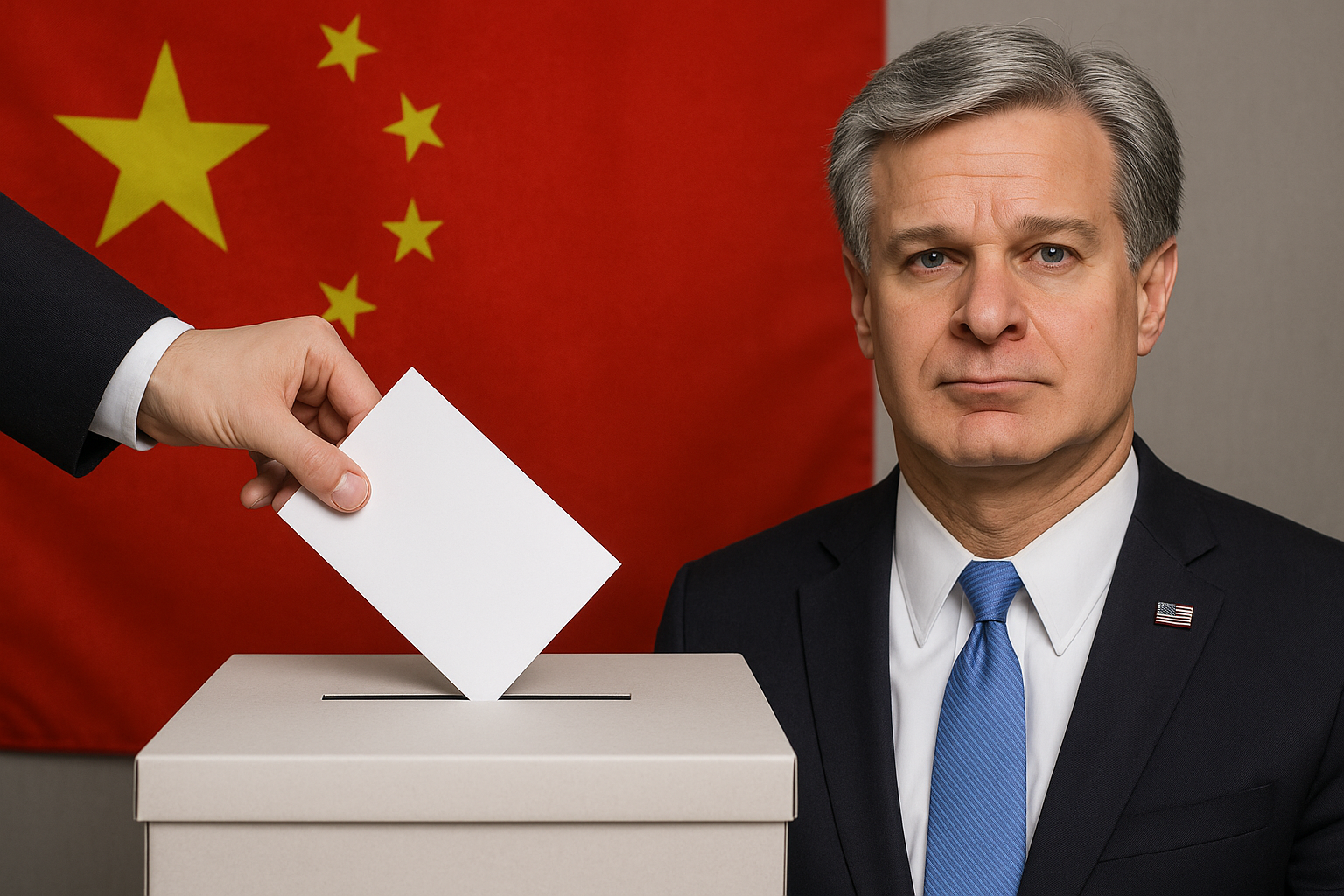
In a troubling revelation, declassified FBI records, released by Senator Chuck Grassley on July 1, 2025, expose a disturbing incident from the 2020 presidential election: the FBI’s suppression of an Intelligence Information Report (IIR) alleging Chinese government interference. The report, issued by the Albany Field Office on September 25, 2020, claimed that China was producing fraudulent U.S. driver’s licenses to enable tens of thousands of fraudulent mail-in votes for then-candidate Joe Biden. Yet, just hours after its dissemination, the IIR was recalled by FBI Headquarters, a move now confirmed to have been driven, at least in part, by a desire to shield then-Director Christopher Wray from political fallout. This episode, detailed in Grassley’s press release and corroborated by internal FBI communications, raises profound questions about the agency’s independence, the integrity of its intelligence processes, and its commitment to national security.
The Allegation and the Recall
The IIR in question, numbered 42127305 20, alleged a sophisticated scheme by the Chinese government to produce and export fake driver’s licenses to sympathizers in the U.S., enabling fraudulent mail-in ballots during the 2020 election. Such a claim, if substantiated, would constitute a significant national security threat, warranting immediate investigation and dissemination to the broader Intelligence Community. However, the report was recalled the same day it was issued, September 25, 2020, under the direction of Deputy Assistant Directors Nikki Floris (Counterintelligence) and Tonya Ugoretz (Cyber). The stated rationale was the need to reinterview the source, but internal documents reveal a more troubling motivation: the report risked contradicting Wray’s congressional testimony from the previous day, September 24, 2020, where he asserted that the FBI had not seen coordinated voter fraud efforts in the election.
The FBI’s letter to Grassley, dated June 27, 2025, from Assistant Director Marshall Yates, acknowledges the recall as “abnormal.” Even after the source was reinterviewed and provided additional context supporting the IIR, FBI Headquarters declined to republish it, citing concerns about the report’s “authoritativeness” and potential foreign disinformation. The Foreign Influence Task Force (FITF), tasked with evaluating such threats, did not approve reissuance, and no significant follow-up investigation was conducted beyond a cursory request to U.S. Customs and Border Protection. This decision, as Grassley’s press release notes, effectively “stymied a legitimate national security investigation” and deprived other agencies of critical intelligence that could have corroborated or discredited the allegations.
Internal Dissent and Political Pressure
The recall sparked significant dissent within the FBI, particularly from the Albany Field Office. Internal emails, included in the 47 pages of declassified records released by Grassley, reveal that Albany staff viewed the suppression as inappropriate and warned that citing “potential political implications” as a reason for withholding intelligence was “dangerous.” One email emphasized that it was not the role of analysts to align intelligence with public testimony, arguing that such actions could undermine the FBI’s credibility and mission. Albany staff further cautioned that suppressing field-generated reporting could prevent other Intelligence Community elements from pursuing investigative leads, potentially compromising national security.
The documents also reveal a broader policy shift following the incident. FBI Headquarters mandated that all raw reporting concerning the 2020 election require HQ coordination, a departure from prior practice that granted field offices greater autonomy. This change, detailed in the FBI’s letter to Grassley, suggests a centralized effort to control sensitive intelligence, raising concerns about bureaucratic overreach and the potential for political bias to influence future reporting.
Grassley’s Oversight and Transparency Push
Senator Grassley’s investigation, spurred by whistleblower disclosures in June 2025, has been pivotal in bringing this incident to light. His request for additional records prompted the FBI, under current Director Kash Patel, to provide the declassified documents, including Yates’ letter and internal emails. Grassley’s press release credits Patel for his cooperation, contrasting it with Wray’s tenure, which Grassley describes as marked by “stonewalling Congress.” The senator argues that the FBI’s actions under Wray reflect a “deeply broken institution” that prioritized protecting its image over safeguarding the American electoral process.
Grassley’s release of these records underscores the critical role of congressional oversight in holding federal agencies accountable. The declassified documents, partially redacted to protect sensitive information, provide a rare glimpse into the FBI’s internal decision-making, revealing how political considerations can infiltrate even the most critical intelligence functions. Grassley’s statement, “Chris Wray’s FBI wasn’t looking out for the American people – it was looking to save its own image,” highlights the severity of the breach in public trust.
Broader Context and Implications
This incident is not an isolated event but part of a broader pattern of controversy surrounding Wray’s leadership. Grassley’s press release references other allegations, such as the FBI’s anti-Catholic memo, which further eroded public confidence. News reports from outlets like Fox News, Newsweek, and Just The News, all dated July 1, 2025, corroborate the documents, noting that the recall occurred just one day after Wray’s testimony, reinforcing suspicions of political motivations. The Washington Times reported that the source was deemed reliable, yet the FBI failed to pursue logical investigative leads, a point echoed in Grassley’s critique of the agency’s inaction.
The suppression of the IIR has significant implications for national security and public trust. By withholding the report, the FBI may have hindered efforts to counter potential foreign interference, leaving unanswered questions about the extent of Chinese involvement in the 2020 election. Grassley’s spokesperson told Newsweek that the senator draws no conclusions about the allegations’ impact on the election, focusing instead on the FBI’s failure to investigate. This caution is warranted, as the documents note concerns about potential PRC disinformation, but the lack of follow-through undermines the agency’s role as a guardian of national security.
Moreover, the incident highlights the dangers of political influence in intelligence operations. The decision to prioritize Wray’s testimony over disseminating a potentially explosive report suggests a troubling willingness to let public relations concerns override objective analysis. This is particularly concerning given the FBI’s subsequent closure of the FITF in February 2025, as noted by Grassley, following Attorney General Pam Bondi’s determination that it had been “weaponized” under Wray.
A Call for Reform and Accountability
The FBI’s handling of the IIR underscores the need for structural reforms to ensure the agency’s independence and commitment to its mission. The new requirement for HQ coordination, while intended to enhance oversight, risks stifling field office initiative and delaying critical intelligence sharing. Grassley’s press release emphasizes the importance of transparency in restoring public trust, with the release of declassified records serving as a critical step toward accountability.
The FBI’s letter to Grassley assures that no federal record preservation requirements were violated, as the IIR was not permanently deleted from the Sentinel system, and related communications were preserved. However, this does little to assuage concerns about the agency’s decision-making process. The fact that the report was recalled to avoid contradicting Wray’s testimony, rather than fully investigated, suggests a prioritization of institutional optics over national security.
Conclusion
The declassified FBI records, brought to light by Senator Grassley’s relentless oversight, reveal a disturbing chapter in the agency’s’s history. The suppression of an IIR alleging Chinese election interference, driven by a desire to protect Director Wray’s testimony, represents a failure to uphold the FBI’s duty to the American people. Internal dissent, policy shifts, and the lack of follow-through on credible allegations underscore the need for reforms to restore trust and ensure that intelligence processes remain free from political influence. Grassley’s efforts, supported by Director Patel’s cooperation, mark a critical step toward transparency, but the incident serves as a stark reminder of the challenges facing federal agencies in navigating complex political landscapes. As the nation moves forward, the FBI must recommit to its core mission: protecting democracy, not shielding its leaders from accountability.
