
The Iran Conundrum: A Tale of Three Presidents and a Regime on the Brink
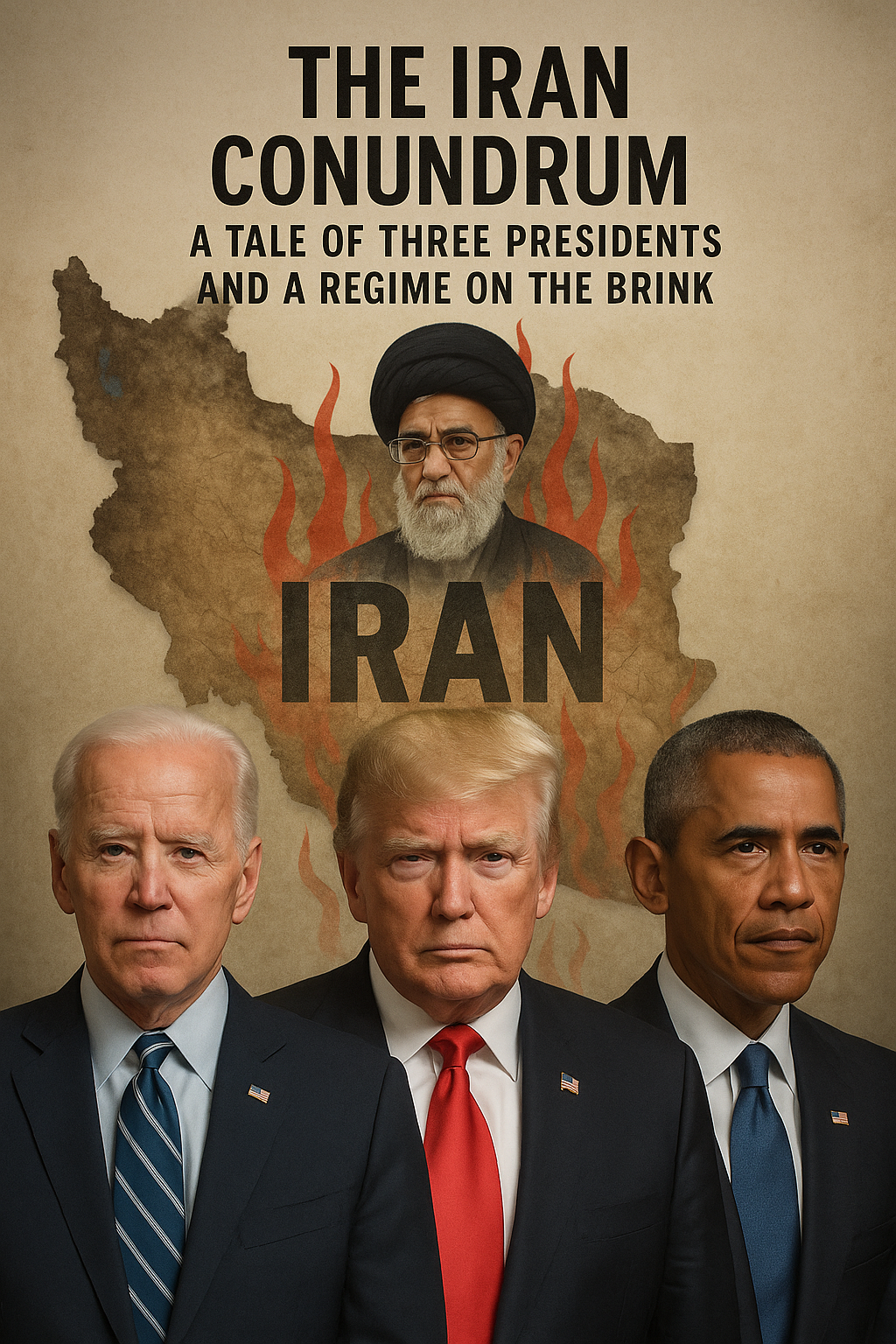 As the Middle East teeters on the edge of seismic change in June 2025, the escalating Israel-Iran conflict and the specter of a collapsing Iranian regime have thrust U.S. foreign policy into sharp focus. The actions of Presidents Barack Obama, Donald Trump, and Joe Biden toward Iran-spanning the Green Revolution, nuclear diplomacy, financial dealings, and the current crisis-reveal starkly different approaches to a regime that has defied easy solutions for decades. With Israel’s relentless strikes on Iran’s nuclear and military infrastructure, President Trump’s bold moves at the G7 summit, and the revolutionary potential of technologies like Starlink, the question looms: what happens if Iran’s theocracy falls, and how have U.S. policies shaped this moment?
The Obama Era: Diplomacy Over Dissent
In 2009, Iran’s Green Revolution erupted, a cry for democracy sparked by a rigged presidential election. Millions of Iranians flooded the streets, demanding reform, only to face brutal repression. President Obama, prioritizing engagement with the regime to secure the 2015 nuclear deal (JCPOA), took a restrained approach. His administration issued tepid condemnations of violence but avoided robust support for protesters, fearing it would undermine nuclear talks or fuel Iran’s narrative of U.S. interference. Critics, including Iranian dissidents and U.S. conservatives, decried this as abandonment, arguing it left the Green Movement to wither under the regime’s iron fist. By 2016, Obama’s $1.7 billion cash payment to settle a 1979 arms dispute-coupled with $100-$150 billion in unfrozen assets via JCPOA sanctions relief-further fueled accusations of appeasing the mullahs. While the administration insisted these were legal obligations and Iran’s own funds, the optics of pallets of cash arriving in Tehran cemented a narrative of enabling a hostile regime, potentially funding its regional aggression.
Trump’s Confrontation: Maximum Pressure, Minimum Diplomacy
Fast-forward to Trump’s first presidency (2017-2021), where diplomacy gave way to confrontation. Rejecting the JCPOA as a flawed deal, Trump withdrew in 2018, unleashing a “maximum pressure” campaign of crippling sanctions that tanked Iran’s economy-GDP contracted, and the rial plummeted. His vocal support for Iranian protesters during later unrest (e.g., 2017-2018) and the 2020 assassination of Qassem Soleimani signaled a willingness to challenge the regime directly. In his second term, Trump’s approach intensified at the G7 summit in Kananaskis, Alberta, on June 16, 2025, where he refused to sign a joint statement calling for “supervision” of Iran’s nuclear sites and civilian protections. Demanding a complete halt to uranium enrichment, he aligned with Israel’s aggressive strikes on Iran’s nuclear and military targets, which began on June 13 under Operation Rising Lion. Trump’s early departure from the summit, his ominous Truth Social post urging Tehran residents to evacuate, and his directive to convene the National Security Council in the Situation Room underscored a policy of unwavering support for Israel and zero tolerance for a nuclear-armed Iran.
Biden’s Balancing Act: Diplomacy Meets Hesitation
The Biden administration (2021-2025) sought a middle path, aiming to revive the JCPOA while addressing human rights and regional concerns. During the 2022 Mahsa Amini protests, Biden expressed solidarity with demonstrators but, like Obama, prioritized diplomacy over confrontation. His administration unfroze $16 billion in Iranian assets-$6 billion for a prisoner swap and $10 billion for Iraq’s electricity payments-restricted to humanitarian use. Critics, echoing sentiments on X, argued these funds indirectly bolstered Iran’s malign activities, though the $6 billion was refrozen after the 2023 Hamas attack on Israel. Biden’s cautious approach, balancing nuclear talks with sanctions on Iranian officials, contrasted with Trump’s all-in aggression. Yet, it faced similar criticism for failing to empower Iran’s dissidents, leaving the regime intact as regional tensions escalated.
Starlink’s Role: A Modern Lifeline for Dissent
Amid this geopolitical chess game, Elon Musk’s Starlink has emerged as a game-changer for Iran’s beleaguered population. Activated in 2022 and again on June 14, 2025, to counter regime internet blackouts following Israel’s strikes, Starlink’s satellite internet has empowered Iranians to bypass censorship, organize protests, and share their plight globally. With over 30,000 users by January 2025, it has become a lifeline for dissent, echoing the Green Movement’s reliance on early social media but with greater resilience. While Obama and Biden offered limited technological support during protests, Trump’s alignment with Musk’s anti-censorship ethos indirectly complements Starlink’s role, amplifying voices the regime seeks to silence. Yet, Iran’s crackdowns on terminals and users highlight the risks, underscoring the technology’s limits without broader international backing.
The Regime’s Edge: What Follows a Fall?
Israel’s 2025 strikes, codenamed Operation Rising Lion, have decimated Iran’s nuclear program, air defenses, and military leadership, killing figures like IRGC commander Hossein Salami and nuclear scientists. A 2022 survey suggests 90% of Iranians oppose the Islamic Republic, and protests chanting “Death to Khamenei” signal a regime on the brink. But the absence of a cohesive opposition or institutional framework raises the specter of chaos, as noted in analyses from HotAir and BattleSwarm Blog. Armed Islamists, a shattered economy, and no clear successor government could plunge Iran into a prolonged, painful transition. Newt Gingrich argues that only regime change can end Iran’s threat, envisioning a secular, democratic state rebuilt by Iranian-American investment. Yet, without international intervention-unlikely given U.S. and G7 reluctance-the path forward is fraught with uncertainty.
Current Events: A Region on Fire (June 16, 2025)
As of today, June 16, 2025, the Israel-Iran conflict dominates global headlines, entering its fifth day of intense missile exchanges. Israel’s Operation Rising Lion, launched on June 13, has targeted Iran’s nuclear sites, military installations, and state media, including a dramatic strike on Iranian state TV during a live broadcast. Iran’s retaliatory missile and drone attacks have killed at least 24 Israelis and injured nearly 600, with damage reported to the U.S. Embassy in Tel Aviv and civilian infrastructure. Iran claims over 220 civilian deaths, including 20 children, and has executed an alleged Mossad informant, signaling internal crackdowns. The Iranian parliament is drafting a proposal to exit the Non-Proliferation Treaty, though it denies pursuing nuclear weapons.
President Trump, at the G7 summit, refused to endorse a de-escalation statement, instead demanding Iran abandon its nuclear ambitions entirely. His early departure to convene the National Security Council, coupled with a Truth Social post warning Tehran residents to evacuate, has heightened fears of U.S. involvement, though the White House denies American forces are striking Iran. Trump’s comments suggest Iran is open to talks via intermediaries, but he insists they “should have signed the deal” earlier, framing Iran as losing the conflict. Israeli Prime Minister Benjamin Netanyahu, refusing to rule out targeting Supreme Leader Ayatollah Khamenei, claims the strikes have set Iran’s nuclear program back significantly but vows to continue until it is dismantled.
Starlink’s reactivation has fueled protests in Iran, with civilians using the service to share videos critical of the regime and call for its overthrow. Exiled opposition figures like Reza Pahlavi and Masih Alinejad support the strikes and urge regime change, while Iran’s government faces growing internal dissent. The U.S. has moved military forces closer to the region, and Defense Secretary Pete Hegseth is preparing for a Situation Room meeting, signaling heightened alertness. European G7 leaders, pushing for a ceasefire, are at odds with Trump’s hardline stance, exposing fractures in the alliance.
Analysis: A Policy Crossroads
The contrasting approaches of Obama, Trump, and Biden reflect deeper philosophical divides. Obama’s diplomacy aimed for stability but was criticized for enabling the regime’s survival. Trump’s confrontational stance has pushed Iran to the brink but risks escalation without a clear endgame. Biden’s attempt to thread the needle has satisfied neither hawks nor doves, leaving the U.S. reactive as Israel takes the lead. Starlink’s emergence underscores how private innovation can outpace government action in empowering dissent, but it cannot replace a coherent strategy. If Iran’s regime falls, the U.S. faces a choice: stand back and risk chaos or engage proactively to shape a post-theocracy future. Trump’s current actions suggest a lean toward the former, banking on Israel’s might and internal collapse, but history-marked by Obama’s restraint and Biden’s indecision-warns that without a plan, even a fallen regime may yield more turmoil than triumph.
The Iran conundrum remains a high-stakes gamble. As Trump mobilizes his national security team and Israel’s F-35s reshape the battlefield, the world watches a regime teetering on collapse. Whether this moment births a freer Iran or a new quagmire depends on the lessons learned from three presidencies-and the courage to act beyond warnings and strikes.
Sources: HotAir, The Telegraph, Just the News, Daily Wire, PJ Media, Townhall, RedState, Daily Caller, BattleSwarm Blog, CNN, The New York Times, The Guardian, NBC News, ABC News, BBC, Reuters, NPR, POLITICO, The Times of Israel, The Washington Post, Al Jazeera, Wikipedia, and posts on X.
