
A Father’s Day Story
The Old Soul of Gen X Fatherhood
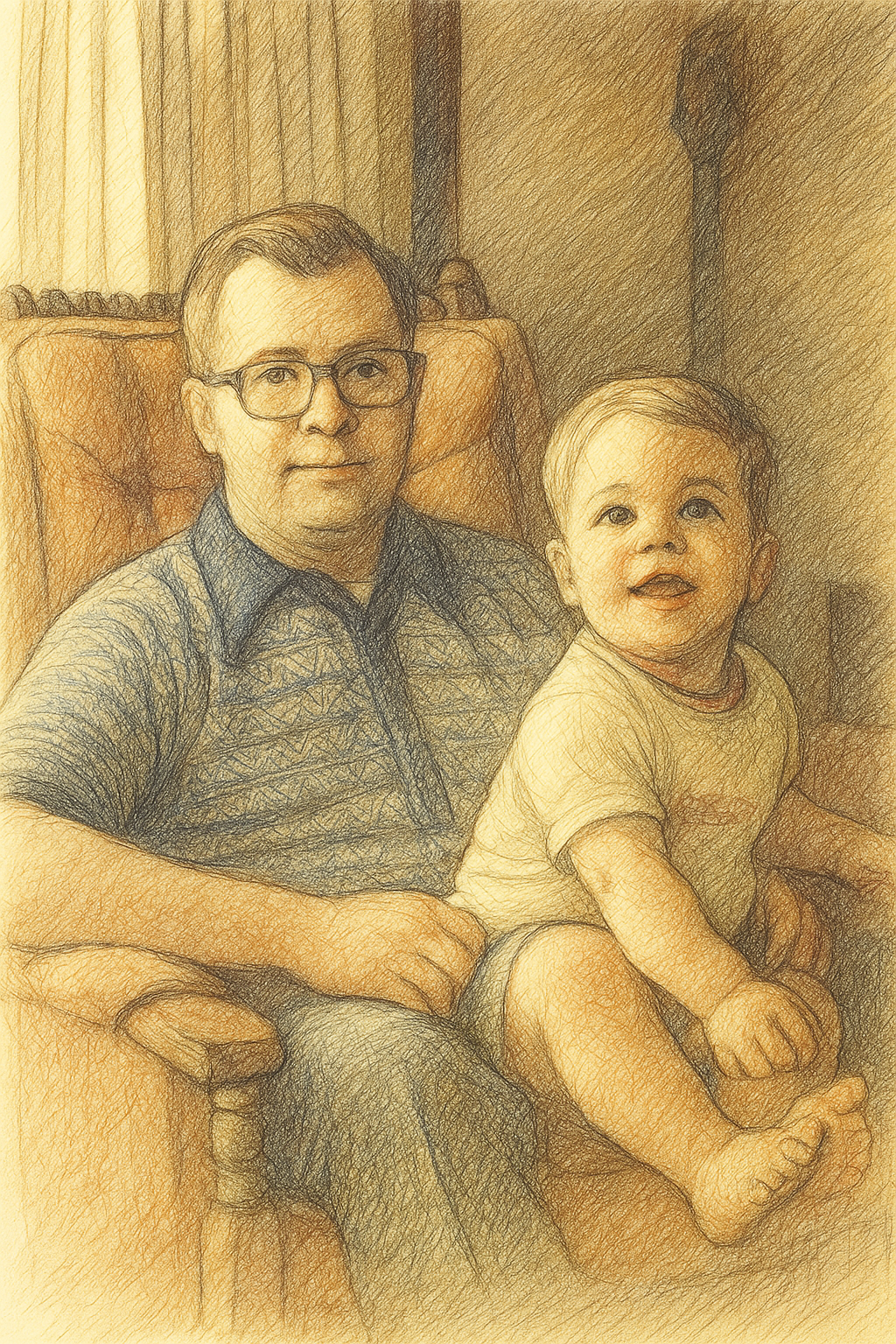
This Father’s Day, I sink into my recliner in our suburban living room, my well-worn coffee mug warm in my hands, steam rising as sunlight filters through the blinds. A Gen X father, raised by a single mom, I carry a time-worn spirit from elders-Granny, aunts, uncles, kin born when the 19th century faded, their lives weathered by wars and want. Over kitchen tables, with fresh-baked cinnamon rolls, they shared stories of grit and grace, giving me memories older than my 1970s corner house and cul-de-sac childhood. I write for Gen X dads-men grappling with their fathers’ ghosts, their own flaws, and the hope of new beginnings, guided by an old-world heart.
In my suburban youth, I learned from elders, not wealth, but wisdom. Granny’s “Made by Jim Weber” Tupperware coffee mug thumped on the table as she told of cotton fields and family suppers, her voice warm. “That’s my Mr. Jim,” she’d say, her smile steady. My aunts and uncles, shaped by the Depression’s lean years, showed me how to mend broken things-hearts, budgets, dreams-on tidy lawns, not farms. My father, a Silent Generation shadow, was a stranger. He fell silent, his face unreadable, after my sharp word-“admitted”-cut into his secrets. His silence left 20 years of brokenness and regret, a pain like The Living Years’ lament: “I wish I’d told him.” I see now how absence shapes us, driving me to be the dad I never had, to break the Divorce Era’s cycle.
Baseball bound my kids and me, a Pop Culture Dad ritual stronger than a perfect double play. My mother, the true fan, taught me baseball’s heart, but Dad joined me now and then at Arlington Stadium, cheering Rangers games. His clumsy throws in the park during my Little League days made us laugh, and I’ll never forget the 1987 Old Timer’s Game he loved. From their early years, I took my kids with my mom to The Ballpark in Arlington-“The Temple,” we called it-its red-brick walls our shrine. Their Nana loved bringing them to Rangers games, their cheers as loud as ours. Later, as teens, they joined me at Globe Life Field, “The Shed,” its cool air smelling of popcorn and Dollar Dogs. Under summer skies fading to dusk, we’d cheer the crack of bat on ball, a sound as warm as Granny’s voice and laughter. Those games were my stand against the Latchkey Dad void, like Ray Kinsella’s catch with his dad in Field of Dreams.
Time slips away, like a morning carpool rushing past. My teens, caught up in school, friends, gaming, music, or scrolling feeds, say, “Just a sec, Dad,” too busy for our seats at The Shed-the Rangers new home Globe Life Field. The empty bleachers hit harder than a bad day, a quiet gap echoing Cats in the Cradle’s warning: “When you comin’ home, Dad? I don’t know when.” I cling to hope, trusting I’ve shared the Rangers’ lessons-their comebacks, their map for life’s trials-as Scotty Smalls learned from his stepdad in The Sandlot. I see future games, fewer but vital, like Bill’s glove pass, a small step to close the gap. This ache, a Father Struggler’s burden, holds Granny’s wisdom: face loss with true grit, working through a rough patch.
My mistakes nearly cost us this bond. I drank for years-evenings alone with a bottle, hours slipping away, then steady rum from 2018-2023, physically present yet miles away, as I relate in “A Sobriety Story.” My absence, not anger, dimmed my role, like Kevin Arnold in The Wonder Years reflecting on missed moments with his father. I chose it, as Walter White said in Breaking Bad: “I liked it. I was good at it.” Now 16 months sober, I’ve ditched the booze, as firm as Granny tossing out a bad potato, rooted in her kin’s resolve. Sobriety is my fence-mending swing, a clear choice for a new chapter. Redemption, I’ve learned, is a conscious act, not a gift.
Starting over, like rebuilding after a loss, fuels me, a hope shared by Gen X dads facing their own shadows. We were The Breakfast Club’s kids, finding truth in detention, or E.T.’s Elliott, craving bonds beyond absent dads, or Stand by Me’s boys searching for meaning. Our drive, like flipping through Granny’s old photo albums, mirrors those who coached Little League or swapped Caddyshack lines with their teens, chasing presence over silence. This shared struggle binds us, a push through tough times where effort counts, shaped by elders’ wisdom, like Granny’s worn recipe cards. The Strauss–Howe Nomad archetype fits us-tough, skeptical, yet seeking connection.
My storytelling, like a quiet night in the recliner, crafts these moments into truth. My columns are my patchwork, stitched with care, weaving lessons from my past at Washington-on-the-Brazos in ’84, offering solace, as enduring as Granny’s faded apron. They carry her generation’s rhythm-small-town hardships, wartime letters-urging me to share my stumbles-drinking, distance, regret-to light a path for dads in their own struggles. Rooted in my mother’s fierce love and elders’ guidance, this work mends what’s broken, like a glove patched for one more game. Writing, I realize, is my way to give back.
Gen X fatherhood is a tightrope: we’re the kids who ran free, fueled by The A-Team’s adventures and Gin Blossoms’ riffs, yet we bear our fathers’ silence like a worn jacket. In Big Jake, set in a fading Old West, Jacob McCandles, an Old Soul dad, faced a new century’s ways. His absence scarred his sons, but saving Little Jake mended some wounds, like my hope, as a Gen X dad in this modern age, for ballpark days with my teens. Scotty’s stepdad in The Sandlot shared baseball’s heart, as I aim to, a Pop Culture Dad passing on its lessons. Sir Arthur Conan Doyle, shadowed by his father Charles’s drinking, found refuge in art, though Sherlock Holmes’s detachment betrays old pain, like The Catcher in the Rye’s Holden, a Nomad adrift. Fatherhood, I’ve learned, demands presence over perfection.
Being a Gen X dad means carrying the unplugged soul of the last pre-internet generation, shaped by a world of mixtapes, payphones, and Saturday mornings glued to Warner Bros. cartoons and Schoolhouse Rock, not screens that ping with notifications. We’re unique, raised on VHS rentals and scribbled notes passed in class, with a scrappy, do-it-yourself grit that kids today-wired to Wi-Fi from birth-can’t quite grasp. Our meaning lies in showing up for our teens, bridging our analog past with their digital now, whether it’s teaching them to throw a curveball or decoding their slang over pizza, all while channeling Reality Bites’s skeptical smirk and Granny’s stubborn heart. We hustle to leave a mark of connection, not absence, in a world that’s always online.
My time-worn spirit, shaped by projector slides flickering in the front den’s glow, shared family time, guides this Gen X path. Granny’s kin, who saw the century turn, taught me to face setbacks with a suburban heart-keep going after a tough day, mend what’s torn. Sobriety is my open space, where I build a new start, like Ray’s corn in Field of Dreams. Storytelling is my work, columns like “A Father’s Fears” drawing lessons from my past, shared like my great-uncle’s sorghum syrup with neighbors. I’m flawed, selfish, as I’ve written before in my reflections, but I give back, hoping my words guide others through their struggles, like tinkering with a bike for one more ride.
This Father’s Day, I raise my mug-not rum, but coffee-in my recliner, to Gen X dads. We heard my mother’s call and vowed to show up, whether at Rangers games, raw talks, or wrestling with teens over homework, their earbuds always in. We’ve tripped, weighed by our fathers’ silence or Divorce Era gaps, but we stand, guided by a time-worn spirit-Granny’s strength, a line drive’s path, the promise of more time. As The Living Years urges, it’s never too late to speak. To my teens, my absent father, and every Gen X dad: let’s keep talking, at the ballpark or over dinner, and tell our stories, old as time, new as a first day.
My teens’ world moves fast, lit by the glow of their screens, their fingers dancing across controllers or scrolling feeds, music pulsing through earbuds. I sit nearby, watching, learning their language-gaming terms, band names, fleeting trends-to step up to their plate. Their distance mirrors my own past silences, those evenings lost to a bottle, but I lean on Granny’s wisdom: meet them where they are. I ask about their favorite games, listen to their playlists, nod at their quick “Just a sec, Dad.” These moments, small as a single in a long inning, build bridges. Like my sobriety, it’s a conscious act, a choice to be present, to know their hearts beyond the bleachers. Gen X dads know this hustle, adapting to a world our elders never dreamed, yet grounded in their lessons of true grit, chasing connection in a digital age.
I dream of a legacy, not of wealth, but of stories and strength, like the shared moments with my kids at The Temple and The Shed, each game teaching baseball’s resilience. Granny’s voice, her “That’s my Mr. Jim,” and Dad’s joy at the 1987 Old Timer’s Game fuel my hope to pass down their resilience-keep going, mend what’s torn. My teens may not yet see it, their eyes on screens, but I weave tales of Rangers games, of my stumbles and rises, hoping they’ll carry this time-worn spirit. Like elders sharing hand-me-down wisdom over cinnamon rolls, I offer my own: face setbacks with a steady heart, find truth in the quiet. This is my gift, as enduring as The Ballpark’s red bricks, a map for their trials. As I write, I trust they’ll hear Big Jake’s echo, hold these stories, and tell their own, timeless yet new.
James Kay is a Gen X father, storyteller, and 16-month sober strong, whose columns weave time-worn spirit with modern struggles.
