
Time Is No Longer on Tehran’s Side
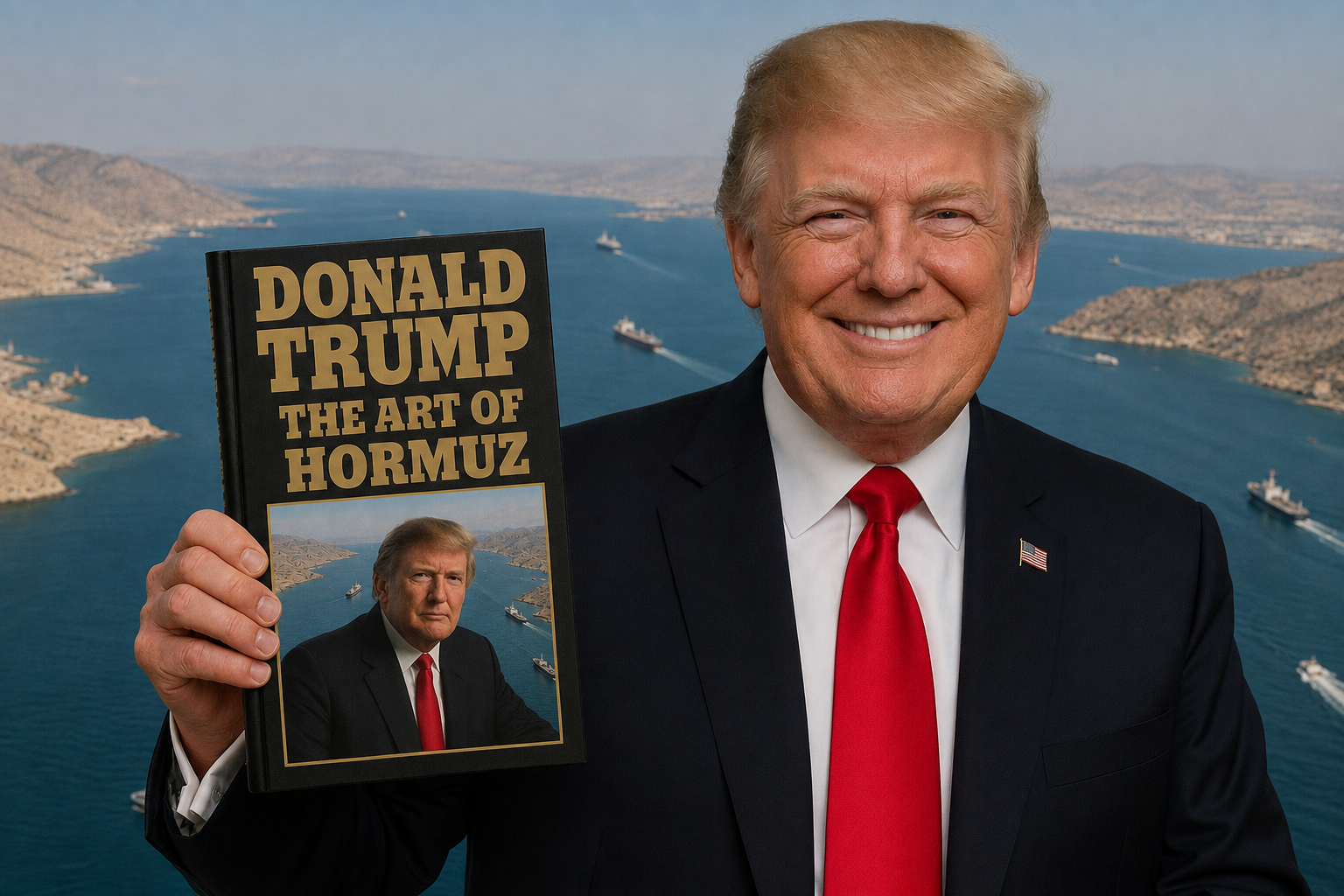
Strategic patience is not passivity. It is a Navy that answers fire with arithmetic, a Treasury that maps every node that pays the IRGC, and a map that is quietly making the Strait of Hormuz optional.
N.B. This follows “The Art of the Hammer” (June 2026). The memorandum was a pause with a clock. The clock ran out. See also the statecraft file and prior Kharg Island notes.
It has been a couple of months since I last wrote about Iran. That was not neglect. It was the interval the story required.
In June, after Kharg sat full and the first blockade had already taught Tehran what a closed port feels like, Washington signed a 14-point memorandum and lifted the cordon. I treated that document as a pause with a verification clock, not as peace. Tehran treated it as a reprieve. They loaded crude. They talked tolls. They waited for midterm politics, Gulf nervousness, and the usual chorus of “off-ramps” to do what missiles had not. On July 14 the blockade went back on. President Trump announced the cordon would resume after renewed Iranian fire on shipping and on bases hosting American forces. The strikes and the port closure arrived together. The Hill, PBS, Insurance Journal, and Gulf News all recorded the same turn. Since then, Iran has not shipped meaningful crude through Hormuz. Not a trickle dressed up as a victory. Near zero. Years of paper sanctions never accomplished that. A Navy did. UANI’s July tracker and the June bookend show the drop after the cordon returned. Al Jazeera put the export hole at roughly 1.5 million barrels a day. A Treasury is now making sure the barrels that cannot sail also cannot be laundered, tokenized, or parked in a trust in the British Virgin Islands.
The Wall Street Journal has now said the quiet part in the language of a business paper: both sides thought time was their ally. The trend is moving against Tehran. The American blockade of Iranian oil is tighter than the IRGC’s blockade of the Strait. Gulf crude is still moving, with U.S. escorts and a southern lane that leaks in America’s favor. Iranian crude is not. That is the opposite of the spring wager that China and Iran could simply wait the blockade out, and of the earlier reading that time still sat on Tehran’s side of the ledger. Oil is elevated. Brent has lived in the mid-90s and, this week, kissed $100, but it has not detonated the global economy the way the mullahs needed it to. See also GuruFocus and Investing.com. China drew reserves. Markets adapted. The hostage strategy failed its first test: it did not force Donald Trump to end the war on Iranian terms.
That is the whole bet, and it is coming due.
Two blockades, one navy
Hormuz is the Clausewitzian center of this fight. If Iran can make the waterway unusable except on IRGC terms, the rest of the world starts bargaining for Tehran. If it cannot, even its “friends” lose interest in the regime as anything but a nuisance. Iran has no blue-water navy. Its instrument is harassment: drones, ballistic missiles, and the insurance market’s fear. That instrument still wounds ships. The Senegal Prosperity, the Sidr, the Metro Venetian: the list is real. Crews get evacuated. Hulls list. Underwriters flinch. That is not nothing. The IRGC still claims the waterway as its own.
It is also not control.
Samir Madani at TankerTrackers put it without poetry in the Journal: the Iranian blockade is leakier than the American one. The Iranians cannot shut it all down. Washington can keep Iranian barrels off the water. That asymmetry is the story. One side is a continental energy island trying to collect rent on a chokepoint it does not own. The other side is a country that can park carriers, board noncompliant hulls, and disable the tankers that pay the IRGC’s bills. Time favors the side that can replace what it loses. Iran cannot replace VLCCs. It cannot buy a new shadow fleet on a blocked treasury. Every hull CENTCOM takes off the board is a permanent subtraction, if the money that would replace that hull is also dead. The spring blockade already exposed that hole. JINSA’s energy brief and the Journal’s own opinion page have been arguing the same arithmetic. Naval blockades have won wars. They have also sometimes done so at great cost. The cost this time is being paid in Iranian steel.
Chicago rules at sea, asphyxiation ashore
Saturday morning, the subtraction became policy.
After the IRGC loosed ballistic missiles at an American carrier and a destroyer, and missed, CENTCOM did not answer with another night of theater against empty radar sites. It disabled the Downy off Kharg and the Stark 1 near Jask, and it destroyed the Kylo (the Noxen) in the Gulf of Oman after the crew was told to get off. Maritime Executive, Shafaq, and Ynet confirm the same three hulls. Admiral Brad Cooper’s sentence is the doctrine: if you shoot at two of ours, we take three of yours. Pete Hegseth said the same thing without the braid: if they shoot at U.S. ships, we destroy their oil tankers. Iran has no navy and no air force that can stop it. Video and unit releases sit on CENTCOM’s media page and the command account.
RedState called it Chicago rules. That is the right vernacular. For a quarter century in this theater the United States specialized in proportionate, legalistic, endlessly explained responses that the other side priced as a cost of doing business. Tanker-for-tanker with a penalty multiplier is different. It attacks the only thing the IRGC cannot speechify back into existence: steel.
Scott Bessent is attacking the other half of the same ledger: cash.
This is not a new hobby at Treasury. Through the spring, under the banner of Economic Fury, OFAC went after the IRGC’s oil-sales fronts, the Persian Gulf Strait Authority extortion racket, and the networks that dressed Iranian LPG as Omani product. See also the earlier Fury designations and the first wave of the oil-revenue hunt. Bessent’s line then was already the strategy: the regime will not be allowed to hold global commerce hostage to finance the Guard. Frozen Iranian funds, he said, would pay for damage inflicted on Gulf allies. Tolls paid to an IRGC “strait authority” would be offset out of Iranian accounts. That is Chicago rules in a spreadsheet.
On August 24 he named the larger campaign. Trump called it economic D-Day. Bessent called it Operation Economic Outcast. The language was not the usual sanctions press release. “America is no longer managing the Iranian threat. We are ending it.” Treasury, he said, had mapped every node, every facilitator, and every network used to smuggle oil and evade sanctions. The objective is zero leakage: block every source of revenue that funds the IRGC. The choice offered to Tehran was binary: global isolation and a subsistence economy, or a path back to normalcy. Every other option is supposed to close. The same remarks ran through the Journal’s live card, the write-up, Dow Jones, To Vima, VOA, Jewish Insider, the Jerusalem Post, RNZ, Arutz Sheva, CNBC-TV18, and the Spokesman-Review.
With its economy in freefall and inflation in the triple digits, the regime is desperate for cash. The United States will not allow Iran to hold global commerce hostage or use international shipping to finance the IRGC’s terrorism, aggression, and repression. https://t.co/J1GsCb79e6
— Treasury Secretary Scott Bessent (@SecScottBessent) July 29, 2026
.@SecScottBessent: "Iran now faces a very clear choice, with only two paths before them: complete global isolation and a subsistence economy or a path back to normalcy with an opportunity to rejoin the global economy. Today, we are launching Operation Economic Outcast to… pic.twitter.com/aVLelpstgq
— Treasury Department (@USTreasury) August 24, 2026
The instruments match the map. Sectoral determinations now put secondary-sanctions risk on five lifelines the regime exploits abroad: digital assets, technology, gold, aviation, and shipping. OFAC designated more than sixty entities, individuals, and vessels tied to oil revenue, missile and nuclear procurement, and cyber operations. Bank Melli branches are to go dark. Anyone facilitating Iranian money-laundering is to be removed from the dollar system. The companion action release is here. Last week at the G20, Bessent went further on camera: Treasury knows the IRGC trust accounts in the British Virgin Islands and the hundred-million-dollar houses. Those get frozen. A bank in Dubai already learned what “out of the Fed wire” means. Airline lessors are next on the list he is willing to say out loud. The Examiner called it asphyxiation. The Hill tracked the political frame. So did the magazine side and the Debevoise client note.
Critics on the financial pages sniffed that D-Day had barely left the beach because Beijing was not named in the first breath. That is a category error. The point of Outcast is not a single theatrical designation of a Chinese mega-bank on day one. The point is a timeline delivered privately to every capital still touching Iranian oil, gold, crypto rails, or hull insurance, and a promise to act unilaterally if they miss it. China takes most of what Iran used to sell. Turkey still drinks Iranian gas. The UAE has already stepped back. The campaign works if the second-order players calculate that access to the dollar is worth more than a discount barrel from Kharg. Bessent’s job is to make that calculation unavoidable. The Navy’s job is to make the barrel itself hard to move. Together they are one strategy.
Cooper sinks the tanker. Bessent kills the replacement financing. That is why the clock on the regime is no longer theoretical.
Mooting the strait
The third piece is the part the cable shows will underplay because it does not explode on camera. Ed Morrissey, reading the same Journal piece this morning, put the strategy in one verb: moot it.
Syria, under Ahmed al-Sharaa, is selling itself as a land bridge from Basra to Baniyas. Trucks are already moving Iraqi crude across the desert to the Mediterranean, thousands a day, an ugly, improvised proof of concept. A Chevron-led pipeline of roughly a thousand miles is in the contract phase. Construction is years, not weeks. Reuters has used four years and $15 billion on one version of the line. Fine. Just the News, Moneycontrol, the follow, Middle East Eye, SANA, and the Telegraph are all working the same corridor. The point is not that Hormuz becomes irrelevant on Tuesday. The point is that the option is now on the map, with American political cover and a president who looked at the Washington Post headline and wrote “great.” Once capital starts pouring concrete, Iran’s veto over a fifth of the world’s oil is no longer a law of nature. It is a depreciating asset.
Oman told the same story in miniature. The IRGC announced a fee-sharing deal for “environmental and security services” in the Strait. Muscat quietly refused. Trump had already said that anyone who tried to toll that waterway on Tehran’s behalf could become a target. Oman chose not to find out whether he meant it. Bessent had already sanctioned the IRGC’s prior version of the same shakedown. That is how a blockade works when the gunline and the ledger agree.
Qatar, Turkey, and Pakistan can keep booking rooms in Islamabad. The band is not getting back together on terms that refill Kharg.
What patience actually is
The temptation, especially with midterms nine weeks away and gasoline a kitchen-table word, is to confuse patience with drift. Drift is what produced the June memorandum’s collapse: Tehran used the interval to export, then went back to shooting at ships. Patience is the opposite. It is Cooper’s three-for-two rule. It is Bessent’s zero-leakage map. It is the refusal to trade a verified dismantling of the nuclear and proxy machinery for another ceasefire photograph. It is the willingness to let Iranian inflation, tanker losses, unpaid IRGC payrolls, and frozen villas do work that a march on Tehran would do only at grotesque cost.
I have argued in this space that Kharg is the hammer and that half-measures are how the Islamic Republic survives American administrations. Nothing in the last eight weeks retracts that. What the last eight weeks add is proof that you do not have to seize the island tomorrow if you can keep its product off the market, pick off the fleet that would carry it, starve the networks that would pay for the next fleet, and fund the pipelines that make the island less important. Seizure remains the reserve card. Attrition, naval and financial, is the hand on the table.
The regime will not surrender on a Saturday because three tankers burned and sixty designations dropped. Theocrats rarely do. They will run out of money to pay the men who keep the bazaars quiet. They will watch China hedge and Gulf capitals hedge and Syria take meetings that used to run through Quds Force cutouts. They will discover that a chokepoint is only a weapon if the rest of the world has no other door, and that a shadow fleet is only a fleet if someone will still clear the dollar.
Time was supposed to be Iran’s. Time is a function of who can last. The United States can last if it keeps the blockade tight, answers fire with hulls, closes the financial exits, and builds the routes that make Hormuz a strait instead of a ransom note. Tehran cannot last on empty tanks, a shrinking shadow fleet, and a Treasury Department that has the addresses of the houses.
Heed this. The war is not over. The bet is.
