
Inside America’s Homeless Industrial Complex
Mario Tama/Getty Images
I’ve been watching this crisis up close for years, and the longer it drags on, the clearer it becomes: decline is a choice.
America doesn’t have a homelessness problem because we lack money, compassion, or housing. We have one because we’ve built a self-perpetuating system that profits from failure, normalizes disorder, imports clients, and refuses to acknowledge what actually works. Call it the Homeless Industrial Complex. It’s not a conspiracy theory. It’s public choice economics in action — billions in annual spending, thousands of careers, powerful ideological commitments, and entrenched institutions all aligned around managing a problem rather than solving it.
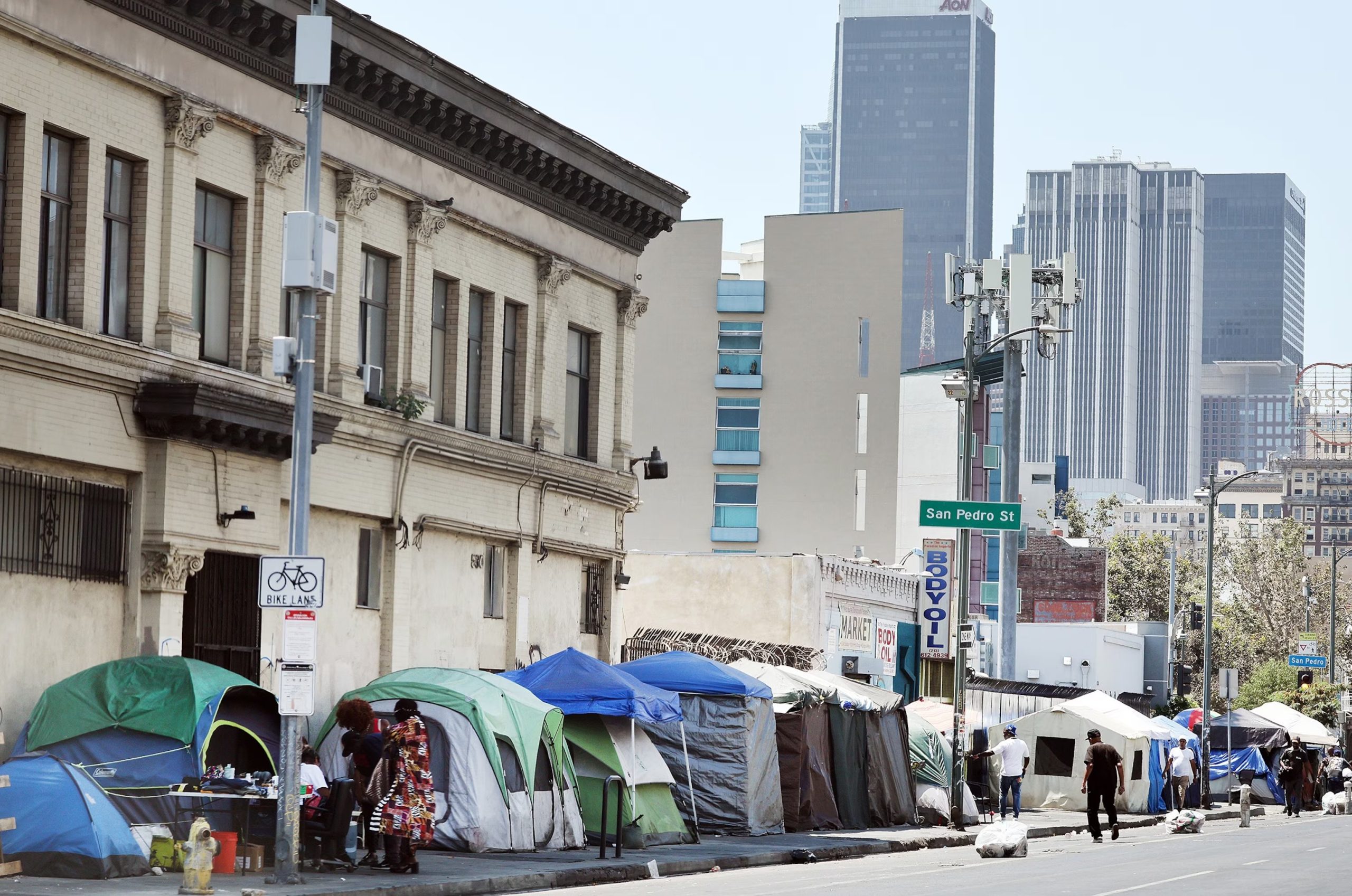
This isn’t abstract. Visible tent cities, open drug use, public defecation, aggressive panhandling, and human misery have become normalized features of major American cities from Los Angeles and San Francisco to New York and Seattle. The system doesn’t just tolerate failure; it rewards it. Billions flow through government programs, nonprofits, foundations, and service providers every year, yet the visible crisis persists or worsens in many places. Understanding how this complex operates — its historical roots, financial incentives, cultural support, policy failures, human costs, and proven alternatives — is essential if we want to choose renewal instead of continued decline.
The Prophecy That Came True
Back in December 2002, William Tucker wrote a remarkably prescient column for the New York Post titled “A Homeless Crisis.” He detailed how New York City was spending $583 million on its Department of Homeless Services (DHS) — roughly half the city’s budget gap at the time — while a 1983 right-to-shelter consent decree turned the system into a powerful magnet. Families were arriving from the Dominican Republic, Yemen, Scotland, and elsewhere. Private Single Room Occupancy (SRO) housing — cheap, basic rooms that once served as an essential low-cost safety net for single adults — had been largely destroyed in the name of eliminating “urban blight” during the 1970s under administrations like Mayor John Lindsay’s.
Tucker warned that the incentives were perverse: stay in the shelter system long enough and you could jump the line for Section 8 federal housing vouchers or public housing. More shelters would create more demand. Judges and legal aid groups blocked basic rules like expelling disruptive individuals or requiring reasonable placements. Private entrepreneurs who once provided low-cost options were regulated out of business. The result was a cash-eating juggernaut that grew with every new dollar spent. Tucker predicted that throwing hundreds of millions at the problem would simply expand the client base rather than reduce it. He was right.
In constant (inflation-adjusted) dollars, that $583 million from 2002 equals roughly $1.08 billion today. Yet New York now spends $3.5 to $4.4 billion annually on homelessness services. The sheltered population routinely exceeds 100,000 people on a given night. Unsheltered counts (measured by Point-in-Time (PIT) surveys conducted by the U.S. Department of Housing and Urban Development, or HUD) have risen in key metrics despite the explosion in spending. Tucker’s warnings proved accurate. His column reads like a warning from the past that we collectively ignored for over two decades.
This pattern was not unique to New York. It reflected a broader national shift toward rights-based shelter systems, expansive welfare entitlements, and a reluctance to enforce basic behavioral standards in public spaces. The same dynamics would later scale dramatically in cities like Los Angeles and San Francisco, where the complex became even more entrenched.
The Cultural Wrecking Ball
We cannot understand the current crisis without examining its cultural roots. Ken Kesey’s 1962 novel One Flew Over the Cuckoo’s Nest had an outsized influence on public attitudes toward mental health institutions. The book portrayed large psychiatric hospitals as oppressive tools of social control and conformity rather than imperfect but necessary attempts to treat severe mental illness. The 1975 film adaptation, starring Jack Nicholson, amplified this message to millions and helped shape a generation’s worldview.
Combined with the introduction of antipsychotic medications in the 1950s and legitimate concerns about institutional abuses, this cultural shift helped drive one of the largest deinstitutionalizations in history. Public psychiatric beds in the United States dropped by over 90 percent from their 1955 peak. The promise was that community mental health centers would replace the old asylums. In reality, many of those centers never materialized at sufficient scale, and funding for long-term care evaporated.
The result was not the promised golden age of community-based care. Instead, we got transinstitutionalization. Many people with Severe Mental Illness (SMI) — conditions such as schizophrenia and bipolar disorder with psychosis — did not magically integrate into supportive communities. Large numbers ended up on the streets, in jails, prisons, or cycling through emergency rooms. Today, roughly 22 percent of adults experiencing homelessness have serious mental illness — three to four times the rate in the general population. Among the unsheltered (street) population, the figure is even higher. Dual diagnosis — the combination of severe mental illness and substance use disorder — is extremely common. A critical neurological factor is anosognosia, the inability to recognize one’s own illness. This makes voluntary treatment nearly impossible for many in this group. Purely voluntary, housing-first systems struggle mightily here, leaving thousands trapped in a cycle of decompensation and street living.
The Architecture of Failure
The modern Homeless Industrial Complex operates through several interlocking parts.
First, perverse financial incentives. Funding from programs like California’s Homeless Housing, Assistance and Prevention (HHAP) grants, the U.S. Department of Housing and Urban Development’s (HUD) Continuum of Care (CoC) program, and massive state Medicaid spending rewards volume — beds filled, outreach encounters logged, people “served” — rather than permanent exits from homelessness. Recovery and independence shrink the client base and threaten future budgets and jobs within the system. This creates a built-in resistance to genuine solutions.
Second, body brokers. As Spencer Pratt recently explained on Bill Maher’s Club Random podcast, roughly 60 percent of Los Angeles’s visible homeless population is not originally from California. These “body brokers” (patient recruiters) actively import vulnerable people — often those struggling with addiction — from other states. They offer free flights, promises of luxury treatment, and access to generous benefits. Once delivered to facilities, these individuals generate high insurance billings through Medi-Cal (California’s version of Medicaid). When the money runs out, many are dumped back onto the streets. National taxpayers subsidize much of this through the federal match on California’s Medi-Cal budget, which exceeds $197 billion annually. This creates a national subsidy for California’s failed policies and turns human suffering into a profitable enterprise.
SPENCER PRATT: “Ready for the best part?”
“60% of the people in Los Angeles that are ‘experiencing homelessness’ — they’re not from California.”
“They’ve been brought here by NGOs that profit off of this homeless industrial complex, Medicaid…”
BILL MAHER: “Wait, wait,… pic.twitter.com/ELIpVe3eOQ
— Overton (@overton_news) June 1, 2026
Third, the harm reduction experiment. Widespread distribution of needle exchanges, safe smoking kits for crack and methamphetamine, and Narcan (naloxone, a medication that reverses opioid overdoses) was sold as compassion. However, risk compensation theory (also known as the Peltzman Effect, named after economist Sam Peltzman) helps explain the outcome: when protections lower the perceived cost of risky behavior, people often take more risks. Fentanyl users could effectively plan their overdose knowing revival was likely. Open drug use became normalized on city streets, contributing to visible chaos even as overdose statistics remained stubbornly high for years.
Fourth, major philanthropy. Foundations such as the Conrad N. Hilton Foundation, the California Endowment, the Bill & Melinda Gates Foundation, and donors like the Benioff family have directed hundreds of millions of dollars into Housing First ideology and harm reduction programs. They provided long-term, flexible funding and narrative support that helped lock these approaches into policy across cities and states, often shielding them from rigorous accountability.
Fifth, the limitations of Housing First. The Housing First model — providing permanent housing without preconditions such as sobriety or treatment compliance first — has real strengths. It achieves high housing retention rates (often 70–90 percent at one to two years) for many participants and reduces use of expensive crisis services like emergency rooms and jails. However, rigorous meta-analyses show weak or nonexistent improvements in substance use, psychiatric symptoms, employment, or long-term recovery, especially among the chronic unsheltered population. When treated as rigid dogma rather than one tool among many, it has struggled to address the most visible and costly cases.
California: The Cautionary Tale
California has become the clearest example of these failures. Five of the top ten U.S. cities with the largest homeless populations — according to Point-in-Time (PIT) counts conducted by HUD — are in California. Decades of one-party Democrat governance delivered Proposition 47 (which reduced penalties for certain drug possession and theft), strict Housing First mandates, aggressive use of the California Environmental Quality Act (CEQA) to block or delay housing projects, restrictive zoning, and NIMBY (“Not In My Backyard”) opposition to new supply.
Billions have been spent with limited visible results on the streets. Then, in November 2023, Governor Gavin Newsom openly admitted that San Francisco cleaned up its streets for the Asia-Pacific Economic Cooperation (APEC) summit because Chinese President Xi Jinping was visiting. The state proved it could restore order when politically necessary. The selective application of enforcement exposed the choices being made: compassion for residents was secondary to international optics. This single event crystallized the gap between rhetoric and reality.
The Human Cost
The heaviest burdens of this system fall on the poor and working class. Low-income neighborhoods absorb most of the visible disorder: open drug use, aggressive panhandling, retail theft, public defecation, and harassment. Small businesses, especially pharmacies and grocery stores, face waves of theft that force closures, locked shelves, or reduced services. Public transit becomes unreliable and unsafe. Working families without the financial means to relocate watch their neighborhoods degrade while being lectured about compassion from those living in gated or heavily policed areas.
Homeless individuals themselves suffer terribly. Rates of violent victimization are many times higher than the general population. The system that claims to help them often leaves them trapped in cycles of addiction, untreated mental illness, and street exposure.
Demographics reveal important differences. Veterans have seen meaningful progress through structured Department of Veterans Affairs (VA) programs that combine housing with accountability and treatment. Youth homelessness — often driven by family conflict, abuse, or aging out of foster care — requires family reunification and transitional living support, not the same chronic adult models. Black Americans are significantly overrepresented, as are certain other racial and ethnic subgroups. The aging homeless population brings rising medical costs. Treating all cases with the same generic formula wastes resources and fails people with distinct needs.
International Counterexamples: What Low-Tolerance Societies Do
The contrast with East Asia is instructive. Japan, South Korea, and Singapore achieve dramatically lower visible homelessness through strict enforcement, cultural norms, and accountability-focused support rather than unlimited unconditional aid.
Japan relies on the 2002 Act on Special Measures Concerning Assistance in Self-Support of Homeless Persons. This law emphasizes temporary, rule-based self-reliance centers (up to six months) with job training, counseling, and expectations of personal responsibility. Public encampments are routinely cleared to restore shared spaces. Strict drug laws keep hard-drug addiction rare. The result: nationwide street homelessness fell from ~25,000 in 2003 to just 2,591 in the 2025 national survey. Tokyo maintains only a few hundred visible rough sleepers despite its massive population.
South Korea operates under the 2011 Act on Support for Welfare and Self-Reliance of the Homeless. The country conducts regular national surveys and coordinates police and social services for proactive intervention. Public encampments are not tolerated. Emphasis is placed on employment programs, family reunification, and temporary shelters with behavioral standards. In 2024, South Korea reported only 12,725 total homeless individuals (including precarious housing) out of a population of 52 million — roughly 1,349 on the streets. Visible disorder is minimal.
Singapore takes the strictest approach with the Destitute Persons Act and Miscellaneous Offences (Public Order and Nuisance) Act. Rough sleeping that causes nuisance can lead to mandatory placement in welfare homes. Encampments are quickly dispersed. The country’s massive public housing system (over 80% of residents live in government-built HDB flats) provides a strong upstream prevention backbone. In 2025, Singapore counted just 496 rough sleepers nationwide. Cultural stigma against public disorder and zero-tolerance drug policies reinforce the legal framework.
These nations prove that societies can maintain clean, functional public spaces without massive perpetual spending on a client-management industry. They combine enforcement, structured support, and cultural expectations of self-reliance and order.
What Actually Works Domestically
Fortunately, we are not without proven alternatives right here in the United States.
Houston, Texas stands out as one of the strongest success stories. Starting around 2011, the city implemented a robust Coordinated Entry system managed through the Coalition for the Homeless of Houston/Harris County. This centralized, data-driven platform uses standardized vulnerability assessments and a real-time By-Name List to prioritize the most vulnerable individuals and efficiently match them to available housing and services. By combining Housing First principles with strong regional coordination between the city, county, and nonprofits, Houston achieved roughly a 60 percent reduction in overall homelessness from its peak. While recent years have seen some upticks in unsheltered numbers due to housing supply constraints, the model still demonstrates that scale, accountability, and data can deliver far better results than fragmented, volume-driven approaches.
Wichita, Kansas offers a compelling hybrid model. The city’s police-led Homeless Outreach Team (HOT), established in 2013, proactively engages with individuals on the streets, diverts them from jail when possible, and connects them to shelter, mental health treatment, substance abuse programs, job training, and family reunification services. Paired with the local Coalition to End Homelessness, this approach produced sharp reductions in chronic homelessness — with some metrics showing drops of 70–86 percent in earlier years. The model balances compassion with order: encampments are addressed when they create public nuisances, but individuals are offered real pathways out of street life rather than being left to cycle endlessly.
Other domestic bright spots include targeted reforms in Texas and Florida, where looser zoning regulations and faster permitting have helped increase overall housing supply, easing pressure on the social safety net. Recent federal efforts in Washington D.C. under the Trump administration — including aggressive encampment clearances in federal parks, increased law enforcement presence, and a focus on accountability — have also shown visible improvements in key areas of the nation’s capital.
These successes share common threads: strong coordination, data-driven decision making, enforcement of basic public order, and a willingness to pair housing with treatment and behavioral expectations. They prove that better outcomes are achievable when cities reject pure ideological approaches in favor of pragmatic, results-oriented strategies.
Cultural Ambivalence
None of these failures could persist without broad cultural permission. For decades, Americans have been conditioned to believe that a certain level of visible homelessness, tent encampments, and open drug use is simply an expected, accepted, and tolerated part of modern urban life. This normalization didn’t happen by accident. It stems from years of media framing, activist narratives, and academic discourse that portray any attempt at enforcement — clearing encampments, mandating treatment, or maintaining basic public order — as cruel, heartless, or “criminalizing poverty.”
This cultural ambivalence creates a dangerous feedback loop. Visible chaos leads to desensitization. Desensitization lowers public expectations. Lower expectations weaken political will for meaningful reform. The result is a society that has largely accepted disorder as inevitable rather than a policy failure. Harm reduction policies, including widespread Narcan distribution and safe smoking kits, reinforce this mindset by signaling that ongoing addiction and street living are manageable rather than problems that demand urgent resolution.
Elite hypocrisy makes the contradiction even starker. Governor Gavin Newsom proudly admitted that San Francisco was cleaned up specifically for Xi Jinping’s visit during the 2023 APEC summit. The same streets that residents endure daily were suddenly made presentable when international embarrassment was on the line. Wealthy progressive neighborhoods often shield themselves with private security while supporting policies that impose disorder on working-class communities. This selective compassion reveals that the tolerance for visible homelessness is often more rhetorical than principled.
Until this cultural ambivalence shifts — until we collectively reject the normalization of suffering and disorder as “compassion” — even the best policy reforms will face an uphill battle. True compassion requires restoring public order, demanding accountability, and refusing to accept decline as destiny.
Renewal Is Also a Choice
Decline is a choice. Renewal is also a choice.
Real progress requires moving beyond the current complex. We need outcomes-based funding that rewards permanent exits rather than headcounts. Reformed civil commitment laws to address severe mental illness more effectively. Aggressive crackdowns on body brokers and patient importation schemes. Zoning and CEQA reform to expand overall housing supply. Treatment mandates paired with housing for those with serious addiction and mental illness. Consistent enforcement against encampments and public drug use. And perhaps most importantly, a cultural shift that rejects the normalization of disorder and demands basic standards of public safety and decency.
The models exist. The resources exist. The data from Houston, Wichita, Japan, South Korea, and Singapore exists. What has been missing is the collective will to abandon failed ideologies and perverse incentives in favor of approaches that deliver results.
The Homeless Industrial Complex does not have to define the future of American cities. We can choose different outcomes. Basic human dignity — for both those on the streets and those living around them — demands that we do.
It’s time to choose renewal.
