
How Iranian Mines and American Realpolitik Made the Spice Flow Again
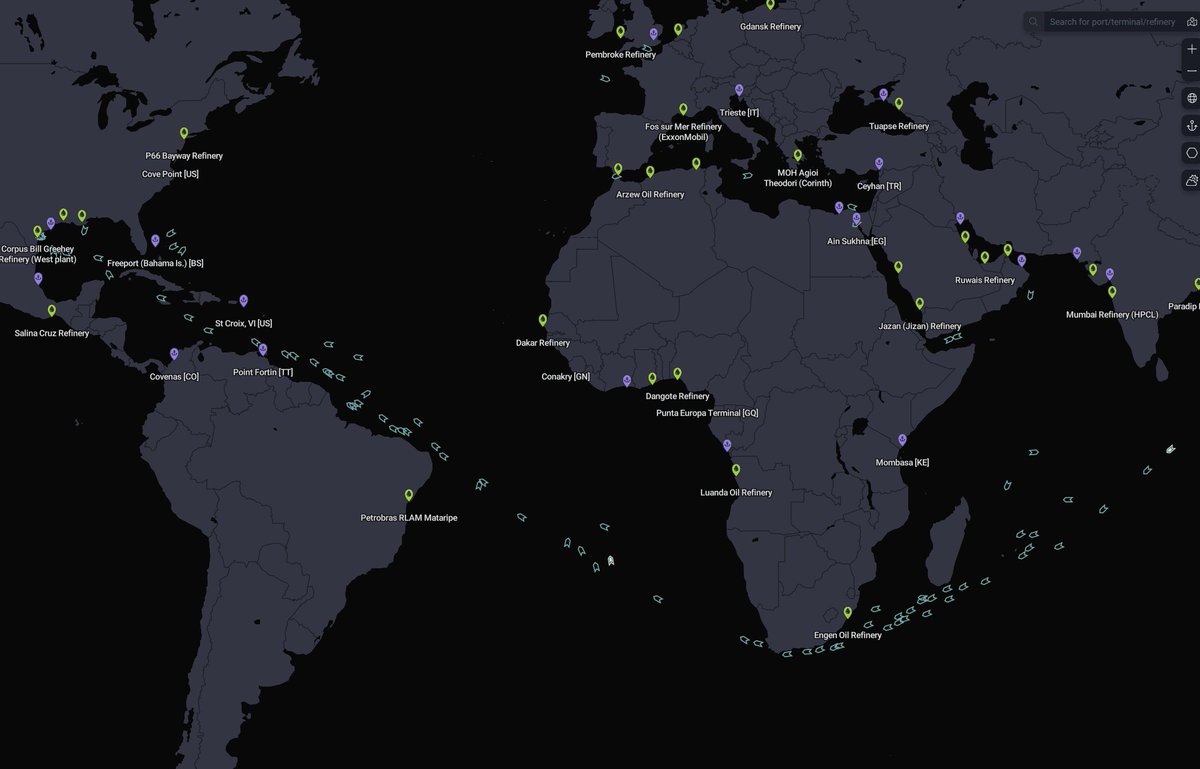
A wave of empty VLCCs heading for Corpus Christi and Houston isn’t just a dramatic map; it’s living proof that pragmatic Hemisphere-first statecraft turned a Persian Gulf crisis into U.S. energy strength, cheaper domestic natural gas for our factories, and a cautionary tale about choosing politics over production.
That map stopped me cold the first time I saw it. Dozens of empty supertankers streaming westward across the Atlantic and Caribbean like a disciplined blue-water convoy, all making straight for the loading terminals at Corpus Christi, Freeport, and Houston. It’s not random shipping noise. It’s the market sending a clear distress signal from half a world away, and the United States stepping in as the reliable closer.
Think of it like the ninth inning when the starter has lost command. Someone has to finish the game, and right now the ball is coming to the American energy sector: shale producers, Gulf Coast infrastructure, and the entrepreneurial flexibility that lets us respond when distant chokepoints fail.
The Hormuz Reality Check
The trouble, of course, is in the Strait of Hormuz. Iran laid naval mines during the recent conflict. Now, even after the ceasefire, those mines are proving hard to locate and harder to clear. Commercial traffic remains a trickle, well under 10% of normal volumes. There’s no tidy “Tehran toll booth” operating here, just drifting hazards and operational paralysis. Global buyers, especially across Asia, have done the sensible thing: they’ve pivoted hard to the one large-scale, reliable alternative sitting right here in the Western Hemisphere.
The numbers tell the story. U.S. crude exports are tracking toward or above record levels of 5 million barrels per day in April and May. VLCC fixtures have spiked sharply, and refined-product exports, gasoline, diesel, jet fuel, have already shattered previous highs. Those empty tankers on the map are the visible proof of a market in motion.
The Domestic Ledger – Winners, Losers, and Creative Destruction
Back home, the ledger is more mixed, as these things usually are. The upside is real: higher global prices layered on top of surging export volumes are delivering stronger margins for Permian producers, midstream operators, Gulf Coast terminals, and the energy-producing states that power so much of our economy. The trade balance improves. Once again, America is acting as the world’s flexible swing supplier, not because of central planning, but because our decentralized system can actually deliver.
At the pump, though, the picture stings. Gasoline has climbed above four dollars a gallon in many places, with diesel pushing toward $5.80. That functions like a stealth tax on trucking, agriculture, manufacturing, and family budgets alike. No one enjoys writing that check.
Yet there’s an important counter-balance that doesn’t get nearly enough attention. Domestic natural gas prices have dropped roughly 20% since the conflict broke out. That cheap Henry Hub molecule is powering a quiet boom in petrochemicals, fertilizers, plastics, and the broader industrial base that actually makes things. It’s the kind of tailwind that reminds us energy abundance still runs deep in this country when markets are allowed to work.
This isn’t simple zero-sum accounting. What we’re watching is creative destruction in real time. The old, rigid, state-controlled supply models are losing ground precisely because they depend on fragile political chokepoints. In their place, the decentralized, market-driven American system is reallocating capital toward its highest use. That’s not ideology talking; that’s how resilient economies adapt and strengthen.
The Canada Contrast – Policy Friction vs. Potential
The contrast with our northern neighbor is hard to ignore. Canada sits on some of the world’s largest proven reserves and produces more than five million barrels per day. Yet the vast majority of that oil still moves south by pipeline at a discount, so American refiners can blend it and re-export at full global prices. The drag isn’t geology. It’s policy: carbon taxes, extended consultations that never seem to end, regulatory delays, and a political reluctance to build the tidewater export capacity that would let Canada compete on the open market.
While those empty tankers line up for Texas ports, our Canadian friends remain occupied with symbolic priorities instead of unlocking their own global potential. It’s a reminder that abundant resources without the institutional courage and clarity to develop them tend to stay trapped on paper.
Venezuela – Proof of Concept for the Art of the Hemisphere
Then there’s Venezuela, which offers the clearest proof of concept for the kind of Hemisphere-first approach I’ve written about in The Art of the Hemisphere. Targeted realpolitik, decisive pressure to remove Maduro, followed by pragmatic reconstruction and selective sanctions relief, has begun to move the needle. Venezuelan output is climbing toward 1.1 million barrels per day, with heavy Merey-grade barrels now flowing directly into U.S. Gulf Coast refineries at market prices rather than discounted shadow-fleet routes to distant buyers.
Every one of those imported heavy barrels does something elegant: it frees up additional light, sweet U.S. shale and refined products for export. That’s exactly the arbitrage powering the VLCC convoy we’re seeing on the maps right now. This wasn’t multilateral virtue-signaling or open-ended sanctions theater. It was a practical, interest-driven update to the Monroe and Roosevelt Corollaries: secure the backyard, remove the political obstacles, then let private enterprise and clear price signals do the heavy lifting. No new distant quagmires. Just hemispheric supply chains working in America’s favor.
Why the Spice Must Flow
At the end of the day, markets function as discovery mechanisms. When one chokepoint collapses, capital, ingenuity, and entrepreneurial effort shift toward the most adaptive alternative. That’s the deeper conservative principle here. We see the difference between failing centralized models, Iran’s mullahs and minefields, Venezuela’s long socialist decline, Canada’s regulatory thicket, and America’s enduring edge: relatively secure property rights, open institutions, and policy that generally lets entrepreneurs respond to real signals instead of political mandates.
Our advantage isn’t geology alone. It’s the cultural willingness to let human action and market discipline work.
From nearly thirty years in information security, I’ve learned that the best defense is anticipating disruption, building resilient systems, and rewarding the adapters rather than shielding the fragile. The tanker convoy still heading into Texas ports is tangible validation of that same logic applied to energy and statecraft. Pragmatic Hemisphere-first thinking, married to market freedom, turned a Persian Gulf crisis into American energy strength and industrial advantage.
The spice must flow. In an economy guided by sound principles, it finds a way, often stronger and more reliable than before.
