
The Democrat Party’s Multifaceted Crisis
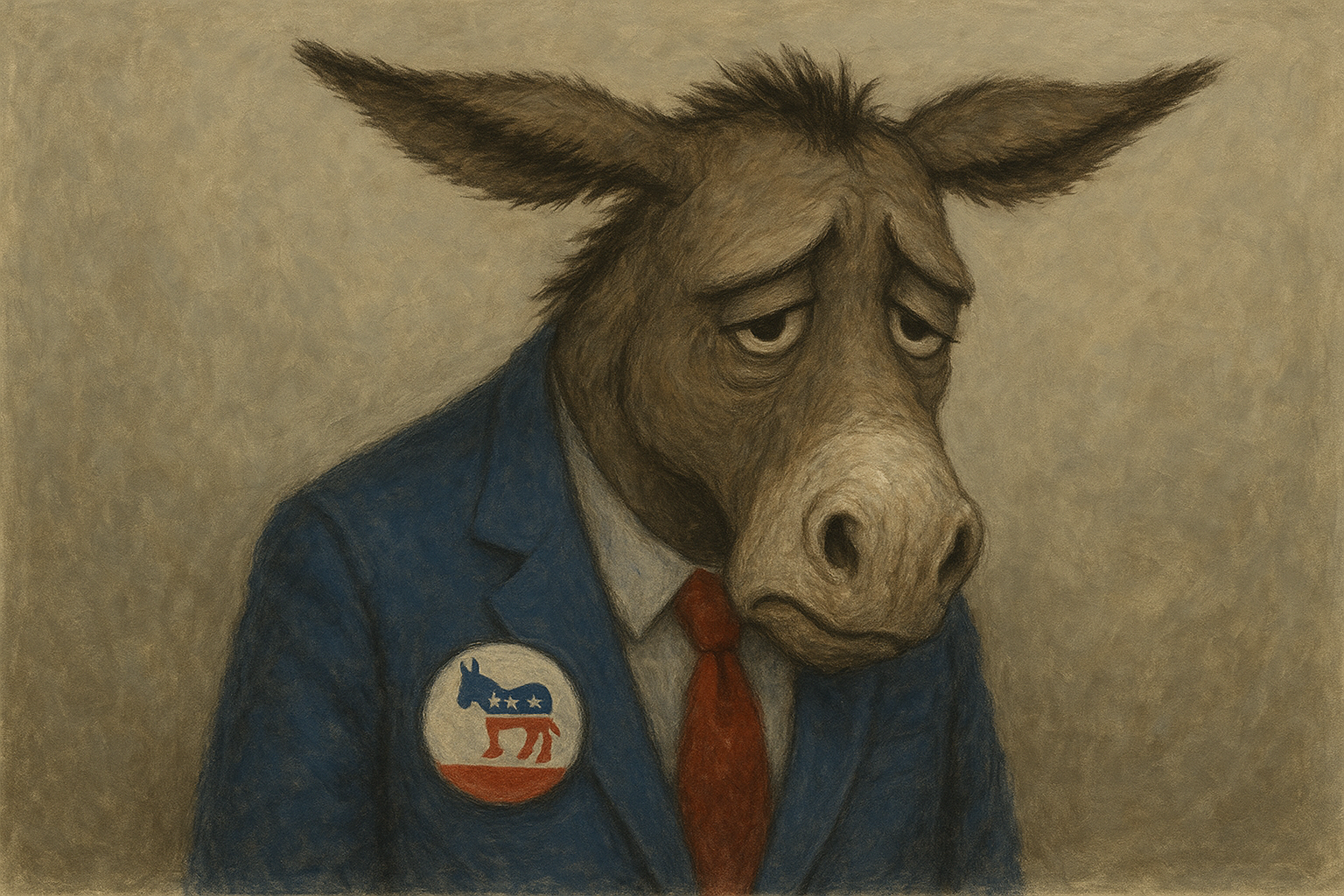
As of September 2025, the Democrat Party faces an existential crisis that threatens its electoral viability in the 2026 midterms and beyond. This crisis, characterized by a dramatic erosion of voter registrations, aggressive Republican redistricting maneuvers, severe fundraising disadvantages, and a significant demographic realignment-particularly among young Latino voters-has been meticulously documented across sources like the New York Times, HotAir, RedState, and public discourse on X. Compounding these challenges are the targeted efforts of conservative activists like Shiloh Marx and Scott Presler, whose complementary strategies are accelerating the Democrat decline. This expository analysis synthesizes five key points to explore the scope, causes, and implications of this crisis, drawing on data and narratives to illuminate the party’s precarious position and the formidable obstacles to recovery.
1. The Voter Registration Crisis: A Stampede Away from Democrats
The Democrat Party has experienced a staggering loss of registered voters, with a net decline of 2.1 million across 30 states and Washington, D.C., between 2020 and 2024, according to L2 voter data cited in the New York Times. Meanwhile, Republicans gained 2.4 million registrations, reducing the Democrat national registration edge from 11 percentage points to just 6. This “stampede away” from the party is evident in both blue and battleground states. For instance, Pennsylvania’s Democrat advantage plummeted from 517,310 in 2020 to approximately 53,000 by 2025, driven by 130,000 former Democrat voters switching to the GOP and inactive voter removals disproportionately affecting Democrat-leaning rolls. The trend persists into 2025, with Democrats losing an additional 160,000 registrations since Election Day 2024, while Republicans added 200,000.
This erosion reflects a deeper malaise: voter dissatisfaction with the Democrat brand, which lacks a clear agenda and struggles with low approval ratings (19% in a July 2025 Quinnipiac poll). Operational failures, such as underfunded registration drives and internal memos cautioning against aggressive efforts due to low Biden-Harris approval, have compounded the issue. As a “lagging indicator” of political sentiment, registration losses signal a broader shift in voter allegiance, making it harder for Democrats to mobilize their base in high-turnout elections like 2024, where new and returning voters favored Trump 52%-45%. Without reversing this trend, Democrats face a structural deficit that could cripple their competitiveness in upcoming cycles.
2. The Pincer Movement: Shiloh Marx and Scott Presler’s Impact
Two conservative activists, Shiloh Marx and Scott Presler, are intensifying this crisis through complementary strategies that erode Democrat voter rolls while bolstering Republican numbers. Marx, operating primarily in California, focuses on “cleaning” voter rolls by targeting inactive, deceased, or non-resident voters through legal challenges under the National Voter Registration Act (NVRA) and Freedom of Information Act (FOIA) requests. His efforts, such as lawsuits against counties like Riverside and San Francisco, have led to statewide directives removing ineligible voters, potentially 1.2 million in Los Angeles County alone, many of whom lean Democrat due to urban demographics. Marx’s work, amplified on X with hashtags like #ShilohMarx, pressures election officials and frames Democrat resistance as enabling “fraud,” resonating with conservative narratives.
Conversely, Scott Presler employs an offensive approach, driving grassroots voter registration to add Republicans in swing states like Pennsylvania, where he has helped flip counties red and narrowed the Democrat lead to 53,303 by 2025. Through Early Vote Action, Presler targets underrepresented conservative groups-hunters, Amish, and young men-at events like fairs and gun shows, boasting individual registrations on X with posts like “+1🟥 in Pennsylvania.” Together, their “pincer movement” subtracts Democrat voters while adding GOP ones, exploiting Democrat failures like underinvestment in registration and lax voter roll maintenance. This dual strategy makes recovery harder, as Democrats must counteract both losses and GOP gains amid strained resources.
3. Redistricting War: Republican Structural Advantage
A mid-decade redistricting “war,” sparked by President Trump’s push for aggressive gerrymandering, further tilts the playing field toward Republicans. On August 20, 2025, Texas passed a new congressional map creating up to five GOP-leaning seats, diluting Democrat strongholds in minority-heavy areas. This move, part of Trump’s “endgame” for a 100-seat House majority, has prompted other GOP-controlled states like Missouri to consider similar redraws. Republicans hold 23 state trifectas compared to Democrats’ 14, giving them greater control over map-drawing processes.
Democrats’ response, such as California’s ACA 8 ballot measure to override its independent redistricting commission and add five Democrat seats, is costly (estimated at $250 million for a special election) and risky, with polling showing mixed voter support. Republicans, leveraging population shifts to red states and a conservative-leaning Supreme Court, can execute redraws more efficiently, potentially netting 4-50 seats if the war escalates. This structural edge, combined with voter registration trends, positions the GOP to lock in long-term electoral gains, especially as 2030 census projections favor red states.
4. Fundraising Disparities: A Financial Death Cycle
Financially, the Democrat National Committee (DNC) is severely outmatched by the Republican National Committee (RNC). FEC filings for July 2025 show the RNC raising $13 million with $84.3 million cash on hand, while the DNC raised $8.5 million with less than $14 million in reserves. This disparity-RNC holding over six times the DNC’s cash-reflects broader donor hesitancy, exacerbated by the Democrats’ 19% approval rating and lack of a compelling agenda. The DNC’s year-to-date receipts ($69.2 million through June 2025) pale against the RNC’s $109.5 million, limiting investments in voter registration, persuasion campaigns, and competitive House races.
This financial “death cycle,” as described by HotAir, means Democrats cannot effectively counter GOP registration drives or redistricting battles. For instance, funding shortages hinder responses to activists like Presler, whose efforts outpace Democrat mobilization. The DNC’s constraints also limit legal challenges to GOP gerrymandering, leaving the party vulnerable as Republicans capitalize on their financial and structural advantages.
5. Demographic Realignment: The Young Latino Swing
A critical demographic shift is the rightward movement of young Latino voters, particularly males, who are increasingly supporting Trump and the GOP. National exit polls from 2024 show Hispanics splitting nearly evenly between Trump and Harris, a sharp decline from Biden’s 2020 margins. In California, Latino-heavy, low-turnout areas shifted right by up to 36 points, with young men prioritizing economic independence and rejecting Democrat policies on equity and immigration. Nationally, new voter registrations among males dropped from 49% Democrat in 2020 to 39% in 2024, with young Latinos leading this trend by embracing “generic American” identities and conservative values.
This realignment wastes Democrat registration efforts, as newly enrolled voters often support Republicans, further straining limited resources. Combined with losses among other groups (e.g., Black voters and young men overall), this trend undermines the party’s coalition, especially in battlegrounds like Pennsylvania and red states like Kentucky, where GOP registration surges are pronounced.
Implications and Outlook
The convergence of these factors-registration losses, activist-driven GOP gains, redistricting advantages, fundraising deficits, and demographic shifts-creates a perfect storm for Democrats. The Cook Political Report’s 2026 House ratings underscore the GOP’s defensive edge, needing to hold just three of eight toss-up seats to maintain control, while potential redistricting gains could push them toward a supermajority. The Democrat Party’s inability to address these challenges, coupled with internal debates over strategy and leadership, risks a prolonged “doom spiral” that could reshape American politics for decades.
To recover, Democrats must rebuild their brand with a clear, inclusive agenda, reinvest in voter registration, and counter GOP redistricting with legal and grassroots efforts. However, with time running short before 2026 and structural disadvantages mounting, the path to reversal is steep. The combined impact of Marx, Presler, and broader trends like the Latino swing suggests that without urgent action, Democrats may face not just electoral losses but a fundamental realignment of the electorate toward Republican dominance.
