
An Originalist Case Against the War Powers Resolution
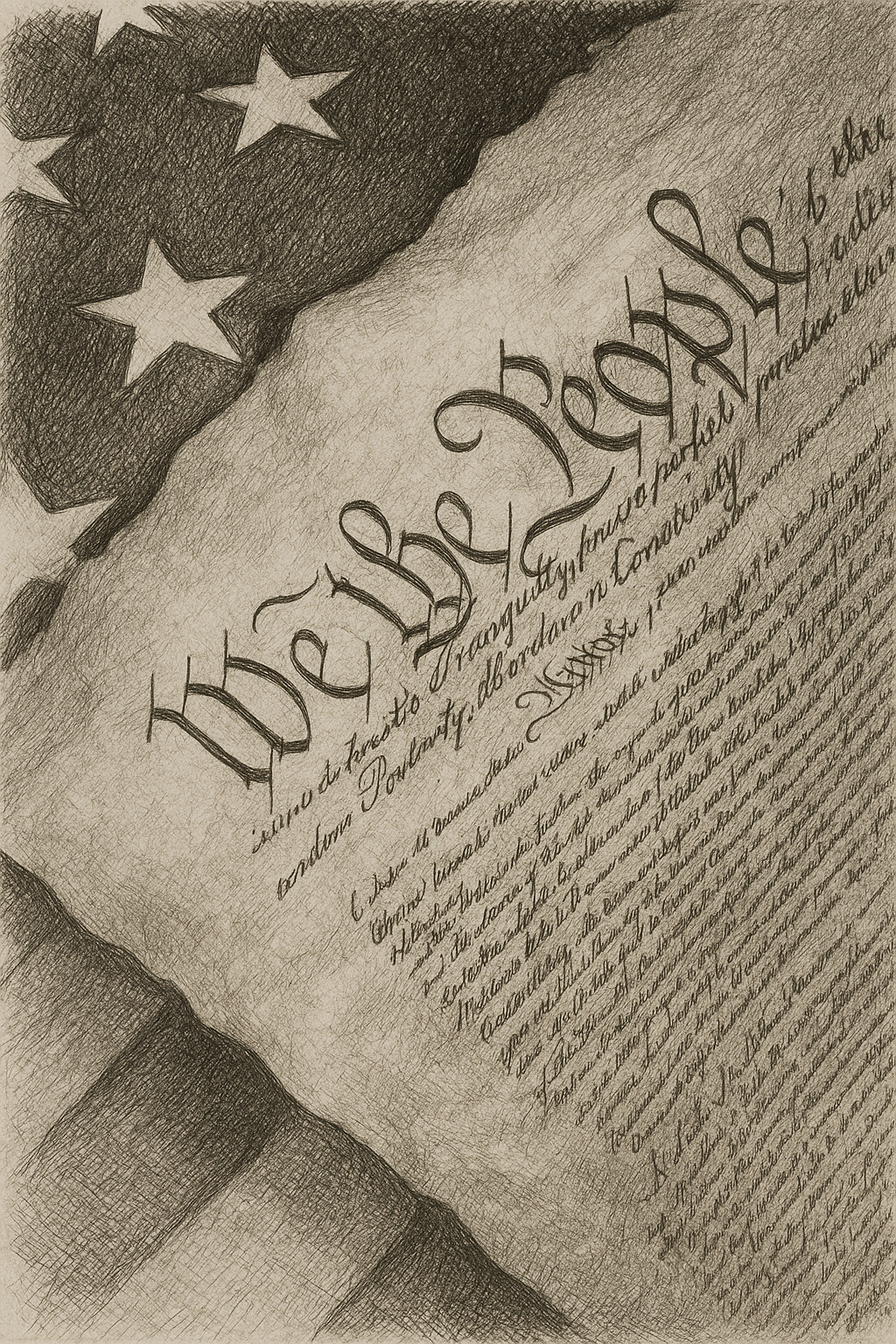
In the sweltering Philadelphia summer of 1787, the Framers of the Constitution grappled with a question that had plagued republics and monarchies alike: who should wield the power to wage war? Drawing on the lessons of European monarchs who dragged nations into ruinous conflicts, they sought to craft a system that balanced deliberate democratic consent with the need for swift action in times of crisis. The result, enshrined in Article I, Section 8, gave Congress the power to “declare War,” while Article II, Section 2 designated the President as “Commander in Chief” of the armed forces. As James Madison’s notes from the Federal Convention reveal, particularly from the August 17, 1787, debate, the shift from “make” to “declare” war was deliberate, ensuring Congress authorized the initiation of hostilities while preserving the President’s authority to conduct military operations and respond to immediate threats, such as repelling sudden attacks. Alexander Hamilton, in Federalist No. 69, underscored this division, contrasting the President’s limited role with the British king’s unchecked power to declare and wage war. The Framers intended a clear delineation: Congress decides whether to go to war, while the President determines how to execute it.
Crucially, Madison’s notes and writings highlight that Congress’s power of the purse serves as a primary check on executive military actions. During the Convention, Madison argued that Congress could control hostilities by refusing to fund them, a point he reiterated in later writings. In a 1793 letter as part of the Helvidius-Pacificus debates, Madison wrote that the President’s war powers are “confined to the conduct of war” and that Congress, through its control over appropriations (Article I, Section 9), can “refuse supplies” to halt unauthorized or disapproved military actions. This power, rooted in the Constitution’s text, gives Congress the ability to defund hostilities it deems unwarranted, rendering additional legislative constraints like the War Powers Resolution unnecessary. The Framers saw this fiscal check as a cornerstone of legislative oversight, ensuring that no President could sustain a war without the people’s representatives’ consent through funding.
Enter the War Powers Resolution (WPR) of 1973, passed over President Nixon’s veto in the shadow of the Vietnam War. Fueled by Congressional frustration over executive overreach, particularly in Vietnam, the WPR sought to reassert legislative control by requiring the President to notify Congress within 48 hours of deploying forces into hostilities, consult with Congress beforehand when possible, and withdraw forces within 60 days (plus a 30-day withdrawal period) unless Congress authorizes continued action. Yet, the WPR was not used to defund military operations or aid to South Vietnam, despite being enacted to address Vietnam-era concerns. Instead, Congress leveraged its constitutional appropriations power to limit U.S. involvement, notably through the Foreign Assistance Act of 1974, which slashed military aid to South Vietnam from a proposed $1.26 billion to $700 million for fiscal year 1974–1975, and the Case-Church Amendment of 1973, which prohibited the use of appropriated funds for U.S. military activities in Southeast Asia after August 15, 1973. These actions, rooted in Congress’s Article I authority, weakened South Vietnam’s ability to resist North Vietnam, contributing to its collapse in 1975, and demonstrate that the WPR was redundant, as Madison’s prescribed fiscal check was sufficient.
From an originalist perspective, the WPR is unconstitutional because it encroaches on the President’s Article II powers and duplicates Congress’s existing authority. The Framers vested the President with the authority to direct military operations and respond to emergencies without legislative micromanagement. By imposing a rigid timeline and mandating withdrawal absent Congressional approval, the WPR undermines the flexibility Hamilton in Federalist No. 74 described as essential for the “direction of the war” once authorized. The WPR’s consultation requirement ignores Madison’s acknowledgment in the Convention that the President must act unilaterally to repel sudden attacks—a scenario the WPR’s constraints could hinder, especially in modern warfare’s rapid tempo. Moreover, Madison’s emphasis on Congress’s power to defund hostilities, as proven in Vietnam, reveals the WPR’s redundancy.
Furthermore, the WPR’s provision allowing Congress to force withdrawal via a concurrent resolution (Section 5(c)) violates the Constitution’s Presentment Clause (Article I, Section 7). The Supreme Court’s 1983 ruling in INS v. Chadha declared legislative vetoes unconstitutional, as they bypass the President’s veto power. While the WPR’s concurrent resolution mechanism has not been directly tested in court, Chadha suggests it is unenforceable, rendering a key enforcement tool void. Originalists would argue that the Framers, wary of legislative overreach, designed the bicameralism and presentment requirements to prevent Congress from unilaterally overriding executive actions without following the full legislative process. The WPR’s attempt to circumvent this process, coupled with its failure to leverage Congress’s existing power to defund, as demonstrated in Vietnam, undermines the constitutional structure envisioned by Madison and his contemporaries.
History has borne out the WPR’s unworkability, exposing its flaws in both theory and practice. Since its passage, Presidents have consistently sidestepped or challenged its requirements, exploiting its vague definition of “hostilities.” In 1983, President Reagan notified Congress of U.S. involvement in Lebanon but faced no serious WPR enforcement when the Multinational Force remained beyond 60 days, as Congress eventually passed an 18-month authorization (P.L. 98-119). In 1999, President Clinton’s Kosovo campaign exceeded the 60-day limit without specific authorization, with his administration arguing that Congressional funding constituted implied approval—a claim courts declined to adjudicate (Campbell v. Clinton). The 2011 Libya intervention under President Obama marked a nadir: the administration claimed airstrikes did not constitute “hostilities” under the WPR due to limited U.S. ground involvement, allowing operations to continue past 60 days without Congressional approval. Critics, including legal scholars like Stephen Vladeck, decried this as a clear violation, yet Congress took no decisive action, failing to exercise its constitutional power to defund the operation, as Madison had envisioned and as it had done in Vietnam.
The WPR’s enforcement mechanisms have proven toothless. Congress, often divided or reluctant to challenge the President, rarely invokes the 60-day withdrawal requirement, nor does it wield its funding power decisively. Since 1973, over 100 WPR reports have been submitted, covering actions from Somalia (1993) to Yemen (2024), but few have led to meaningful Congressional oversight or withdrawal orders. The 2001 and 2002 Authorizations for Use of Military Force (AUMFs) further muddied the waters, with Presidents citing these broad mandates to justify actions in Syria, Iraq, and beyond, bypassing the WPR’s intent for specific authorizations. For example, President Obama’s 2014 airstrikes against ISIS relied on the 2001 AUMF, despite its focus on 9/11 perpetrators, and Congress failed to pass a new AUMF or defund the operations, undermining its own authority as Madison had prescribed. Social media posts from 2024 highlight ongoing frustration, with figures like Senators Sanders and Murphy criticizing U.S. involvement in Yemen as WPR violations, yet legislative efforts to enforce the resolution, such as the 2018 Senate vote to end Yemen support, have faltered or been vetoed, and Congress has not used its purse strings to force compliance, unlike its decisive actions in Vietnam.
The judiciary’s refusal to intervene compounds the WPR’s ineffectiveness. Cases like Dellums v. Bush (1990) and Kucinich v. Obama (2011) were dismissed due to lack of standing or “political question” doctrines, leaving enforcement to the political branches. This aligns with the Framers’ expectation, as Madison noted in Federalist No. 51, that checks and balances rely on each branch defending its prerogatives. Yet Congress’s political timidity and the WPR’s ambiguous language—failing to define “hostilities” or account for modern warfare’s complexities, like drone strikes or cyber operations—render it a relic. Presidents routinely submit reports “consistent with” rather than “pursuant to” the WPR, signaling their view of its unconstitutionality while avoiding direct confrontation.
From an originalist lens, the WPR’s fatal flaw is its attempt to legislate constraints on powers the Framers intentionally left to the President’s discretion, while ignoring Congress’s potent constitutional authority to defund hostilities. The Constitution’s text, Madison’s Convention notes, and the Federalist Papers emphasize that Congress’s role is to authorize war and control its funding, not to dictate its conduct or micromanage responses to unforeseen threats. The WPR’s 60-day clock and consultation mandates impose burdens the Framers rejected when they chose “declare” over “make” war, preserving executive flexibility. Madison’s explicit recognition that Congress can refuse to fund unauthorized wars, as demonstrated by its actions in Vietnam through the Foreign Assistance Act and Case-Church Amendment, underscores the WPR’s redundancy: the Framers already provided a mechanism to check executive overreach. History proves this framework unworkable: Presidents evade its limits, Congress fails to leverage its funding power or enforce the WPR, and courts abstain from resolving disputes. The result is a statute that exists more as a symbolic gesture than a functional check, clashing with the Constitution’s original design and failing to adapt to the realities of modern conflict.
