
Selective Shielding
Media Bias in American Coverage
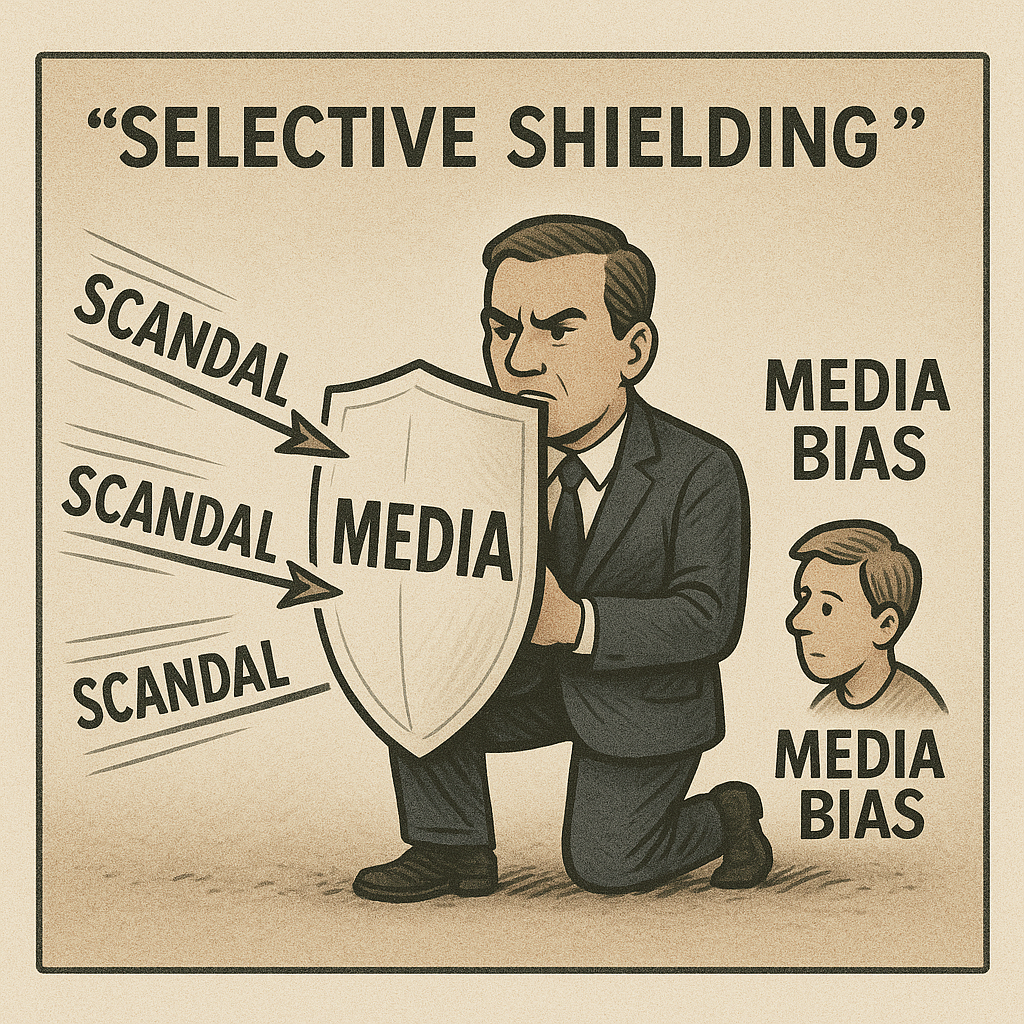 On Tuesday, Greg Gutfeld, on Fox News’ The Five, sharply criticized legacy media for their coverage of anti-ICE riots in Los Angeles, accusing them of “selective shielding” by refusing to interview rioters who burned cars and attacked law enforcement. He argued this omission was a deliberate tactic to obscure the involvement of organized, radical groups-specifically Antifa and Marxist organizations-and their funding, thereby protecting a sympathetic narrative that downplayed the riots’ chaos. This charge of media bias through omission-sidestepping voices or facts that challenge preferred frames-resonated across a series of American stories, from pro-Palestinian campus protests where outlets like CNN and The New York Times avoided engaging with pro-Hamas voices, to the shielding of President Joe Biden’s alleged mental incapacity from 2019 to 2025, alongside other instances where inconvenient truths were buried to preserve curated narratives.
🚨 Fox News’ @greggutfeld calls out liberal media’s L.A. coverage: “What I find interesting is how come the networks aren’t interviewing the protesters? There’s a selective shielding going on. They know the protesters are the worst spokesmen for the protest.”
“So, as the media… pic.twitter.com/yoZG8AUc6t
– TV News Now (@TVNewsNow) June 10, 2025
The Los Angeles anti-ICE riots, as Gutfeld highlighted, saw over 1,000 protesters causing significant destruction, with reports from Fox News’ Bill Melugin pointing to coordinated efforts by groups like the Coalition for Humane Immigrant Rights (CHIRLA) and the Party for Socialism and Liberation (PSL). Critics suggested these riots were organized by Antifa and Marxist-affiliated groups, potentially backed by figures like Neville Singham, a billionaire linked to funding progressive causes. Yet, major outlets like CNN and MSNBC focused on the protests’ broader immigration grievances, omitting interviews with rioters or investigations into their ideological ties. This selective shielding, as Gutfeld argued, hid the radical underpinnings of the unrest, much like media avoided exposing the organized nature of similar events.
At Columbia University in April 2024, pro-Palestinian protests, including the Gaza Solidarity Encampment, demanded divestment from Israel amid the Gaza conflict. Outlets like CNN failed to interview protesters explicitly aligned with Hamas or its rhetoric, such as those chanting “globalize the intifada.” Noah Bernstein, a Columbia Daily Spectator deputy editor, noted that protesters felt coverage was slanted, with media avoiding direct engagement to sidestep the controversy of their pro-Hamas sentiments. This selective omission, much like Gutfeld’s LA riots example, suggested a deliberate effort to shield the protesters’ more radical positions, framing the protests as broadly pro-Palestinian rather than probing their support for Hamas.
At George Washington University in 2024, pro-Palestinian protests included rhetoric linked to Hamas. PBS NewsHour emphasized university responses over interviews with protesters endorsing Hamas’s tactics, focusing instead on less contentious demands like divestment. This aligned with Gutfeld’s point: by not engaging with the most radical voices, media outlets shielded their actions from scrutiny, presenting a sanitized version of the protests. Similarly, at the University of Washington in May 2025, students occupying an engineering building to protest Boeing’s military contracts included some expressing pro-Hamas views. CNN reported arrests but relied on university statements, omitting protester interviews, thus shielding their radical rhetoric as Gutfeld accused media of doing in LA.
Concerns about President Joe Biden’s mental capacity, evident in public appearances from 2019 to 2025, were similarly shielded by major outlets. Reports from conservative media, like Fox News, and public observations of Biden’s gaffes, moments of confusion, and physical stumbles during his campaign and presidency were downplayed or ignored by CNN, MSNBC, and The New York Times. While these outlets focused on Biden’s policy achievements or framed criticisms as age-related stereotypes, they avoided in-depth investigations into claims of cognitive decline, despite occasional leaks from White House staff about managed public appearances. This omission, as Gutfeld might argue, protected a Democratic leader by sidestepping a narrative that could undermine his administration’s credibility, much like shielding radical groups in LA.
In 2020, the New York Post’s report on Hunter Biden’s laptop, alleging questionable business dealings, was largely ignored by NPR, CNN, and The New York Times. NPR’s Terence Samuels called it a “distraction,” and only in 2022, after the laptop’s authenticity was confirmed, did coverage emerge. By 2025, NPR’s CEO Katherine Maher admitted the error, but the initial silence, as Gutfeld might argue, shielded a Democratic candidate, much like avoiding Antifa or Marxist ties in LA protected a progressive narrative. During the 2020 George Floyd protests in Chicago, stations like WGN and ABC 7 were slow to report on looting and violence in the Loop, seemingly to avoid tainting a social justice movement-a choice akin to shielding radical organizers, per Gutfeld’s critique.
The border crisis from 2021 to 2023, with over 2.5 million apprehensions at the U.S.-Mexico border in 2022 per Customs and Border Protection, saw CNN and MSNBC focus on humanitarian angles while downplaying enforcement failures, possibly to protect the Biden administration. This selective framing, like shielding Antifa and Marxist involvement in LA, aligned with Gutfeld’s view of media omitting inconvenient details. Similarly, during the COVID-19 vaccine rollout, concerns about Pfizer’s trial data, revealed in 2022 court documents, were barely covered by CNN, The New York Times, or NBC, suggesting a shielding of public health narratives, as Gutfeld’s argument would imply.
As trust in media plummeted to 31% in a 2024 Gallup poll, Gutfeld’s charge of selective shielding struck a chord. From Antifa and Marxist organizers in LA to pro-Hamas voices on campuses, from Biden’s alleged mental incapacity to political scandals and policy failures, the media’s failure to engage with radical or inconvenient perspectives crafted a narrative that obscured reality. Whether it was CNN’s omission of pro-Hamas rhetoric at Columbia, PBS’s focus on institutional responses at George Washington, or NPR’s sidestepping of the Hunter Biden story, the pattern was clear: by selectively shielding organized radical elements and their motives, or protecting political figures like Biden, American media left the public questioning whether the full story was ever told, just as Gutfeld had warned.
