
The Declaration and Constitution at Washington-on-the-Brazos, 190 Years On
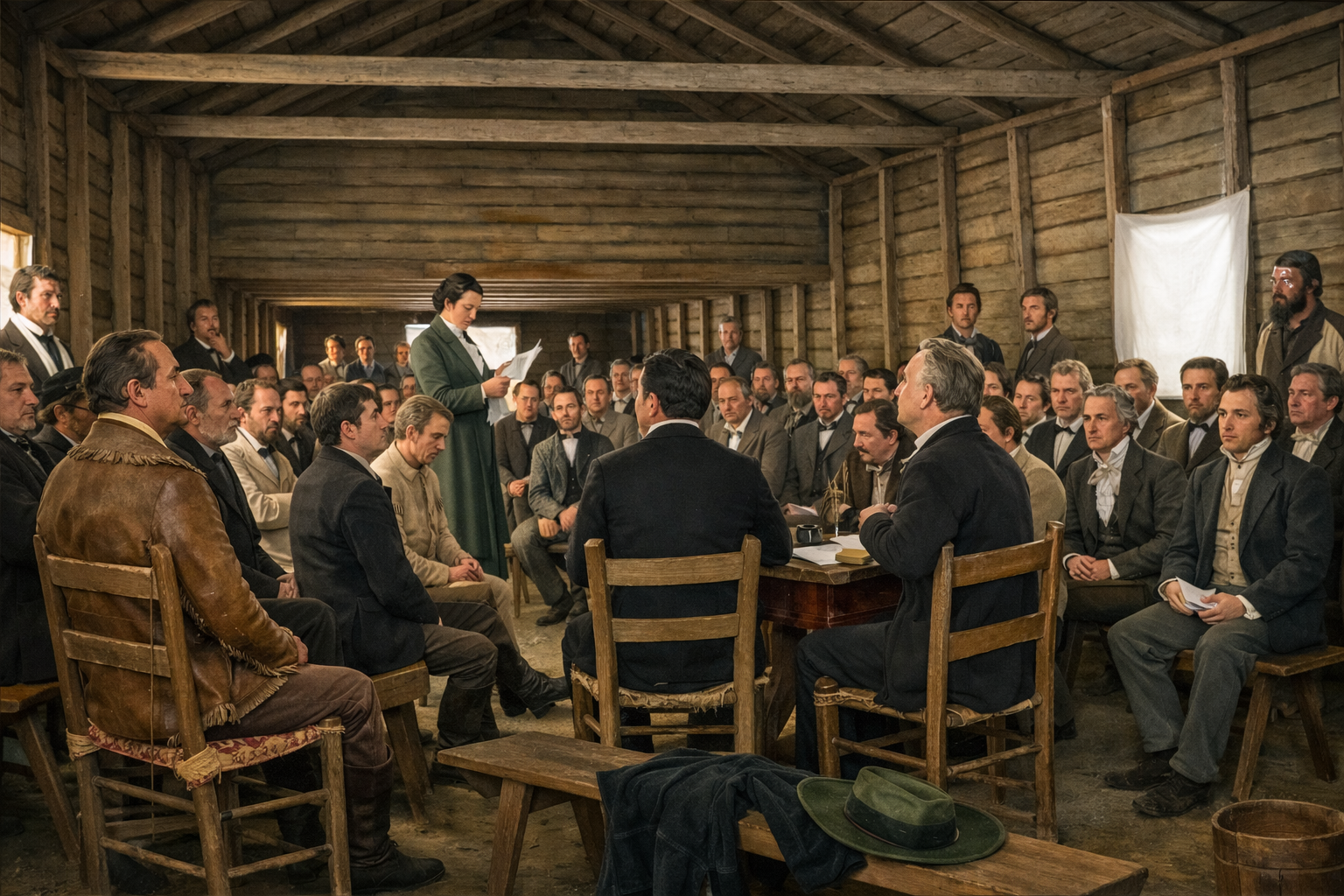
Picture a raw, unfinished wooden hall on the banks of the Brazos River—leaky roof, dirt floor, the chill of early March seeping through cracks in the walls. Rain drums outside, wagons creak in the mud, and inside, 59 men from across the scattered settlements of Texas crowd benches or stand along the walls. It’s March 2, 1836—exactly 190 years ago today—and while cannon fire still echoes faintly from the direction of the Alamo (though the full horror of its fall won’t reach them for days), these delegates put quill to paper and declare: Texas is no longer part of Mexico. The Republic of Texas is born.
But their work didn’t end there. In the same urgent session, they drafted and adopted the Constitution of the Republic of Texas—a framework to govern the fledgling nation amid war. This is the next chapter in our series on the Texas Revolution, expanding on the swift Declaration to include the practical foundation laid just days later. The Convention of 1836 at Washington-on-the-Brazos wasn’t a grand assembly like Philadelphia in 1776; it was a frontier gathering in a boomtown barely two years old, a ferry crossing turned makeshift capital. Yet in 17 frantic days, these men—lawyers, farmers, soldiers, speculators—severed ties with Mexico and built the skeleton of a sovereign republic.
The Gathering Storm: Delegates in a Drafty Hall
The convention opened on March 1 amid rising anxiety. News from Bexar was grim: Santa Anna’s army encircled the Alamo, Travis begged for aid that might never come. Delegates arrived piecemeal—some delayed by swollen rivers, others by distance—but urgency drove them. Richard Ellis of Red River presided; among the 59 signers were Sam Houston (commander-in-chief designate), Lorenzo de Zavala (a Mexican liberal fleeing Santa Anna’s regime), and Tejanos José Antonio Navarro and José Francisco Ruiz, whose signatures underscored this wasn’t purely an Anglo rebellion.
On the first day, Ellis appointed a committee—George C. Childress (chairman and primary drafter), James Gaines, Edward Conrad, Collin McKinney, and Bailey Hardeman—to draft a Declaration of Independence. They worked overnight, modeling it on Jefferson’s 1776 masterpiece but sharpening it for Texas realities. By March 2, the draft was read once, debated briefly, and adopted unanimously—no dissent, no amendments. Copies raced out by riders to spread the word: Texas stood independent.
Yet the delegates pressed on. With the Alamo’s fate unknown (Travis’s letter, received around this time, urged a declaration so the world would know what they fought for), they turned to framing a constitution. Committees labored over the next two weeks, blending U.S. principles with Mexican legal traditions. Houston, ever strategic, pushed to complete the work rather than rush west to slaughter. The hall buzzed with debate over structure, rights, and protections—better to forge a nation than remain subjects of a despot.
The Words That Severed Chains: The Declaration of Independence
The Texas Declaration opens with a powerful echo of 1776:
When a government has ceased to protect the lives, liberty and property of the people, from whom its legitimate powers are derived… and so far from being a guarantee for their inestimable and inalienable rights, becomes an instrument in the hands of evil rulers for their oppression…
It unleashes a litany of grievances against Santa Anna’s centralist regime:
- Abandoning the federal Constitution of 1824 for military despotism favoring army and priesthood.
- Denying trial by jury, religious freedom, fair representation, and public education.
- Ignoring petitions, imprisoning messengers, imposing rule by bayonet.
- Inciting Native tribes, failing to secure property, and more.
The document culminates boldly:
We, therefore, the delegates with plenary powers of the people of Texas, in solemn convention assembled… do hereby resolve and declare, that our political connection with the Mexican nation has forever ended, and that the people of Texas do now constitute a free, Sovereign, and independent republic…
Signed by all 59—Richard Ellis first—the words committed Texas to the fight. No turning back.
Building the Republic: The Constitution of 1836
With independence declared, the convention shifted to the Constitution, adopted on March 16 and finalized March 17, 1836. Hastily drafted under threat of advancing Mexican forces, it drew heavily from the U.S. Constitution but incorporated Mexican influences like community property laws, homestead protections, and debtor relief—practical nods to frontier life.
Key features included:
- Separation of powers into legislative (bicameral Congress: Senate and House), executive (a strong president), and judicial branches (four-tiered: justice, county, district, supreme courts), with checks and balances.
- A Bill of Rights protecting freedoms of speech, religion, press, assembly, and trial by jury.
- Male suffrage (white males over 21; explicitly excluding “Africans, the descendants of Africans, and Indians” from citizenship and voting).
- Legalization and protection of slavery—a stark contrast to Mexico’s abolition, reflecting settler interests.
- Abolition of imprisonment for debt, prohibition of monopolies, primogeniture, and entailment.
- Ineligibility of ministers/priests for public office.
- Strong protections for land and property to attract settlers.
The Constitution was brief (under 6,500 words), flexible, and granted broad powers to officials—especially the president—to meet wartime needs. On March 17, as reports of Santa Anna’s approach arrived, the convention adjourned hastily, establishing an ad interim government (David G. Burnet as president, Sam Houston as commander-in-chief) to lead through the crisis until elections.
For men like Houston—seeking redemption after Tennessee scandals—this was rebirth: from provisional leader to architect of a republic. For Tejanos like Zavala, a stand against centralism. The documents rallied forces, drew U.S. volunteers, and framed the revolution as defense of liberty and property.
Echoing Today: 190 Years of Texas Spirit
Though delayed by a couple of days (the calendar doesn’t wait for writers), this anniversary resonates in 2026. Washington-on-the-Brazos State Historic Site celebrated with parades, reenactments, living history at Barrington Farm, and tours—free admission, musket firings, lantern tours bringing the moment alive.
As we reflect, remember: while the Alamo’s defenders bought time with blood, these delegates bought legitimacy with ink. The Declaration severed ties; the Constitution built the nation—paving the way through Goliad’s tragedy, the Runaway Scrape’s despair, and San Jacinto’s triumph.
Next in the series: Goliad—the massacre that turned grief to vengeance. Until then, happy (belated) Texas Independence Day. In the words of the hour: Independence is declared; it must be maintained.
