
The Imperative of Pruning: Lessons from Conservatism’s Past for Its Present Reckoning
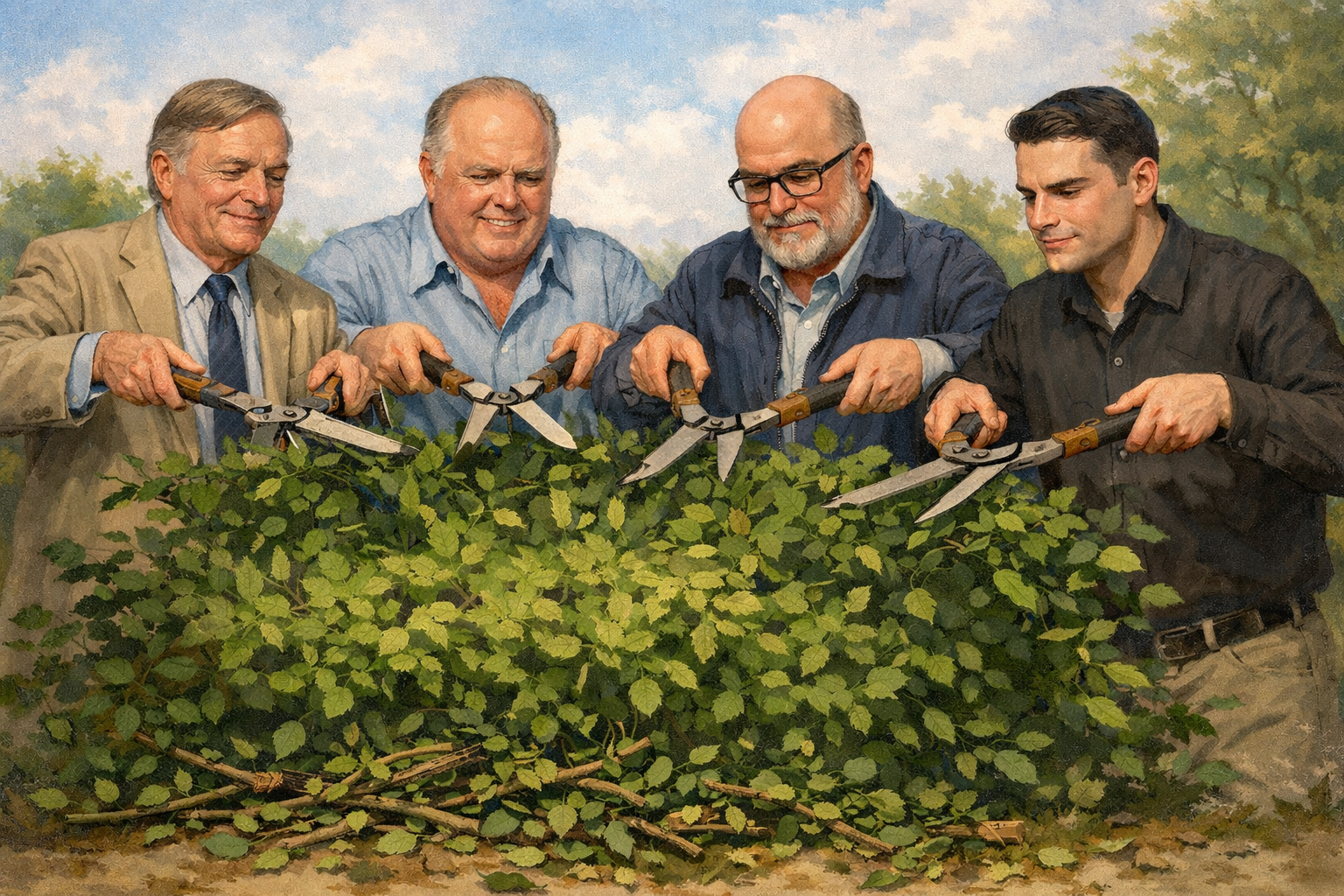
In the shadow of a resurgent conservative movement post-2024, where victories at the ballot box mask deeper fissures, a quiet but fierce battle rages-not against external foes like progressive overreach or cultural Marxism, but within the ranks themselves. This internal reckoning, akin to the purges that forged modern conservatism from the chaotic mid-20th century, demands a return to first principles and the permanent things. As voices like Tucker Carlson and Candace Owens amplify rhetoric that veers perilously close to historical toxins, the imperative to prune-methodically, courageously-has never been more urgent. Drawing from the lessons of our intellectual forebears, this analysis distills five enduring takeaways from our discourse, weaving historical precedents with contemporary exigencies to underscore why such pruning is not merely advisable, but essential for the movement’s survival and fidelity to its foundational ethos.
A Recurring Struggle: History’s Warning Against Internal Threats
First, recognize that this is not a new fight; it is a recurring one, etched into the annals of conservatism’s evolution. From the John Birch Society’s peak in the 1950s and 1960s-boasting up to 100,000 members, a multimillion-dollar budget, and sway over Barry Goldwater’s nomination-the movement has grappled with elements that cloak bigotry and paranoia in anti-communist zeal. William F. Buckley Jr.’s painstaking campaign to marginalize the Birchers, culminating in National Review’s 1965 exposé, was no aberration but a pattern repeated against Pat Buchanan’s paleoconservatism in the 1990s. While earlier generations of conservatives rightly rejected the Klan’s overt racism as antithetical to American principles, the focus here remains on ideological threats within the mainstream right. Today, as Carlson platforms Holocaust deniers like Darryl Cooper and Owens peddles conspiratorial narratives implicating Jewish influence, we witness echoes of those same infiltrations. History teaches that tolerance of such forces fractures coalitions, alienates allies, and cedes moral high ground to adversaries. Pruning must be done precisely because unchecked extremism has historically doomed conservatism to irrelevance, as Buckley’s efforts cleared the path for Ronald Reagan’s triumphs. In 2025, with MAGA’s broad tent at risk of splintering over isolationism and anti-Semitic undertones, failing to act repeats the mistakes of the past, ensuring electoral setbacks and ideological dilution.
The Cost of Courage: Why Pruning Demands Unyielding Dedication
Second, pruning requires dedication and moral courage, far beyond superficial tactics or fleeting outrage. Buckley’s purge was no swift decree; it unfolded over years of private entreaties, public editorials, and alliances with figures like Goldwater and Reagan, enduring subscriber losses and accusations of betrayal. The Birchers’ real-world clout-local chapters, school board infiltrations, and grassroots funding-mirrors the substantial audiences commanded by Carlson (millions of podcast views), Owens (over 20 million across platforms), and Megyn Kelly (top-ranked shows). Yet, as Mark Levin thunders in his recent radio monologues and Republican Jewish Coalition speeches, labeling Carlson a “Jew-hater” and urging expulsion of such “poison,” the process demands steadfast resolve. Why must it be done? Because short-term unity purchased at the price of principle erodes the movement’s soul, much as the JBS’s conspiracism threatened to taint the entire GOP. In today’s digital age, where clicks reward controversy, the dedicated few-like Ben Shapiro at AmericaFest decrying “moral imbecility”-must weather backlash to safeguard electability and integrity. Without this grit, conservatism devolves into a haven for grifters, repelling the principled patriots essential for enduring governance.
Anchored in Eternity: The Primacy of First Principles and Permanent Things
Third, all pruning must be grounded in first principles and the permanent things, lest it devolve into arbitrary factionalism. Russell Kirk’s “permanent things”-those unchanging norms of moral order, tradition, human dignity, piety, and ordered liberty-form the litmus test, rooted in the Judeo-Christian heritage that underpins the American Founding. Buckley’s expulsion of the Birchers stemmed not from personal pique but from their violation of objective truth (wild conspiracies) and moral tradition (latent anti-Semitism), principles echoed in Edmund Burke’s reverence for organic society and C.S. Lewis’s defense of natural law. Currently, as Levin warns of figures abandoning Judeo-Christian legacies for “America only” isolationism, pruning becomes a moral imperative: rhetoric that minimizes genocide or indulges blood-libel tropes assaults these foundations, betraying the Declaration’s self-evident truths and the Constitution’s limited government. It must be done to preserve conservatism as a philosophy of stewardship, not transient passions; without this anchor, the movement risks mirroring the left’s relativistic slide into identity politics and division.
Surgical Precision: Redeeming the Base While Excising the Poison
Fourth, distinguish the redeemable audience from the toxic enablers, ensuring pruning strengthens rather than diminishes the base. Unlike Nick Fuentes’ largely online phantom force-amplified by bots yet absent in real-world encounters, as David Marcus attests-the audiences of Carlson, Owens, and Kelly are vast and often genuinely patriotic, drawn to critiques of establishment excess. Buckley’s model was surgical: praising Birch rank-and-file as “fine citizens” while excoriating founder Robert Welch’s extremism. Similarly, today’s pruners must appeal to shared values-individual responsibility, free markets, Western heritage-while isolating enablers who platform bigots like Fuentes. Levin’s and Shapiro’s condemnations exemplify this, redirecting followers toward truth without blanket alienation. Why imperative? History reveals that retaining redeemable elements post-purge fueled Reagan’s coalition; today, failing to differentiate risks hemorrhaging young conservatives to fringes, undermining the broad tent needed for policy victories on borders, economy, and culture.
Arming the Renewal: The Conservative Canon as Indispensable Arsenal
Fifth, intellectual resources like the Conservative Canon are essential tools, providing the positive vision for renewal amid excision. This meticulously curated canon-encompassing Locke, Burke, Kirk, and Buckley-offers summaries, civic influences, and policy legacies that equip pruners with intellectual rigor. Rooted in history’s wisdom, it counters abnormities by fostering moral imagination and constitutional fidelity, much as Buckley’s National Review served as a beacon during the JBS fight. In 2025’s debates, where outrage farming eclipses principle, this canon redirects discourse toward enduring frameworks-Hayek’s warnings against serfdom, Sowell’s constrained vision of humanity-ensuring pruning yields growth. It must be wielded because, as Kirk taught, conservatism conserves the permanent things; without such resources, purges become mere vendettas, leaving voids filled by the very toxins expelled. The canon serves as a safeguard against those who believe that, as Rush Limbaugh described them, “history began on the day that they were born.”
A Call to Fidelity: Pruning as the Path to Triumph
In conclusion, the conservative movement stands at a crossroads, its post-Trump vitality imperiled not by external storms but by internal rot. Yet history affirms that pruning, guided by dedication, principles, discernment, and intellectual fortitude, is the forge of resilience. As Buckley, Limbaugh, Levin, and Shapiro have shown across generations, this labor-though arduous-secures a conservatism worthy of its inheritance: principled, electable, and unyielding in defense of liberty’s flame. The time to act is now; for in fidelity to the permanent things lies not just survival, but triumph.
