
Outthinking and Outworking Western Leaders in the Gaza Peace Deal
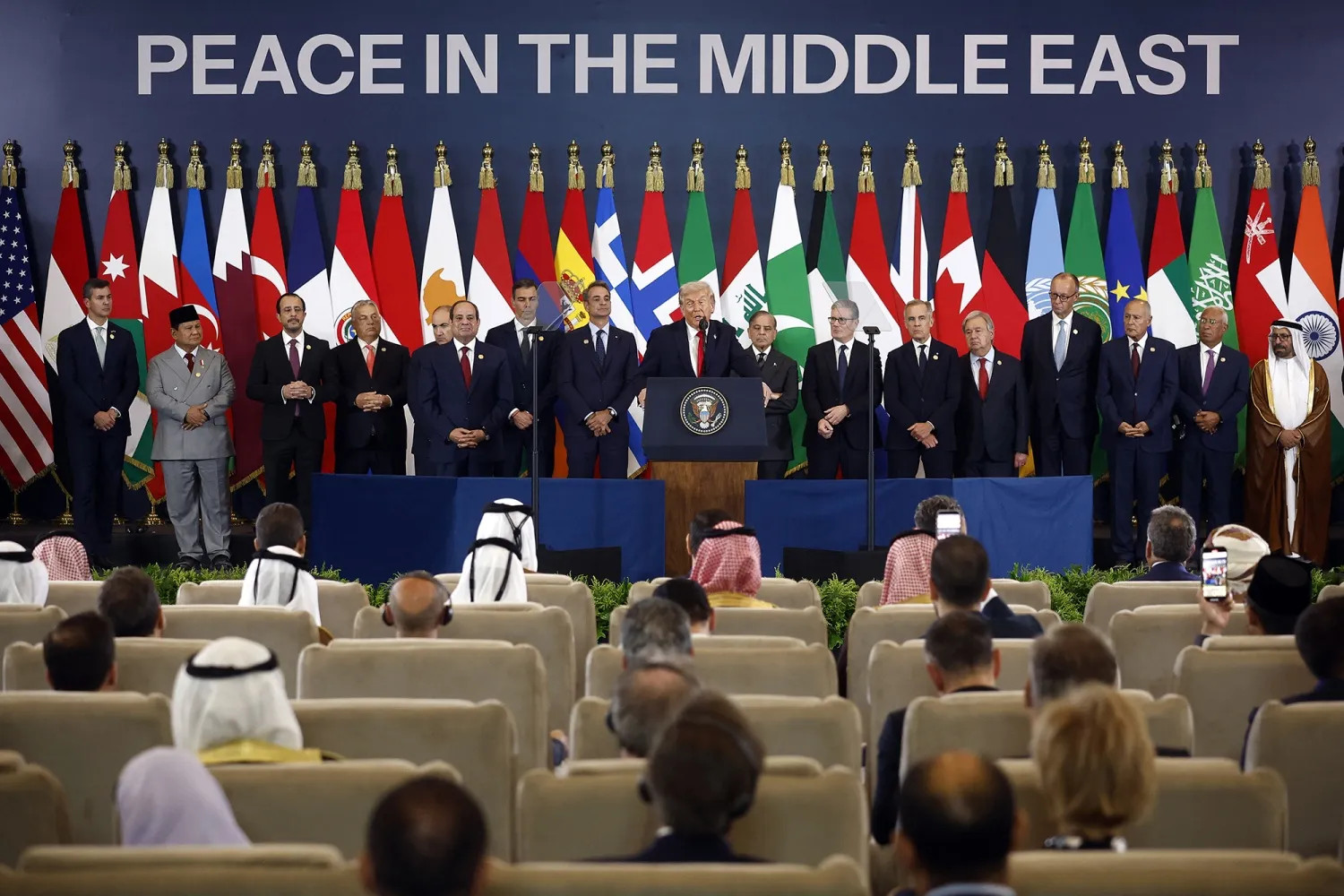 President Trump leading the wo
The Middle East stands at a historic juncture, with the release of all 20 living hostages held by Hamas marking a decisive victory in the Gaza conflict. This achievement, cemented by the implementation of Phase One of President Donald Trump’s 20-point Gaza Peace Plan, stands as a testament to his unparalleled leadership and moral clarity. Unlike the Western leaders at Monday’s Peace in the Middle East summit in Sharm El Sheikh, who offered muted applause and pushed for excessive Israeli concessions, Trump, alongside his formidable team-Marco Rubio, Jared Kushner, Steve Witkoff, and Mike Huckabee-out-thought, out-manipulated, and, most crucially, out-worked them. Antony Blinken’s recent thread claiming Biden’s groundwork for this deal is easily refuted by the facts on the ground, which reveal Trump’s fearless use of leverage as the true catalyst for peace. Trump’s stronger moral compass, demonstrated through decisive action and a rejection of feckless establishment norms, exposes the pathetic moral failings of Western leaders who prioritized optics over results.
(7/12) The post conflict plan should be implemented as soon as possible, with eyes wide open about its challenges: pulling together the international stabilization force, fully demilitarizing and disarming Hamas, dealing with insurgents, expeditiously securing a phased but full…
— Antony Blinken (@ABlinken) October 11, 2025
The Moral Failure of Western Leaders
The contrast between Trump’s leadership and that of Western leaders was starkly evident at the Sharm El Sheikh summit on October 13, 2025. As Katie Pavlich observed, while Israelis cheered Trump’s announcement of the hostage releases, dozens of leaders in the room-representing the European Union, the United Nations, and Arab states-remained silent, their lack of reaction speaking volumes about their moral compass.
An observation:
In Israel, when Trump spoke about the release of the hostages, those listening cheered and clapped.
In Egypt at the Peace in Middle East summit, when he mentioned the hostages being released there was little reaction from dozens of leaders in the room.
— Katie Pavlich (@KatiePavlich) October 13, 2025
This silence reflected a reluctance to endorse a deal that strengthened Israel without addressing Palestinian statehood, a demand Blinken championed in his October 11, 2025, X thread. Blinken argued that Trump’s plan built on Biden’s May 2024 proposal, which included phased ceasefires and a path to statehood. However, the Wall Street Journal (WSJ) reported that Hamas officials, stunned by Trump’s post-election sanctions on Iranian oil and pressure on Qatar, admitted they had “no choice” but to accept a deal they didn’t want. This fact directly refutes Blinken’s narrative, as Biden’s approach, rejected multiple times by Hamas for lacking consequences, failed to deliver where Trump succeeded.
Western leaders, including Blinken, pushed for Israel to surrender significant concessions-full troop withdrawal and statehood talks-without leveraging sufficient pressure on Hamas or its backers. The WSJ and Daily Signal articles highlight how Trump out-maneuvered them by imposing $10 billion in threatened sanctions on Qatar and cutting off Iranian funding, forcing Hamas to release all hostages by October 13. This contrasts with the summit’s muted response, where some Arab leaders privately opposed the deal, fearing it tilted too heavily toward Israel, and Egypt’s declined invitation to Iran underscored regional divisions. Their pathetic moral stance prioritized political correctness and appeasement over the urgent need to free hostages and end the conflict, a failing Trump’s team exploited with ruthless efficiency.
Trump’s Superior Moral Compass and Leadership
Trump’s moral compass shines through his unwavering commitment to results, prioritizing the safety of hostages and Israel’s security over the establishment’s ideological fixations. His 20-point Gaza Peace Plan, announced on October 9, 2025, reflects this clarity, with Phase One already delivering the release of all living hostages and a ceasefire. Supported by a stellar team-Rubio as a diplomatic strategist, Kushner leveraging his Abraham Accords experience, Witkoff applying business acumen, and Huckabee offering evangelical moral support-Trump out-worked Western leaders who dawdled in ineffective negotiations. The Power Line Blog’s depiction of Trump as a “Churchillian” figure, signing “A new beginning” in the Knesset guest book on October 13, underscores his tireless effort, contrasting with Biden’s five decades of missteps.
Trump’s fearlessness in using leverage-sanctions, public threats of “all hell,” and pressure on Qatar-out-thought and out-manipulated the summit’s leaders. The Daily Signal notes a former State Department official praising Trump’s use of “all tools of American power,” a strategy that forced Hamas’s capitulation where Blinken’s diplomacy floundered. RedState’s coverage of Trump’s Knesset address, with its praise for Israeli resolve, further highlights his focus on security over statehood fantasies, a stance that delivered tangible peace. HotAir’s David Strom adds context, arguing that legacy media’s Hamas-shilling amplified the pressure on Israel to concede, a dynamic Trump overturned by ignoring biased narratives and focusing on results.
Refuting Blinken’s Claims
Blinken’s thread, claiming Biden’s groundwork was foundational, crumbles under scrutiny. The WSJ’s interviews with Hamas officials reveal that Trump’s post-election actions, not Biden’s rejected May 2024 proposal, forced the deal. Biden’s plan, demanding full Israeli withdrawal without enforcing Hamas disarmament, was a non-starter, prolonging the conflict and leaving hostages in peril. In contrast, Trump’s plan, with its security-first approach and leverage, secured all 20 living hostages’ return by October 13, as reported by the Daily Signal. The RedState article on Trump’s Knesset speech and Power Line’s “new beginning” narrative further cement that this was a Trump-led triumph, not a Biden legacy. Blinken’s moral failing lies in his willingness to sacrifice Israeli security for an unworkable statehood vision, a strategy outworked by Trump’s relentless pursuit of peace through strength.
Trump’s 20-Point Gaza Peace Plan: Status and Next Steps
President Donald J. Trump’s Comprehensive Plan to End the Gaza Conflict:
1. Gaza will be a deradicalized terror-free zone that does not pose a threat to its neighbors.
2. Gaza will be redeveloped for the benefit of the people of Gaza, who have suffered more than enough.
3. If… pic.twitter.com/veqhr9MW28
— Rapid Response 47 (@RapidResponse47) September 29, 2025
The 20 points can be grouped into five thematic pillars: ceasefire and exchanges, humanitarian aid, governance and reconstruction, security and demilitarization, and long-term political vision. Below is a structured summary:
| Pillar | Key Points | Details |
|---|---|---|
| Ceasefire and Hostage/Prisoner Exchanges | 1, 3–6 | – Immediate war end upon agreement; IDF withdraws to pre-October 7 lines, freezing operations. – All hostages (alive/dead) released within 72 hours of Israeli acceptance. – Israel releases 250 life-sentence prisoners, 1,700 post-October 7 detainees (including women/children), and 15 Palestinian remains per Israeli hostage body. – Amnesty for decommissioning Hamas members; safe passage for those leaving Gaza. |
| Humanitarian Aid | 7–8 | – Full aid influx (matching January 19, 2025, levels) for infrastructure, hospitals, rubble removal. – UN/Red Crescent distribution without interference; Rafah crossing opens bidirectionally under prior mechanisms. |
| Governance and Reconstruction | 9–12 | – Technocratic Palestinian committee with international experts, supervised by Trump’s “Board of Peace.” – Economic redevelopment via expert panel (inspired by UAE/Saudi “miracle cities”); special economic zone with tariff incentives. – No forced displacement; voluntary emigration/return encouraged. – Hamas barred from governance; focus on jobs and investment. |
| Security and Demilitarization | 13–17 | – Destruction of tunnels/weapons; demilitarization monitored independently, with weapon buy-back/reintegration. – Regional guarantees for compliance; U.S.-led International Stabilization Force (ISF) deploys to train Palestinian police and secure borders (with Egypt/Jordan input). – Phased IDF withdrawal tied to ISF milestones; security buffer zone retained until threat neutralized. – If Hamas rejects, plan proceeds in IDF/ISF-controlled areas. |
| Long-Term Vision | 18–20 | – Interfaith dialogue for tolerance. – Pathway to Palestinian statehood after PA reforms and Gaza stability. – U.S.-facilitated Israel-Palestinian talks for coexistence. |
Conclusion
Trump’s stronger moral compass, evident in his fearless use of leverage to free hostages and secure peace, exposes the pathetic moral failings of Western leaders at the summit. While Blinken and others demanded Israeli concessions that empowered Hamas, Trump out-thought and out-manipulated them with sanctions and threats, out-working their sluggish diplomacy. The facts on the ground-hostages home, ceasefire active, Hamas caving-refute Blinken’s claims, crediting Trump and his team for a victory rooted in strength, not appeasement. As the 20-point plan unfolds, Trump’s legacy as a peacebroker grows, leaving Western leaders to reflect on their moral and strategic shortcomings.
Like this post? Become a Citizen Producer!
