
The Modern Slave Trade in North Africa
A Story of Exploitation, Complicity, and Resilience
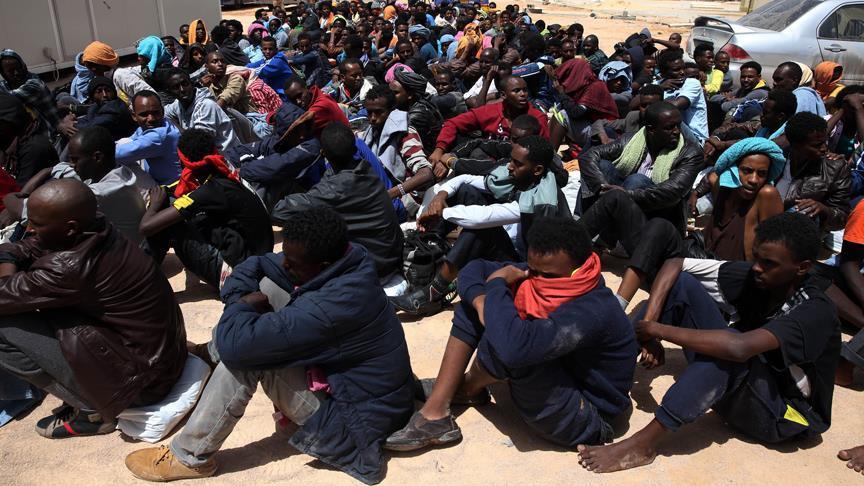
Beneath the vast expanse of the Sahara, a modern tragedy unfolds, one that resurrects the specter of the ancient Trans-Saharan slave trade while thriving in the chaos of the 21st century. Across North Africa-Libya’s lawless detention centers, Mauritania’s caste-bound villages, and subtler exploitations in Algeria, Egypt, Morocco, and Tunisia-an estimated 1–2 million people, including 100,000–200,000 children, are ensnared in modern slavery. Black sub-Saharan African migrants and Mauritania’s Haratin (Black Moors) bear the brunt, sold in open markets, forced into grueling labor, or bound by hereditary chains. This is no historical relic but a living crisis, fueled by racial prejudice, economic greed, political instability, environmental pressures, and the complicity of global powers like the European Union. Yet amid the horror, stories of resilience and resistance shine through, demanding we confront this human rights catastrophe with urgency and resolve.
The Human Faces of Slavery
Consider Victory, a 21-year-old Nigerian from Edo State, who left home in 2017 dreaming of work in Europe to support his widowed mother and three siblings. Selling their small cassava farm for $2,000, he entrusted smugglers to guide him across Niger’s deserts, a journey marked by dehydration, sandstorms, and bandit attacks that left his group shaken. In Sabha, Libya, hope turned to horror as he was auctioned for $700 to a militia boss. Forced to toil on a construction site, hauling concrete blocks 14 hours a day under a blistering sun, Victory was beaten with metal pipes, his hands blistered and back scarred. Fed moldy bread, he watched two friends die from untreated wounds, their bodies discarded in the desert. “They called us ‘abeed,’ like we were nothing,” he told CNN (2017). His family sold their last possessions for a $1,500 ransom, only for him to be resold in Tripoli, where he endured electrocution in a militia-run detention center, his screams echoing in overcrowded cells. Repatriated by the International Organization for Migration (IOM) in 2018, Victory now warns others in Edo’s markets, but his physical scars and nightmares remain a testament to Libya’s racialized slave trade.
In Mauritania’s remote Hodh Ech Chargui, Fatimatou, a 30-year-old Haratin woman, was born into slavery, inherited by a White Moor family in a mud-brick village. From age five, she rose before dawn to cook millet porridge, clean goat pens, and fetch water from a distant well, her hands calloused and back scarred from beatings for minor errors like spilling a drop. At 16, she was sexually abused by her master’s son, bearing a daughter who, too, became enslaved, her childhood stolen by the same chains. “We belonged to them,” she recounted to Anti-Slavery International (2019). In 2018, a traveling merchant whispered of SOS-Esclaves, an anti-slavery NGO. Fatimatou fled under cover of night, walking 20 miles with her child, evading her master’s search party. She filed a rare legal case against her captors, a bold act in a nation where such claims rarely succeed, but her mother and siblings remain in bondage, a stark reminder of hereditary slavery affecting 149,000–600,000 people-10–20% of Mauritania’s 4.7 million population (Global Slavery Index, 2023).
Amina, a 19-year-old Eritrean, fled conscription in 2019, escaping Asmara’s oppressive regime, where indefinite military service crushed her dreams of education. Crossing Sudan’s border with a smuggler’s caravan, she endured hunger and harassment, only to be kidnapped in Libya’s Kufra by a militia. Held in a “connection house” for eight months, she was raped repeatedly, branded with a hot iron, and forced into prostitution, taunted as “abeed” by her captors. “I thought I’d die there,” she told Human Rights Watch (2020). Freed during a militia clash, Amina stumbled to a smuggler’s boat, her body frail but spirit unbroken, reaching Italy in 2021. Her trauma lingers, one of 20,000–50,000 children trapped in Libya’s detention centers, where disease and despair claim countless lives (UN Human Rights Council, 2023).
In Cairo’s sprawling slums, 15-year-old Fatima, a Sudanese refugee, fled war in Darfur with her aunt, only to find a different hell. She works 12-hour days in a textile factory, her fingers raw from sewing, unpaid and beaten for slowing down, her wages withheld by a foreman who calls her “abeed.” “They say we’re only good for this,” she told UNHCR (2020), her Blackness marking her for exploitation in a city where refugees lack legal protections.
In Algeria’s Tamanrasset, 17-year-old Issa, a Malian migrant, toils in a brick kiln, his lungs choked by dust, paid in scraps of food by a local gang. Fleeing drought in Gao, he hoped for work in Europe but was trapped by smugglers promising passage. “We’re less than animals here,” he told Amnesty International (2022), one of thousands in Algeria’s hidden labor camps (Human Rights Watch, 2019). These stories reveal a crisis rooted in racial hierarchies, echoing the Trans-Saharan trade’s legacy of commodifying Blackness.
A Web of Drivers
Libya, fractured since NATO’s 2011 intervention ousted Muammar Gaddafi, is the epicenter. With 573,000 in slavery-like conditions (8.4% of 6.8 million, Global Slavery Index, 2023), its militia-controlled detention centers in Tripolitania and slave markets in Fezzan thrive on lawlessness. Black migrants from Nigeria, Eritrea, and Somalia, fleeing conflict or poverty, are sold for $400–$800, forced into construction, agriculture, or prostitution. The slur “abeed” dehumanizes them, but militias exploit all migrants, pocketing $1–2 billion annually (UNODC, 2022). Economic greed and political chaos, worsened by Western destabilization, enable trafficking in a nation split by rival factions.
The Trans-Saharan slave trade, spanning the 7th to 20th centuries, moved 7–10 million Black Africans to North Africa, embedding racial hierarchies that persist. Libyan ports like Zawiya and Tripoli were hubs for enslaving sub-Saharan captives, traded for gold and salt, their Blackness framed as servile in Arab chronicles. This cultural legacy fuels modern slave auctions, where Black migrants are disproportionately targeted. In Mauritania, hereditary slavery enslaves 50,000–150,000 Haratin children (UNICEF, 2023). White Moor elites, wielding religious texts from medieval scholars, justify bondage as divine will, despite 1981 abolition. Mbarek, a 40-year-old Haratin herder in Adrar, was whipped for losing camels, denied schooling, and forced to marry to “produce” more slaves, his family’s labor sustaining his master’s wealth (BBC, 2021). Poverty and cultural norms trap Haratin, with economic dependence entrenching slavery across rural Hodh and urban Nouakchott.
Religious Context
Religion shapes the identities of both slavers and enslaved, though it is not a primary driver of modern slavery. In Libya, slavers-militias and smugglers-are predominantly Sunni Muslims, reflecting the country’s 97% Muslim population (Pew Research, 2017). Their exploitation is driven by profit and racial bias, not faith, using slurs like “abeed” to dehumanize Black migrants. In Mauritania, White Moor elites, also Sunni Muslims of the Maliki school, enslave Haratin, who share their faith, using medieval Islamic texts to justify caste-based bondage, a cultural distortion condemned by modern scholars (Anti-Slavery International, 2019). In Algeria, Egypt, Morocco, and Tunisia, exploiters are similarly Sunni Muslims, but slavery stems from economic greed and prejudice, not religious ideology (Human Rights Watch, 2019). The enslaved are diverse: sub-Saharan migrants like Victory (likely Christian from Nigeria’s Edo State) and Moussa (Muslim from Senegal) reflect a mix of Christianity and Sunni Islam, while Haratin like Fatimatou are Sunni Muslims (UNHCR, 2020; BBC, 2021). Religion is secondary to Blackness and vulnerability, with shared faith in Mauritania underscoring caste’s dominance over spiritual unity.
In Algeria, Egypt, Morocco, and Tunisia, slavery is subtler, affecting 1,000–20,000 children per country through forced labor, begging, or trafficking. Black migrants face worse conditions, but poor Berbers in Morocco’s orange groves or Egyptian children in cotton fields endure exploitation, showing economic desperation and cultural indifference as drivers alongside race (Human Rights Watch, 2019).
Climate change intensifies the crisis, with Sahel desertification affecting 80% of farmland, displacing 10 million annually (UNDP, 2023). In Mali, Niger, and Chad, failed harvests, dried wells, and livestock losses push families to sell land or migrate. In Burkina Faso, 1.5 million face food insecurity, driving youth like Moussa, a Senegalese fisherman, into Libya’s trafficking routes. “The sea took my fish, so I went north,” he told Amnesty International (2017), only to face detention and forced labor. Gender disparities amplify risks: 70% of female migrants in Libya report sexual violence, as seen in Gloria, a Nigerian trafficked to Italy’s sex trade, owing €35,000 in debt bondage (PBS News, 2016). These layers-race, history, religion, economics, politics, environment, gender-reveal slavery’s complexity.
The EU’s Complicity
The EU, grappling with Mediterranean migration (186,000 arrivals in 2022, Frontex, 2023), is a critical co-driver. Its €455 million funding for the Libyan Coast Guard (LCG) since 2015, part of the €5 billion Emergency Trust Fund for Africa (EUTF), equips militias to intercept over 100,000 migrants, returning them to Department to Combat Illegal Migration (DCIM) detention centers rife with slavery. The LCG, often militia-linked, uses EU-supplied boats to patrol coasts, yet 60% of intercepted migrants face torture or sale (Amnesty International, 2023). “The EU pays to trap us,” a Nigerian survivor told Amnesty International (2023). Another €50 million for detention center “improvements” fails, with funds diverted to militia leaders, leaving centers overcrowded and disease-ridden (UN Human Rights Council, 2023).
Bilateral agreements-€200 million for Morocco’s border patrols, €100 million for Tunisia’s coast guard-strengthen borders, diverting migrants to Libya’s riskier routes. Morocco’s navy, trained by Spain, intercepted 70,000 migrants in 2022, many redirected to Libya’s Sabha, where smugglers sell them into slavery (Human Rights Watch, 2023). Morocco’s crackdowns, including mass arrests in Tangier, push migrants into desert routes, increasing trafficking risks. Underfunded repatriation (€400 million, 13,000 returned since 2015) leaves 700,000–1 million stranded, vulnerable to exploitation (IOM, 2023). By prioritizing deterrence over protection, the EU amplifies racial targeting in Libya’s “abeed”-tainted hierarchy.
NATO’s 2011 intervention, backed by EU states like France and Italy, plunged Libya into chaos, dismantling state institutions and creating the vacuum for slave markets. Today’s policies externalize migration control, shirking asylum responsibilities under the 1951 Refugee Convention while fueling abuses. Anti-trafficking efforts (€20 million for UNODC, 2022) pale against €455 million for LCG, exposing misplaced priorities (European Commission, 2023).
The Human Toll
Victims endure devastating health impacts. In Libyan centers, 80% suffer tuberculosis, scabies, or untreated injuries, with Black migrants like Victory facing starvation (IOM, 2023). In Mauritania, Haratin children face 27% stunting, denied healthcare or vaccinations (UNICEF, 2023). Sexual violence leaves women like Amina with untreated STIs or pregnancy complications, often leading to ostracism upon return (UN Women, 2023). Psychologically, PTSD and depression plague survivors, with 50% of rescued children showing distress, unable to sleep or trust (IOM, 2023). Gloria’s suicidal thoughts in Italy’s sex trade highlight the mental toll, her dreams of family reunion shattered (PBS News, 2016). Lack of health services in North Africa and repatriation countries perpetuates poverty cycles.
Gender shapes experiences. Women face forced concubinage in Mauritania (35% of girls married under 18, UNICEF, 2023) and sex trafficking in Libya, while men like Mbarek endure brutal labor, their bodies broken by decades of toil. Children, like 15-year-old Haby in Nouakchott, raped and enslaved, face intersecting vulnerabilities, their futures stolen (UN, 2018).
Geopolitical and Environmental Stakes
Slavery fuels organized crime, with Libyan militias earning $1–2 billion annually, potentially funding terrorism like ISIS or AQIM, whose networks exploit migration routes (UNODC, 2022). It strains AU-EU relations, with Nigeria and Senegal recalling ambassadors in 2017 over Libya’s abuses, accusing Europe of complicity in a “new slave trade” (UN, 2017). The African Union’s 2018 summit in Addis Ababa condemned EU migration policies, demanding repatriation funding, yet only 13,000 migrants returned, leaving millions vulnerable (IOM, 2023). In Mauritania, Haratin activism, led by Biram Dah Ould Abeid, risks unrest as demands for equality challenge White Moor elites, threatening stability in a region already strained by jihadist groups (BBC, 2021). As part of the global 49.6 million in modern slavery (ILO, 2022), North Africa’s crisis amplifies Europe’s migration pressures, with 186,000 arrivals overwhelming Italy and Greece, fueling political unrest (Frontex, 2023).
Environmental drivers are critical. Sahel desertification, driven by 2°C warming, destroys livelihoods, forcing families to sell land or migrate. In Burkina Faso, 1.5 million face food insecurity, driving youth into Libya’s trafficking networks. In Niger, 70% of farmers report crop failure, pushing entire villages toward smugglers (UNDP, 2023). In Mauritania, water scarcity forces Haratin into servitude for access to White Moor-controlled wells, entrenching dependency (Anti-Slavery International, 2021). EU’s EUTF allocates only 10% to climate resilience, missing a chance to curb migration with sustainable agriculture or water projects (Oxfam, 2022).
Resilience and Resistance
Amid despair, victims show extraordinary resilience. Moussa escaped Libyan detention, hiding in a smuggler’s truck to reach Senegal, where he started a fishing business, employing two others (Amnesty International, 2017). Fatimatou’s legal fight inspired Haratin activism, with her daughter now attending school, a rare victory (Anti-Slavery International, 2019). Gloria advocates for trafficking survivors in Italy, speaking at shelters to empower others, her voice a beacon (PBS News, 2016). Selam, an Ethiopian trafficked to the UAE’s kafala system via Egypt, escaped in 2021, now raising awareness in Addis Ababa’s churches (Human Rights Watch, 2022). Biram Dah Ould Abeid’s IRA-Mauritania risks imprisonment to free thousands, rallying global support through UN speeches (UN, 2020). Migrant communities in Libya organize escapes, sharing food and information, aiding IOM’s 13,000 repatriations since 2015 (IOM, 2023). These acts of defiance demand we amplify survivor voices.
A Path to Reform
To dismantle this crisis, reforms must address root causes and EU complicity:
- Redirect EU Funds: Shift €455 million from LCG to Sahel development (€500 million for irrigation, jobs), reducing migration by 20%. Fund safe houses (€100 million) for 50,000 victims, prioritizing women and children (Oxfam, 2022).
- Prosecute Perpetrators: Expand ICC investigations in Libya, sanction 50–100 militia leaders, and fund Mauritania’s anti-slavery courts (€10 million) for 100 prosecutions annually, overcoming judicial corruption (UN Human Rights Council, 2023).
- Empower Governance: Allocate €100 million to Libyan councils in Tripoli and Sabha, bypassing militias, and €5 million to Mauritanian NGOs like SOS-Esclaves, building local capacity (UNDP, 2022).
- Legal Migration: Issue 50,000–100,000 EU work visas (€200 million) for Africans in agriculture or care, cutting smuggling profits by $1–2 billion. Pilot programs must navigate bureaucratic hurdles, public skepticism, and integration challenges (IOM, 2023).
- Combat Racism: Fund €10 million for Libyan campaigns against “abeed” slurs, using radio and schools, and €5 million for Mauritanian education on Haratin equality, reaching 1 million people. These must counter deep-seated prejudice with community-led efforts (UNICEF, 2023).
- Reform Kafala: Condition EU-GCC trade (€100 billion) on abolishing passport confiscation, protecting 50,000–100,000 African workers, despite GCC resistance (ILO, 2023).
- Regional Cooperation: Fund AU anti-trafficking task forces (€50 million) to unify North African efforts, overcoming Libya’s fragmentation and Mauritania’s denial, with cross-border patrols (AU, 2023).
- Health Support: Allocate €20 million for trauma care in Libya and Mauritania, aiding 10,000 survivors with counseling and medical aid, addressing PTSD and STIs (UN Women, 2023).
Challenges and Hope
These reforms face steep hurdles. Balancing legal migration pathways with national sovereignty and cultural identity, valued by many EU states and citizens, is a key challenge. Concerns about border control and social cohesion, especially in Italy, Hungary, and France, fuel resistance to African migration, even if it curbs smuggling and slavery (Frontex, 2023). Public fears of job competition, welfare strain, and cultural shifts, amplified by economic downturns and security narratives, complicate 50,000–100,000 work visas, as governments face domestic pressure from voters and media (Politico, 2024). Libyan militias resist ICC probes, wielding armed power and local influence. Mauritanian elites jail activists like Biram, denying slavery’s scale to protect caste privilege (UN, 2020). GCC countries cling to kafala, prioritizing cheap labor over human rights (ILO, 2023). Costs (€1–2 billion) strain EU budgets, competing with Ukraine aid (€50 billion, Oxfam, 2022). Cultural change in Mauritania’s caste system or Libya’s racial prejudice is glacial, requiring decades of education and advocacy.
Yet hope persists. Niger’s EU-funded job program reduced migration by 20% in Agadez, creating 5,000 jobs in agriculture and crafts (EEAS, 2022). Senegal’s trafficking courts convicted 30 perpetrators in 2022, a model for Mauritania’s nascent judiciary (UNODC, 2023). Portugal’s visa program for 5,000 African workers cut irregular crossings by 10%, proving legal pathways’ efficacy with proper integration support (Frontex, 2023). Public awareness, sparked by CNN’s 2017 exposé but dimmed by Mauritania’s underreporting, is critical. X posts decry EU complicity-“funding militias to enslave Africans”-but oversimplify solutions, ignoring climate, gender, or cultural drivers. Educating publics about slavery’s health toll (80% disease prevalence in Libyan centers), environmental roots (Sahel displacement), and geopolitical risks (terrorism funding) can drive advocacy for victim-centered policies, currently dwarfed by €700 million in EU migration control funds.
The Full Business
North Africa’s slave trade is a story of profound suffering, systemic failure, and global complicity. Victory, Fatimatou, Amina, Fatima, Issa, and countless others embody its toll, their Blackness marking them for exploitation in a region scarred by history. EU policies, prioritizing borders over lives, fuel the crisis, alongside climate crises, economic desperation, and entrenched prejudice. Yet survivors’ resilience-escaping, advocating, resisting-lights a path forward. The full business demands action: redirect funds, prosecute perpetrators, empower communities, open legal pathways, and confront racism. Only by honoring the voices crying out from the Sahara-demanding freedom, dignity, and justice-can we dismantle this modern tragedy and build a future where no one is enslaved.
Sources: Global Slavery Index (2023), IOM, UN Human Rights Council (2023), Human Rights Watch, Amnesty International, Anti-Slavery International, CNN (2017), PBS News (2016), BBC (2021), UNICEF, UNDP, UNODC, Oxfam (2022), European Commission, EEAS, ILO, AU, UN Women, UNHCR, Frontex, Politico, Pew Research (2017).
