
Three Democrats. Three Levels of Government. One Unmistakeable Pattern.
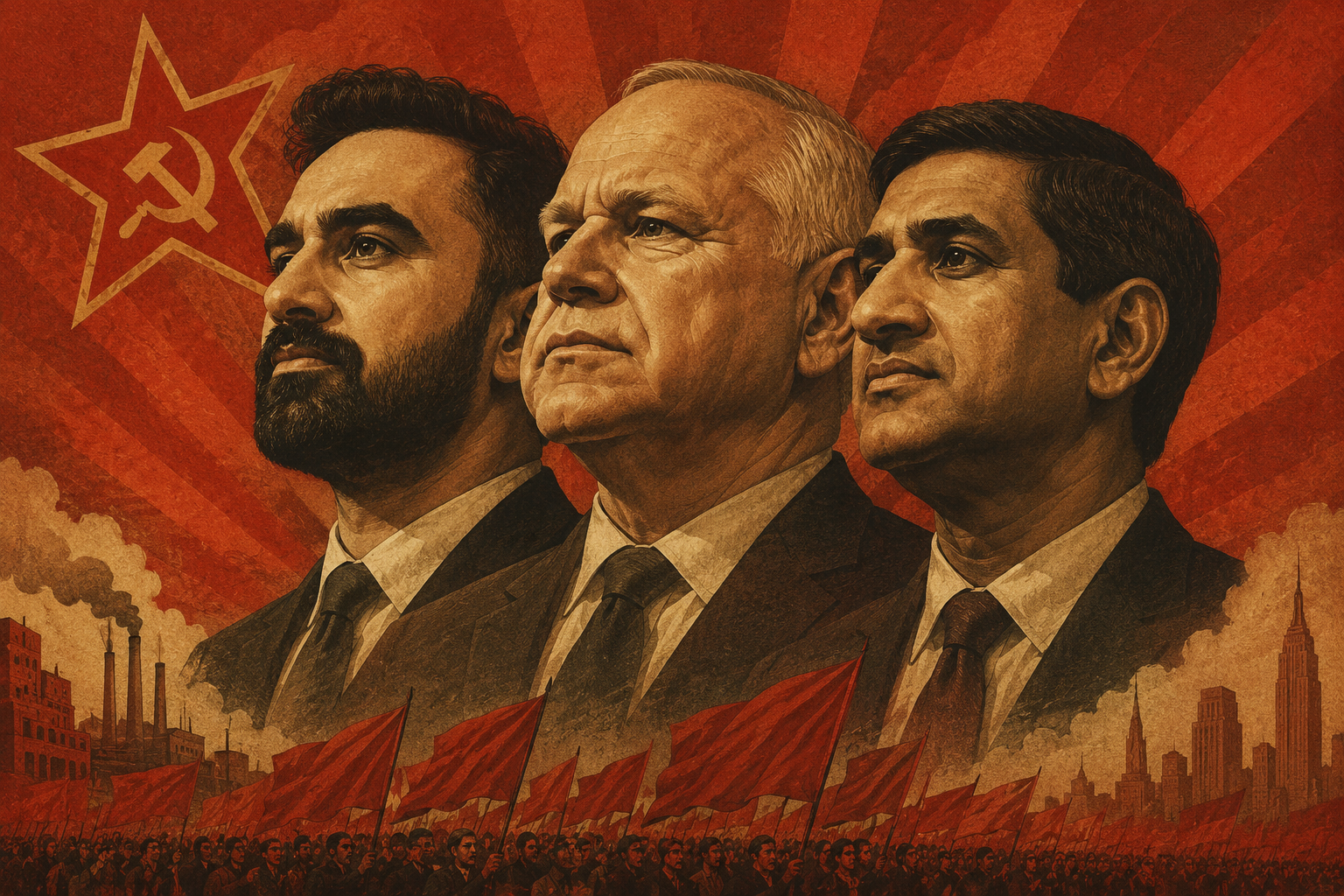
Zohran Mamdani runs New York City with the fervor of a DSA socialist. Tim Walz steers Minnesota from the statehouse using the same ideological toolkit: the very man who nearly became Vice President of the United States. Ro Khanna advances the agenda from Congress. These aren’t fringe voices or passing embarrassments. They represent the direction the Democrat Party has deliberately chosen: rhetoric over results, grievance over governance, and a quiet but persistent hostility to the America that still gets things done.
Start in the city that never sleeps, now governed by a man who treats basic economics like a moral failing.
Zohran Mamdani in New York City
Mamdani froze rents on stabilized units and promised relief. Instead, rents climbed to all-time highs: Manhattan medians north of five thousand dollars a month, Brooklyn close behind. Vacancies rose as landlords stepped back. The predictable fallout of price controls arrived right on schedule. Then he floated a twenty percent raise for himself, funded by the same taxpayers already squeezed by his policies.
When reports of rape and sexual assault increased, he reached for the technocratic dodge: much of it, he claimed, stemmed from broadened legal definitions under a 2024 state law. More survivors came forward, he said. Fair enough—but Mamdani turned explanation into excuse. Women in the city received redefinitions and lectures while the mayor busied himself rebranding sidewalk scaffolding as “fashionable.”
He allegedly worked to blunt a major Navy parade marking America’s 250th anniversary—ferry closures, permit delays, safety pretexts that kept warships from full public view. He skipped the Israel Day Parade. He stacked key posts with appointees carrying open anti-Zionist records. Yet the same mayor eagerly seeks federal dollars for housing programs like the 21st Century ROAD to Housing Act. Patriotic displays and alliances, it seems, are optional.
Our streets are getting a makeover! Say hello to New York's fashionable new sidewalk sheds, brought you by @NYC_Buildings. pic.twitter.com/G9nN3xhBOZ
— Mayor Zohran Kwame Mamdani (@NYCMayor) July 13, 2026
“Tax the rich” sounds righteous until the rich leave. New York’s share of America’s millionaires has plummeted, costing the state nearly eleven billion dollars in lost tax revenue in a single year. Florida and Texas keep gaining. The Empire State bleeds. And who ultimately pays? The middle class through higher effective burdens, shrinking services, and mounting pressure on working families as the productive base erodes. Mamdani keeps pushing the same failed formula. New Yorkers endure record rents, watch crime statistics twist in real time, and get told the scaffolding is now chic. Ideology first, people second.
Tim Walz in Minnesota
Walz built his brand on “Minnesota nice.” The record reveals something colder.
His Board of Pardons granted clemency to Tou Lue Vang, a forty-two-year-old illegal immigrant convicted of repeatedly raping a child. Commissioners cited deportation risks and the perpetrator’s six children who needed a father. The victim’s trauma ranked lower. Federal authorities later deported him anyway, but the state board’s priorities stood exposed.
When federal immigration enforcement increased, Walz reached for the heaviest historical comparison available. He likened operations to the Holocaust and invoked Anne Frank—children hiding in houses, afraid to go outside. The rhetoric landed in a state already shaped by sanctuary policies. Two U.S. citizens died amid the resulting tensions: Renee Good, who drove her car at a federal law enforcement officer, and Alex Pretti, a VA ICU nurse who became engaged in a physical altercation with law enforcement while armed. Walz framed both incidents as symbols of federal overreach. Critics see the predictable harvest of years spent softening enforcement and amplifying grievance.
The fraud record runs even uglier. Under Walz, Minnesota became a national punchline for pandemic-era theft. Feeding Our Future stole more than $250 million in federal child nutrition funds through fake meal sites and inflated claims, often linked to networks in the Somali-American community. Warnings came early. Action was slow, citing litigation fears and political sensitivities. Billions more in Medicaid sat vulnerable. Then influencer Nick Shirley exposed apparently sham daycares raking in millions from the Child Care Assistance Program. Walz’s team faced charges of sidelining whistleblowers while tolerating red flags.
This is the same governor who delayed the National Guard as Minneapolis burned in 2020, restored felon voting, pushed driver’s licenses for illegal immigrants, and declared Minnesota a trans refuge. Stolen valor questions and “Tampon Tim” policies painted a picture of a leader more focused on cultural signaling than public safety or basic competence. Americans dodged a bullet when he fell short of the vice presidency.
Minnesota paid in disorder, fraud, and lost lives. The pattern holds: elevate ideology, downplay consequences, blame those enforcing the law.
Ro Khanna in Congress
At the federal level, Ro Khanna runs the same playbook. He led a West Bank-focused trip emphasizing Palestinian voices alongside left-leaning groups. A New York Times photographer joined. So did Cameron Kasky, the Parkland activist turned anti-Israel operative, now serving as an aide. The delegation largely ignored Israeli offers for meetings with October 7 survivors, hostages’ families, Druze communities, and border briefings. A localized confrontation with settlers became national theater.
Khanna played the race card explicitly, noting the experience made him “acutely aware of being brown” and that he felt powerless despite his privilege. This from a congressman who was among the earliest defenders of Graham Platner, the Maine Senate candidate with a Nazi tattoo facing serious assault allegations—until political costs mounted. Then came the pivot to West Bank drama. The timing looked calculated. The substance looked like performance.
Khanna has built a record of “genocide” and “apartheid” framing on Israel with little appetite for balanced inquiry or American strategic interests. He demands investigations of settlers and soldiers but skipped direct briefings from survivors of the worst massacre of Jews since the Holocaust. Selective outrage, elite posturing, coalition protection: the pattern persists.
The Pattern Across Levels
City, state, federal. Mamdani, Walz, and Khanna share the same operating habits. They treat law enforcement as the problem rather than the solution. They prioritize ideological allies and grievance narratives over ordinary citizens’ safety and prosperity. Their language inflames: Holocaust comparisons from a near-Vice President, definitional dodges from a big-city mayor, race-and-privilege theater from a congressman. They demand federal resources while undermining federal authority and patriotic symbols.
Programs like the 21st Century ROAD to Housing Act show how these impulses scale—expanded subsidies and weak guardrails feeding the same ecosystems of sanctuary priorities, nonprofit networks, and rent-control experiments that drive up costs. The middle and working classes absorb the damage while the rhetoric points elsewhere.
These three are not embarrassing exceptions. They are leading indicators. The Democrat Party has normalized governance that places ideology first, citizens second, and consequences a distant third. From city streets choked with scaffolding and sky-high rents, to statehouses that pardon predators and enable massive fraud, to congressional trips staged for domestic headlines, the country sees the pattern at every level.
The Horribles aren’t three isolated cases. They are the operating system. Americans are watching the results, and drawing the obvious conclusion.
